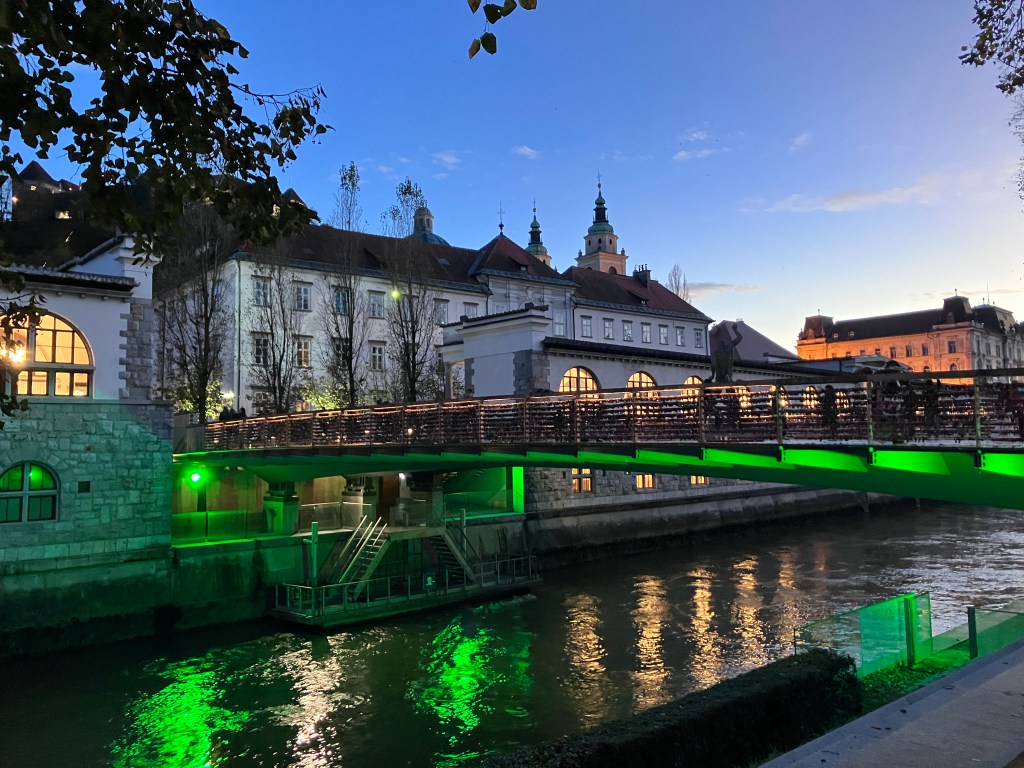
After a relaxing three-hour train ride, we’ve arrived in Ljubljana, Slovenia’s capital city. It’s because of its proximity to Zagreb that we chose to visit Ljubljana before going further south in Croatia. Though the city is relatively close to Zagreb, it’s quite a bit colder and wetter on average; in fact, while Portland, OR (my home city) gets approximately 36 inches of rainfall annually (and feels like a rainy godforsaken place half the year), Ljubljana gets a whopping 55 inches, making it one of the wettest capitals in Europe. As if to drive home this point, we could see on the train ride over here how much the Sava river had swelled and flooded its banks from the most recent rains.
Often, when you travel from one place to the next within the same region, the differences between places are subtle; however, on occasion they’re a little more obvious. In this case, going from Zagreb to Ljubljana has been different enough to inspire a lot of conversation since we arrived.

Ljubljana is half the size of Zagreb (approximately 300,000 people), yet “feels” as though it’s the much bigger city in a number of ways. For example, judging purely on visible litter, Ljubljana doesn’t seem quite as clean as Zagreb. Yet, regardless of that observation, the city has some serious sustainability cred—it was voted Europe’s “green capital” in 2016 due to its environmental awareness, commitment to the preservation of green space, and implementation of sustainable infrastructure. You can see evidence of its well-utilized neighborhood recycling program in the form of metal bins all over the city.
In addition, while Zagreb had the kind of open, casual, and friendly vibe that you might expect from a smaller city, Ljubljana has a more urban, hurried, closed-off feel to it. This isn’t to imply that Slovenians are rude (they’re definitely not), it’s just that we’d grown used to the refreshing friendliness of Zagrebians, so the surlier treatment we’ve received in Ljubljana has been noticeable. I can only assume it’s the result of the weary tension that develops between service workers and foreigners in a place that is a popular tourism destination.

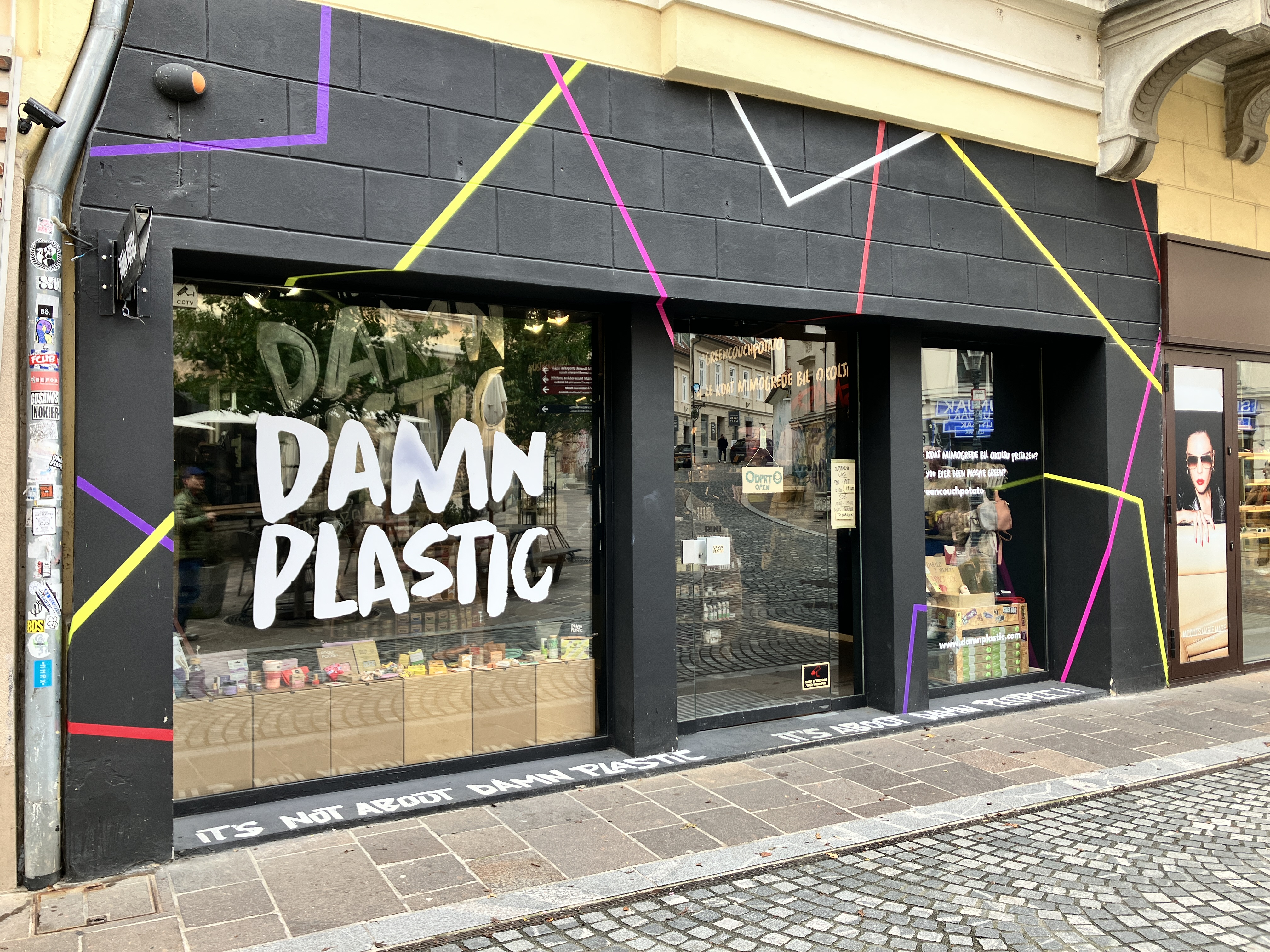
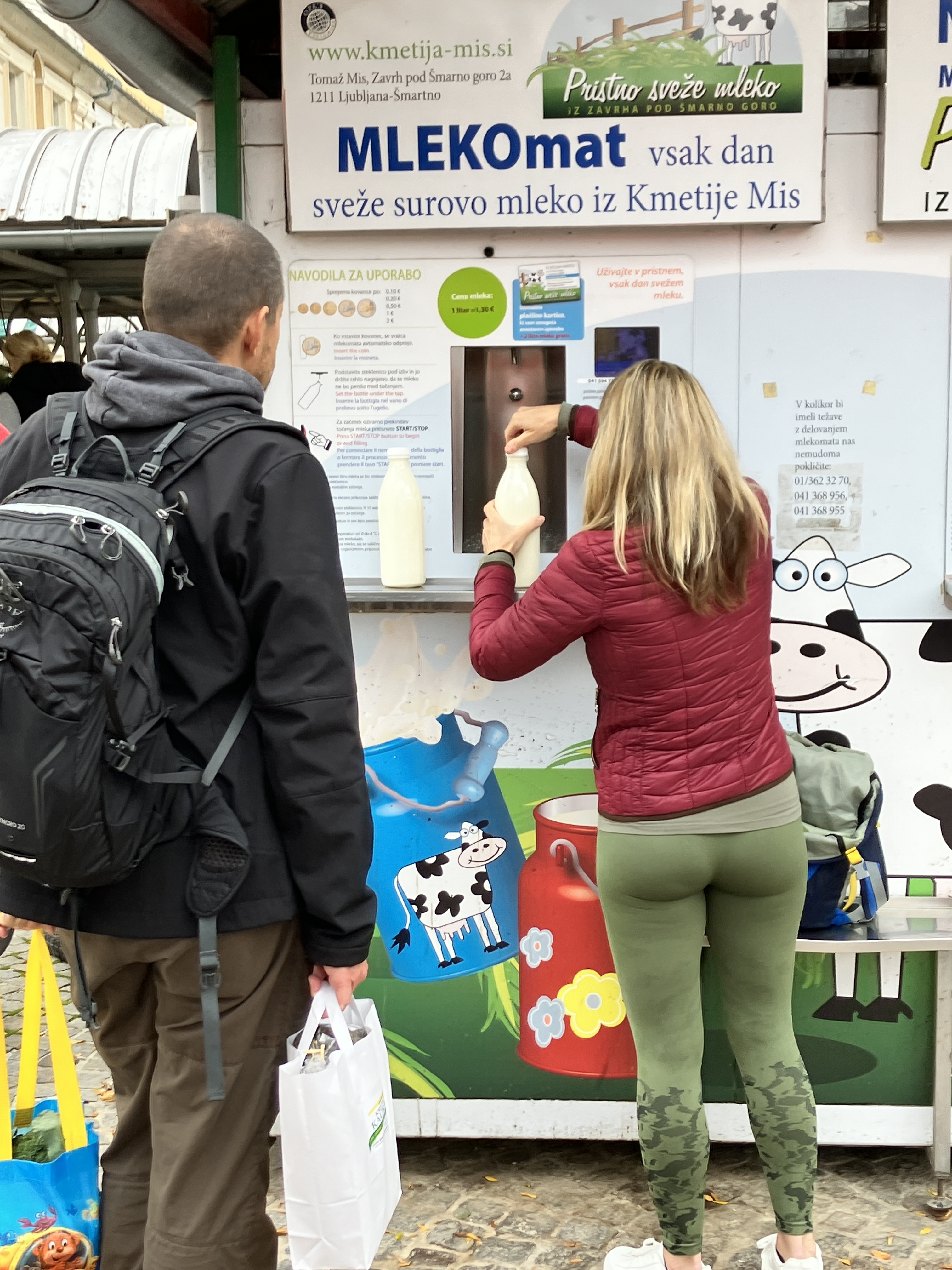
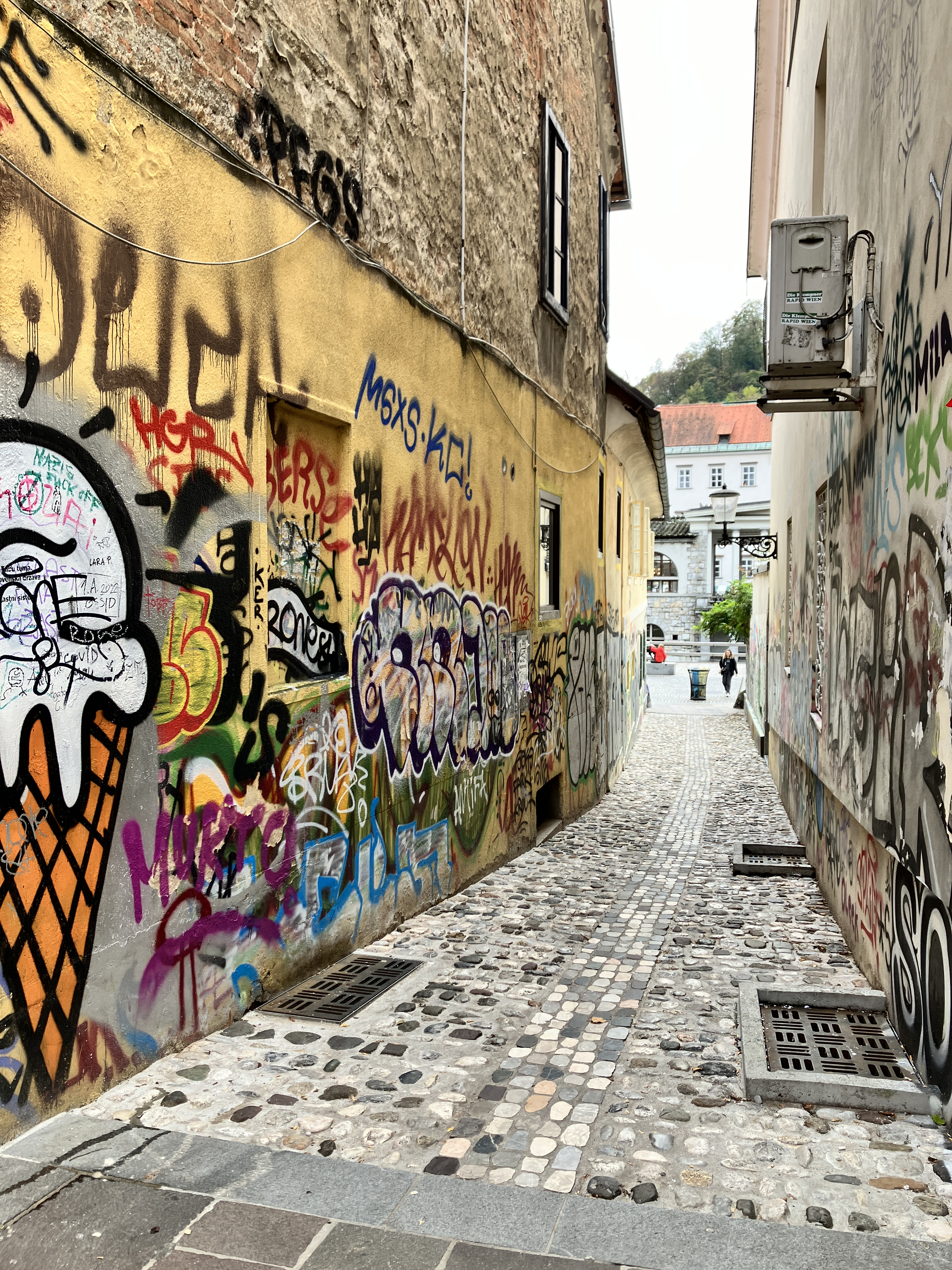

Finally, though Zagreb is absolutely overflowing with caffe bars and bakeries, so far Ljubljana (in particular the old town) seems to have traded those in for more upscale establishments offering everything from fine food, wine, gourmet charcuterie (we’re in charcuterie heaven), artisanal desserts, clothing, and gifts (and the higher price tags that go with all of the above). The city seems to have edgier art, more visible signs of both angst and homelessness, far more graffiti—but also more obvious signs of social, political, and global awareness. There are even more signs of health awareness; for example, suddenly we’re seeing lots of health food shops and raw food options (there’s even a raw milk vending machine in the Central Market!).
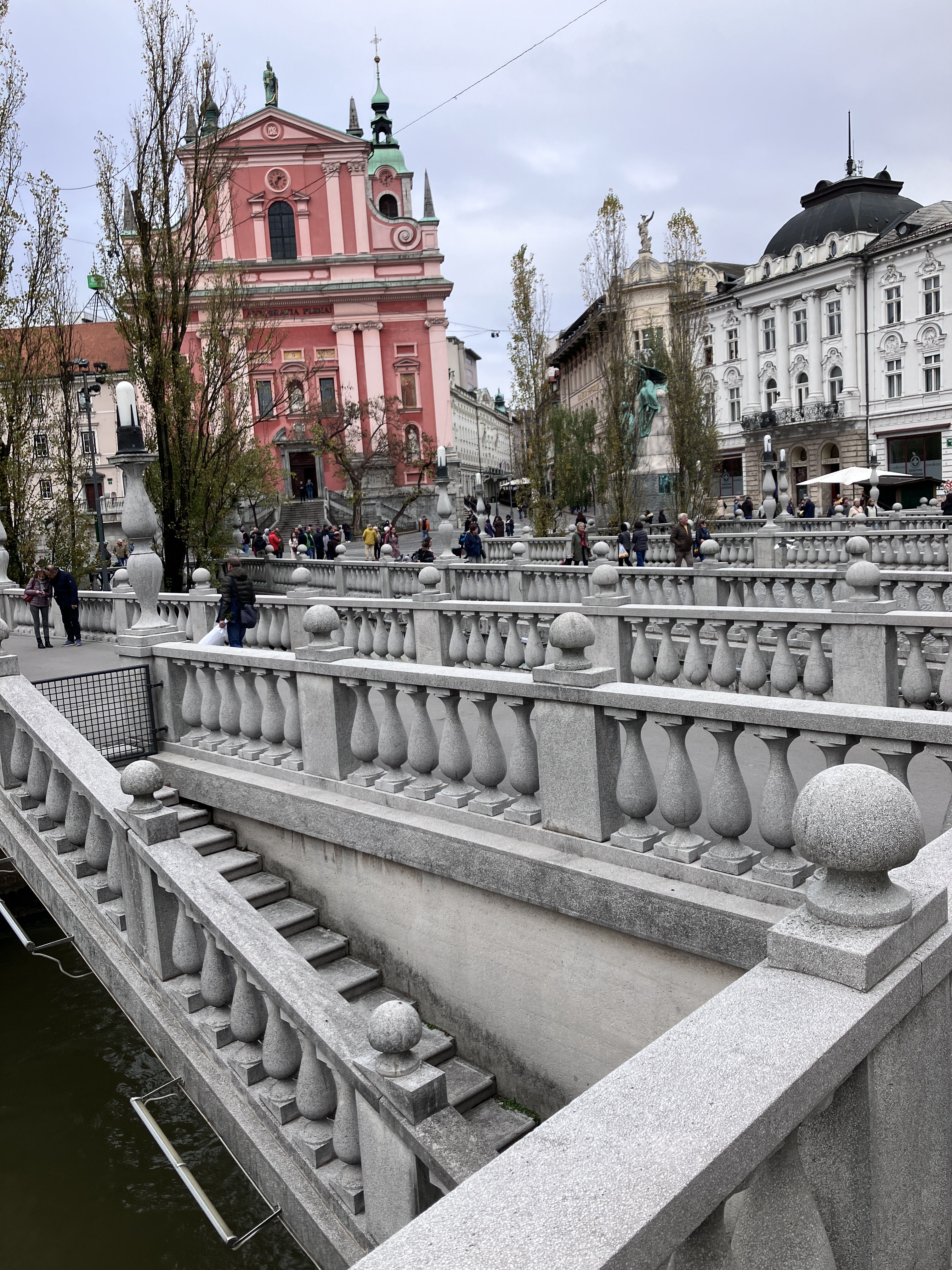
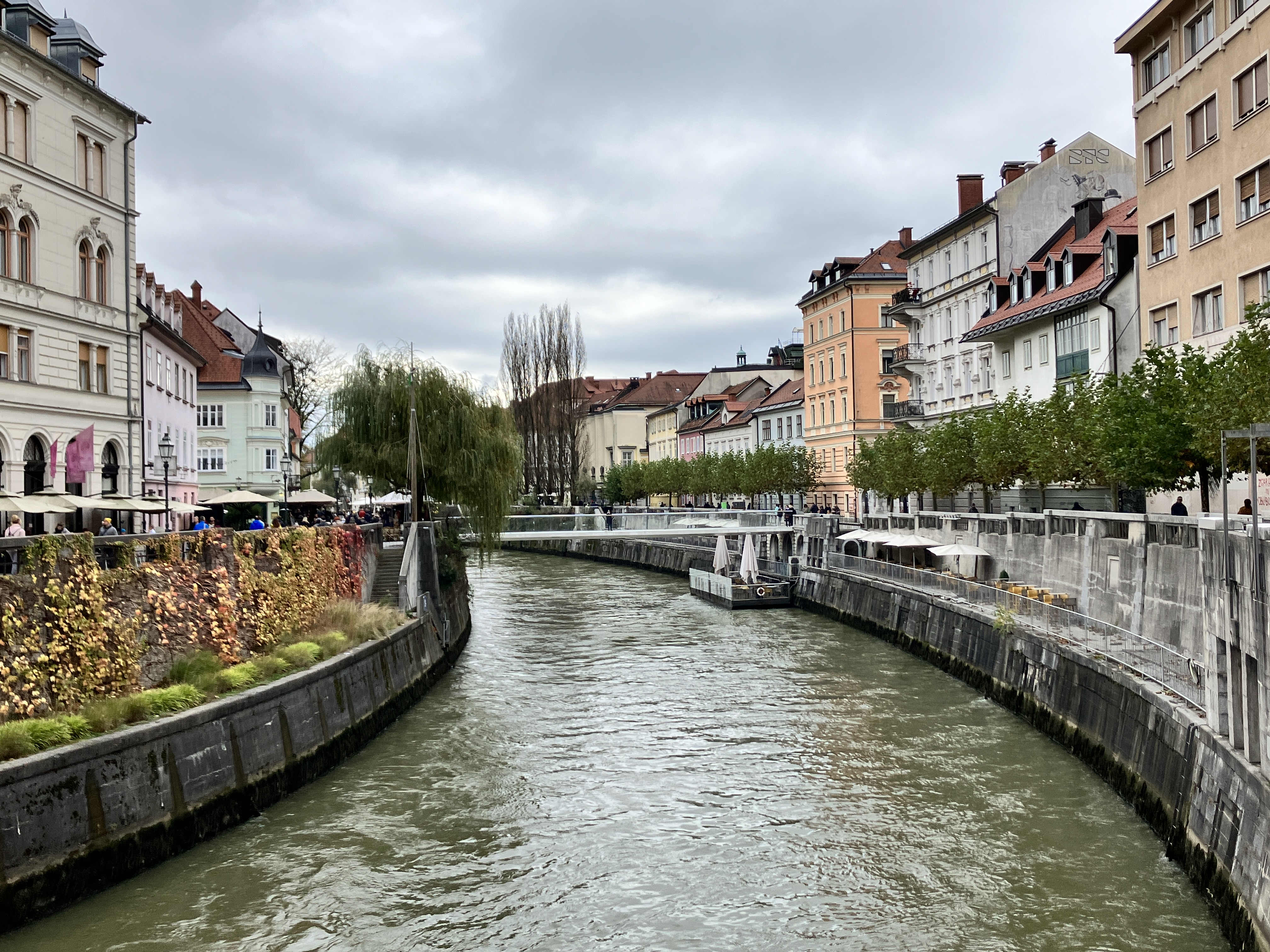

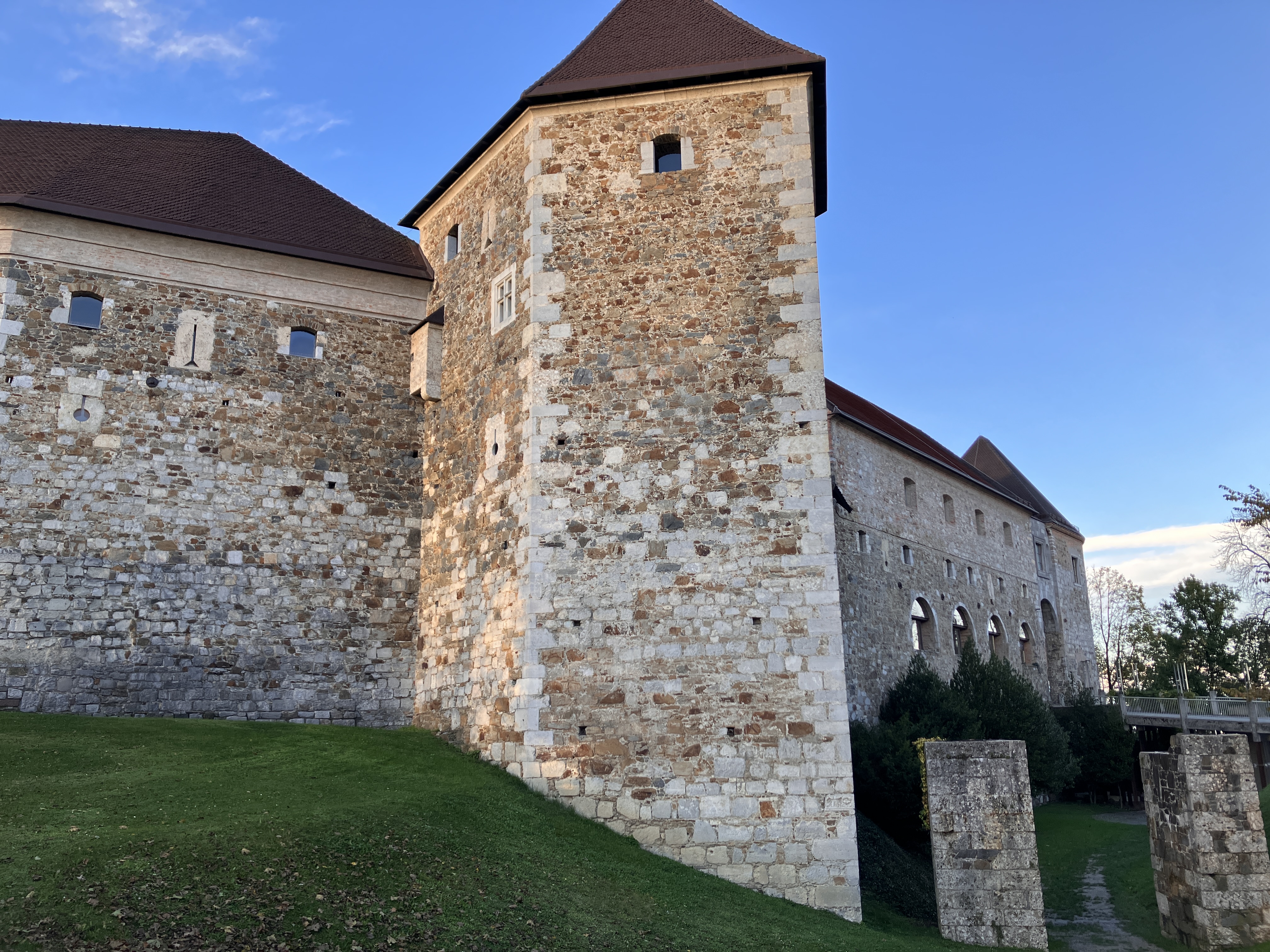


In short, when compared to Zagreb, qualities that one might normally attribute to a larger city are, in this case, more apparent in a much smaller one. This is neither good nor bad—it’s simply different and it’s these sorts of differences that make going from one city to another (or one country to another) all the more interesting when you’re traveling.
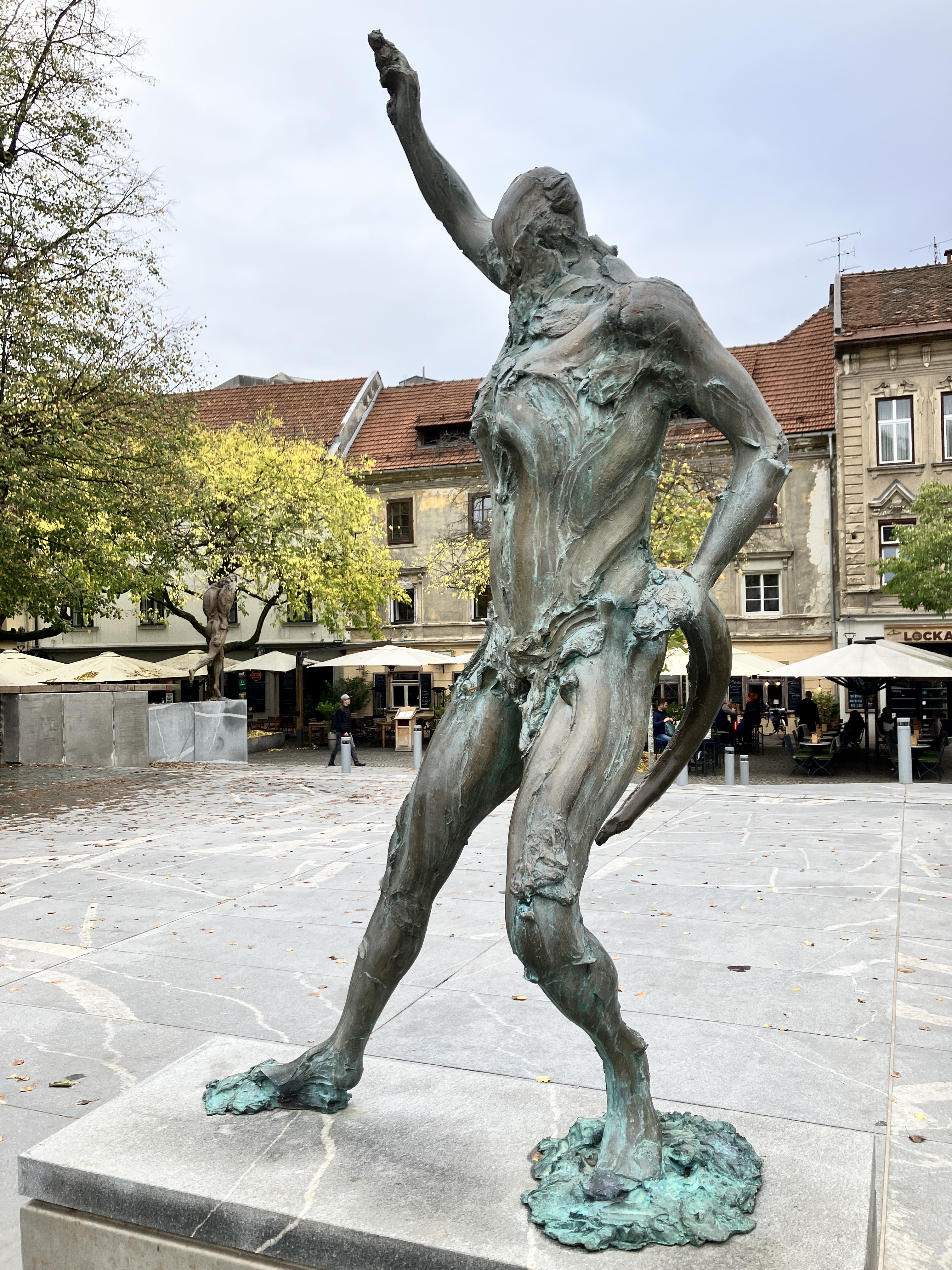
Though the differences between places stand out when you jump from city to city, what’s more important is the unique beauty that each place has to offer. Ljubljana offers an exquisitely charming old town that flanks both sides of the Ljubljanica river. Among other things, it’s a place known for its dragon sculptures, art, and the Ljubljana Castle that gazes upon the old town from atop a hill. Here, you can stroll the cobblestoned roads while listening to street musicians play their instruments for spare coins, admire the work of Jože Plečnik, their most famous architect who earned Ljubljana a spot in the UNESCO World Heritage registry, photograph outdoor sculptures that range from the whimsical to the downright scary, or even add a love lock to the famed Butcher’s Bridge (I honestly don’t know where this trend started, but it seems like every city has something like this now). It’s an exquisitely beautiful old town with an idyllic European air. Since we arrived, we’ve been thoroughly enjoying all of these things and more, which I will elaborate on in the next post …




 tales of wander
Leave a comment