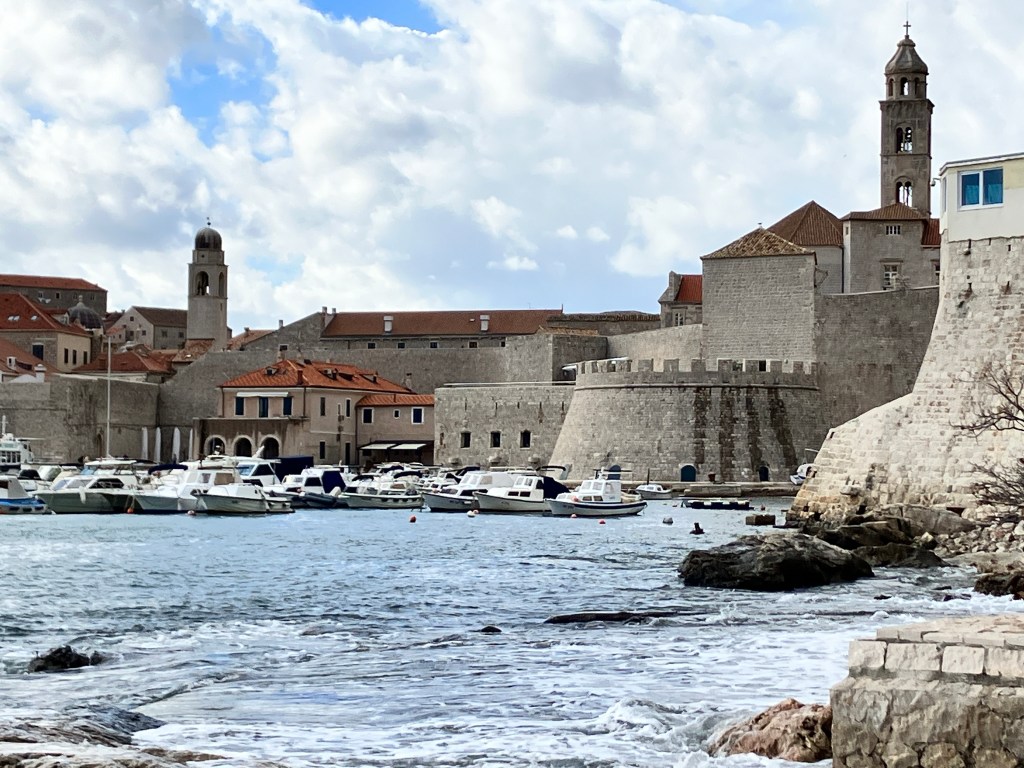
After a long and stressful day of travel, we finally arrived in Dubrovnik—the “Pearl of the Adriatic”—and yet another UNESCO World Heritage site due to the city’s beautiful medieval architecture and fortified old town (it seems this whole trip has been full of UNESCO sites). In this part of the world, there’s such an abundance of medieval towns, castles, and fortresses that it can get a bit old. At this point, we’re like: What, another castle? Another beautifully preserved medieval town straight from the pages of a fairy tale? Yawn.
Just kidding, it never gets old.
Dubrovnik is on the southernmost coast of Croatia and is known for being one of the best-preserved walled cities in the world. When travelers complain about the high price of traveling in Croatia, they’re likely talking about Dubrovnik, which is a stop on many a cruise ship’s itinerary and one of the most heavily touristed cities in Europe. To make the tourism situation worse, it’s also (apparently) the setting of many Game of Thrones episodes, thus giving birth to a fresh new onslaught of tourists who are less interested in the historical value of the city and more interested in knowing where the dragon was kept during filming (this is a true story from our walking tour guide, who thought the gentleman was kidding…only to discover he wasn’t). Sigh. Tourists.
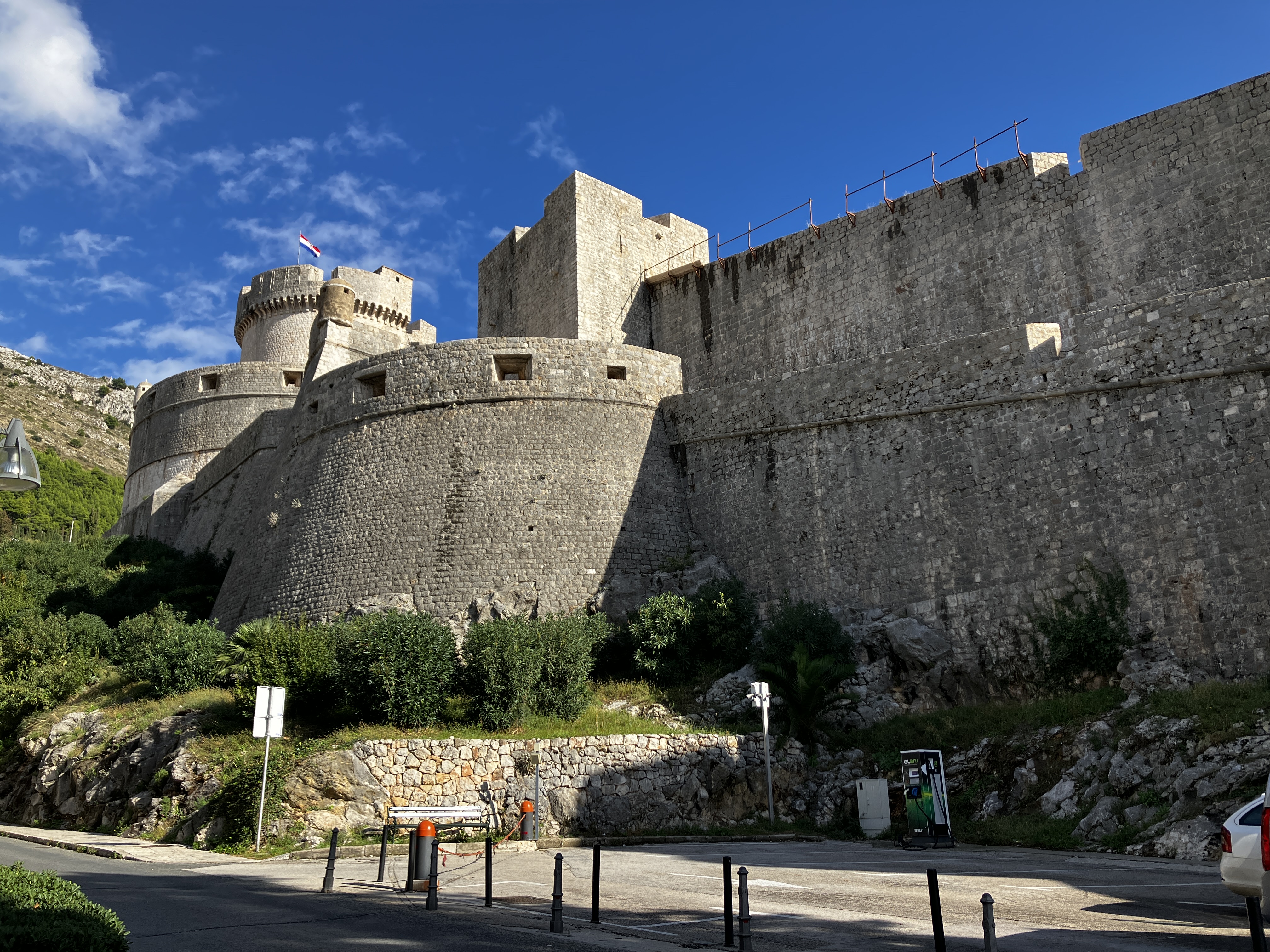


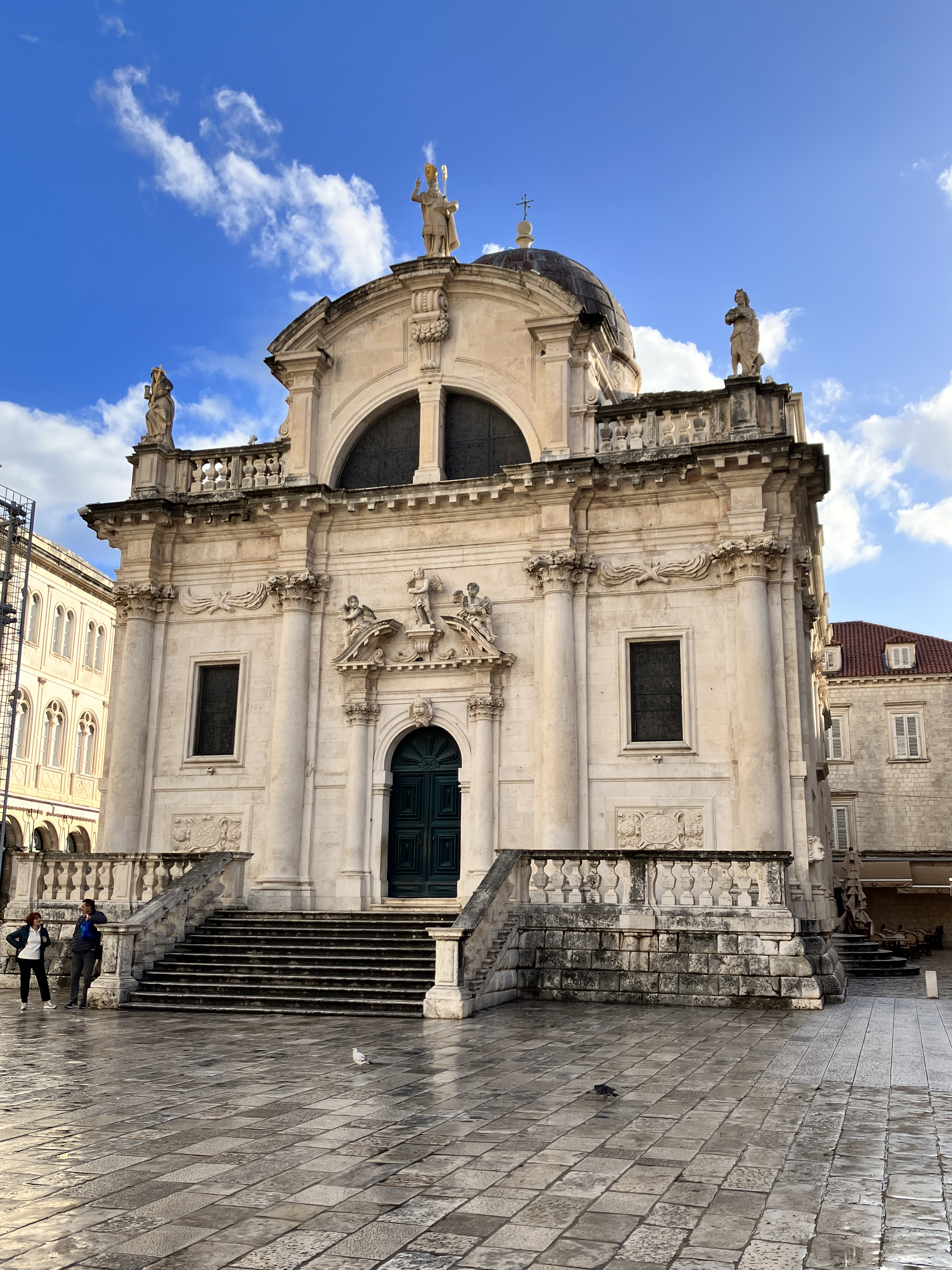

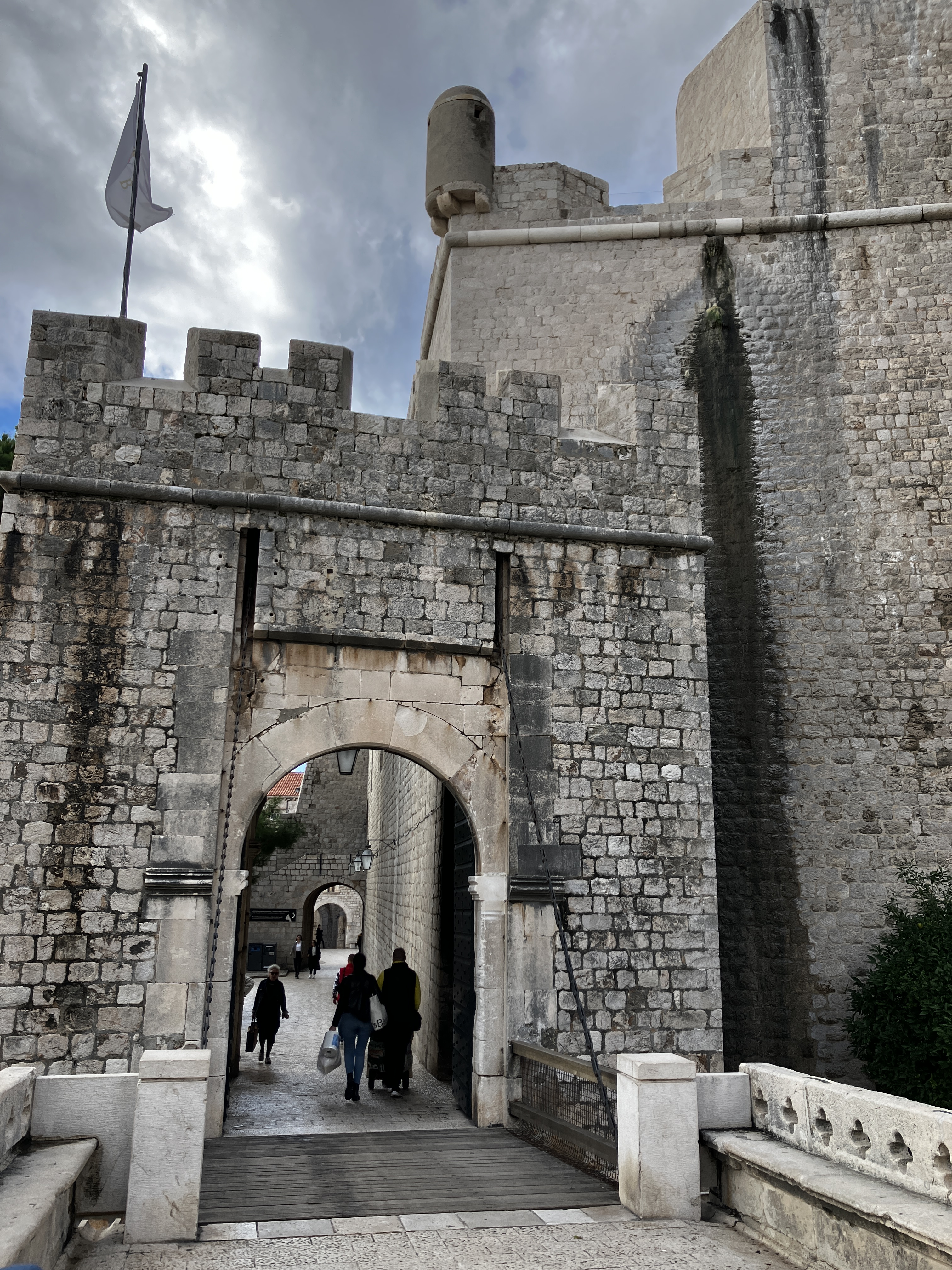
Dubrovnik was founded in the 7th century as a defensive settlement and its city walls—which were designed to protect its inhabitants from seafaring invaders—were erected in phases over a period between the 13th and 17th centuries. Within the walls is a fully functioning city with inhabitants who have lived there for generations. While in Dubrovnik, we enjoyed wandering around the city admiring its architecture, exploring its nooks and crannies, checking out the museums, and walking its city wall, which is about 1.2 miles in circumference, has 16 towers, and includes several fortresses, including Lovrijenac (St Lawrence), which is known as “Dubrovnik’s Gibraltar.” We also hiked to the top of Mount Srd, which is the small mountain that overlooks the city. At the top of Mt Srd is Fort Imperial, which was built in the early 1800’s during the Napoleonic Wars and now contains a museum dedicated to the Croatia’s Homeland War in 1991. It was during that war when Serbia conducted a siege on Dubrovnik that left over 50 percent of it damaged, while some buildings were completely destroyed. Since then, much of the damage has been restored.
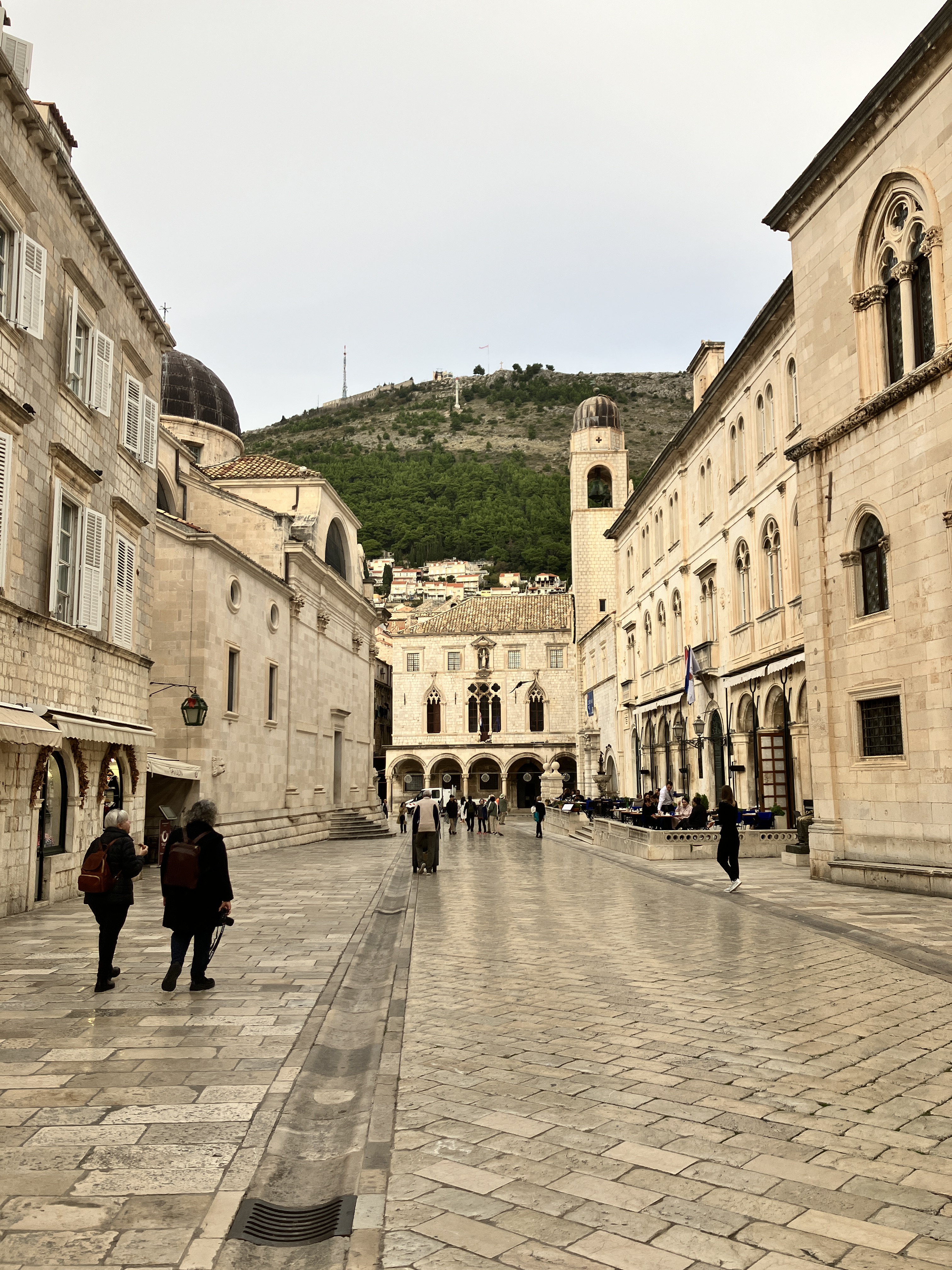
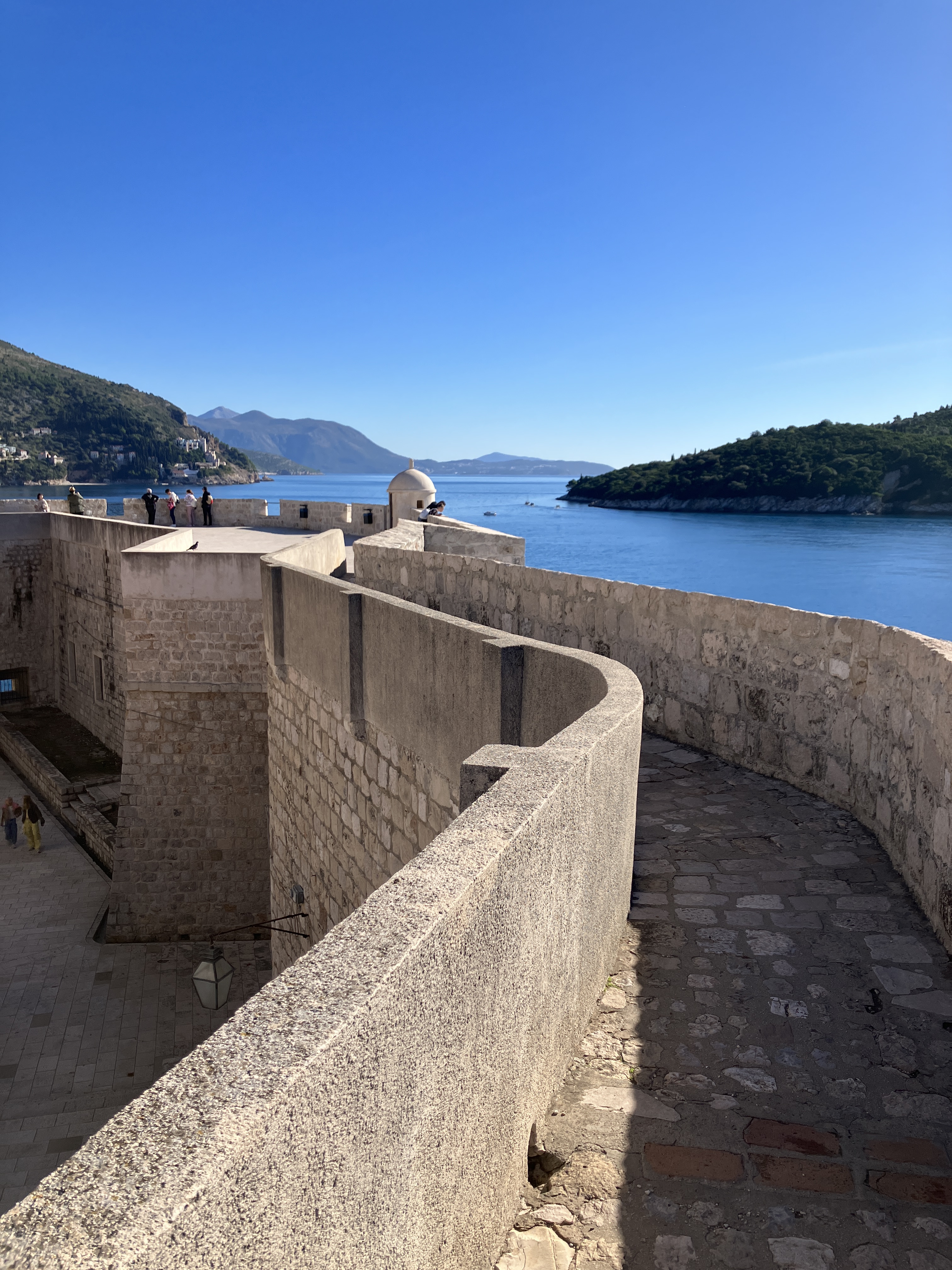
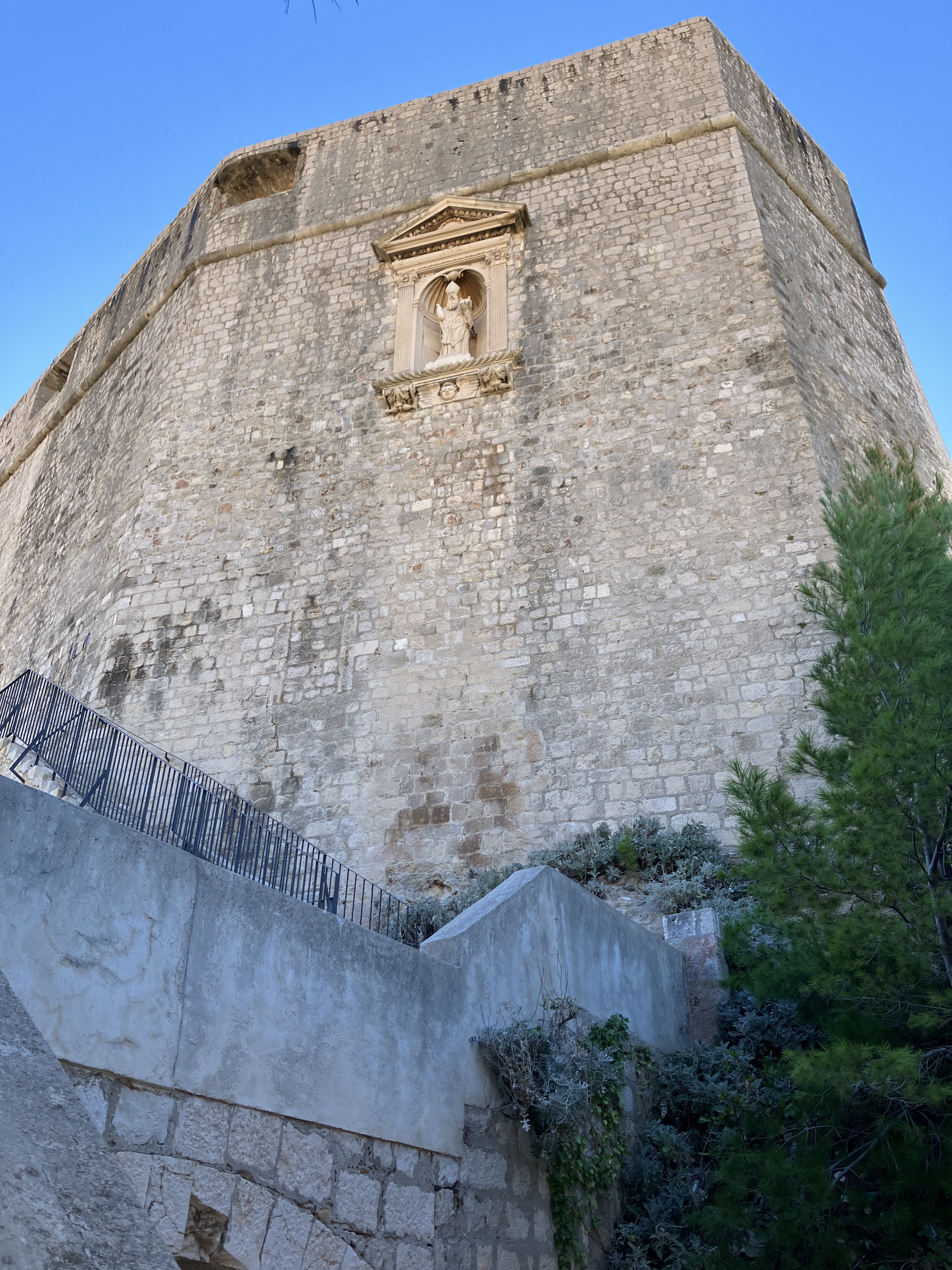
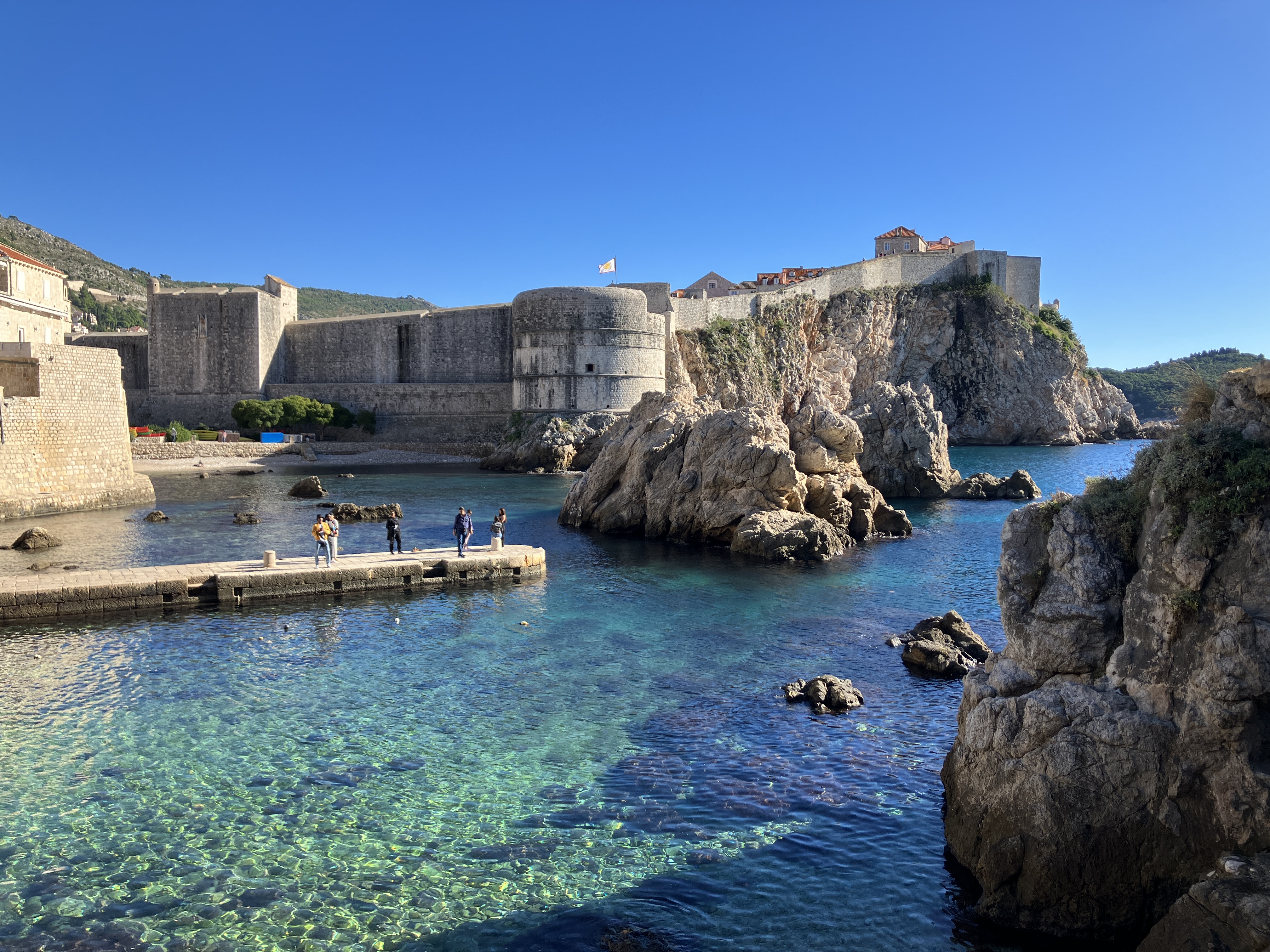
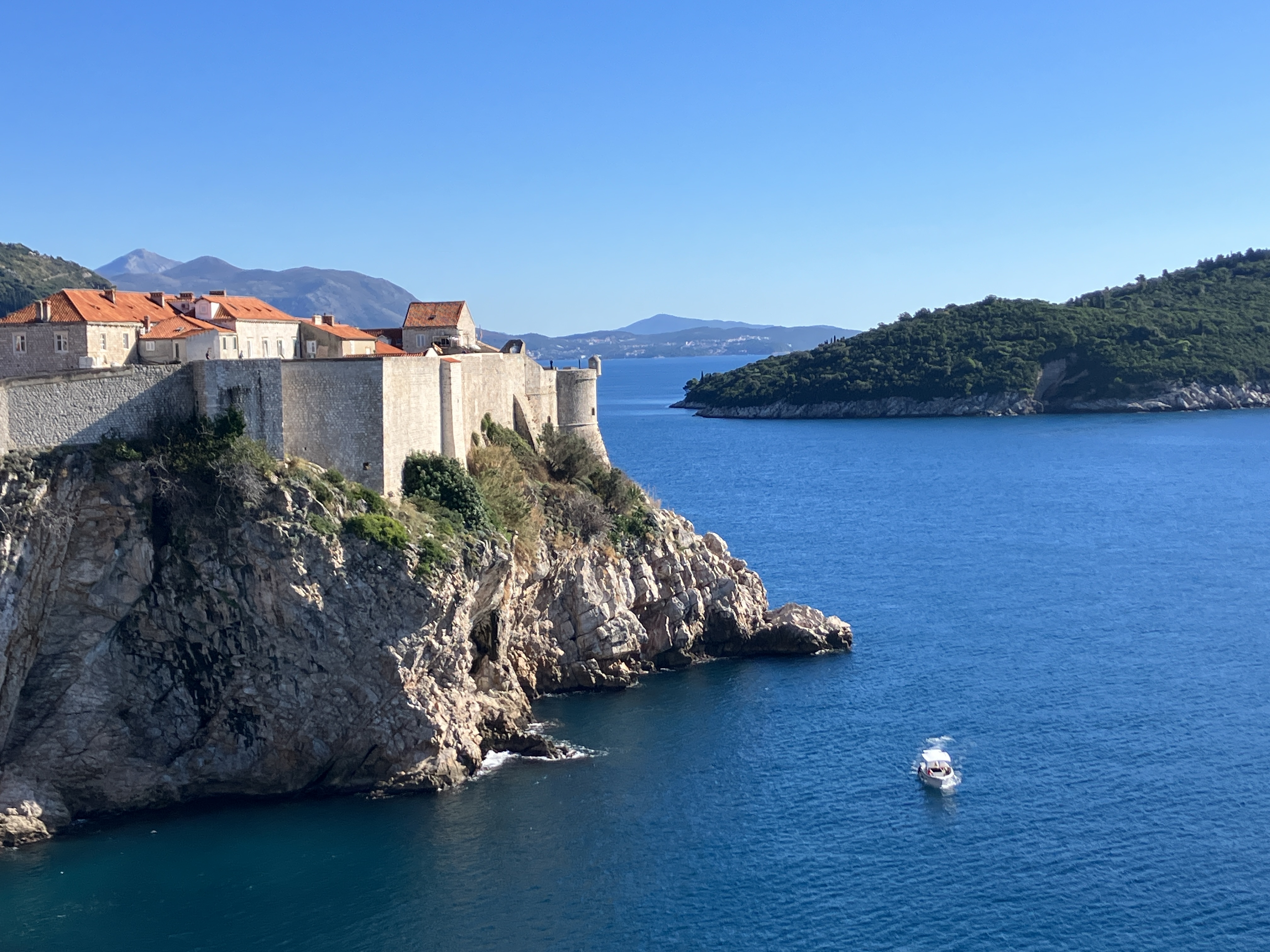
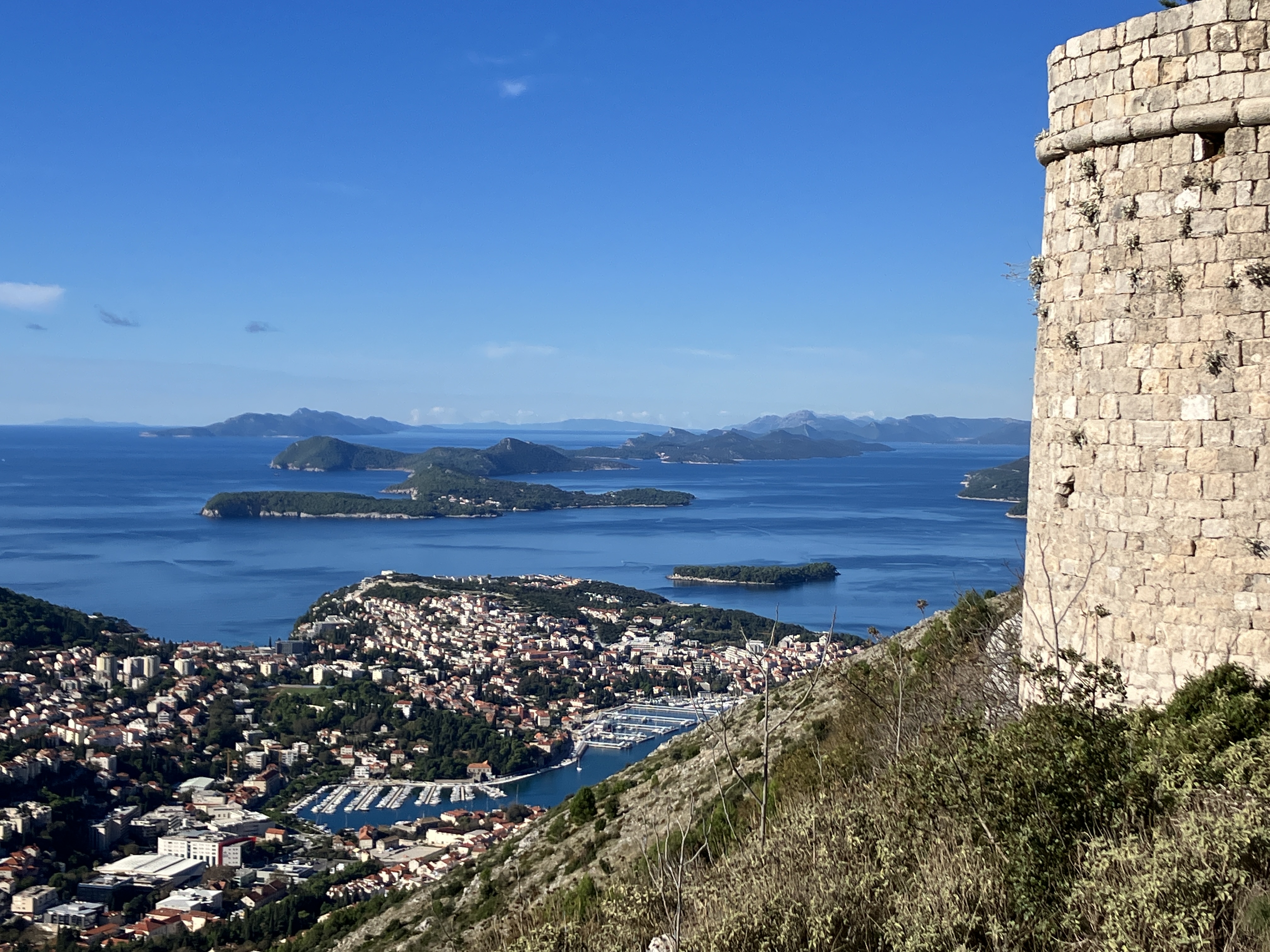
There’s plenty to do and see in Dubrovnik, so we did fewer day trips than has been our norm, but we did squeeze in one quickie:
Cavtat
Cavtat is a sleepy little beach town about 9 miles south of Dubrovnik and a lovely spot to nab a bit of peace and quiet. The town is actually older than Dubrovnik, having been founded by the Greeks in the 6th century. We spent a peaceful afternoon simply wandering around the rocky beaches, having coffee at a spot recommended by the guidebook as “one of the few places in Croatia where you can get pastry and a coffee at the same time” (this is one of Croatia’s charming quirks), and walking up to one of the sights of Cavtat, a mausoleum that is the work of the famous Croatian sculptor and architect, Ivan Mestrovic. As we climbed up the steep pathway to the mausoleum, we met Ivo, an old Croatian gentleman who appeared to be taking a break from heavy yard work as he sat upon a bench smoking a cigarette. He was dressed in work clothes with a navy blue smock and black rubber boots. When he saw us, he asked if we were going to the mausoleum. When we replied that we were, he proceeded to tell us about its symbolism, which then wove itself into a lengthy, but eloquent lesson about Croatia’s history—a lesson so detailed and broad that it sounded as though it could only come from a history teacher. During his lesson, Ivo covered topics such as the respect and autonomy of women in this region, war, and Croatian inventions. He was clearly proud of his country and wanted to share not only its history, but all of the little-known ways in which Croatia has impacted the world, ending each salient point with a glint in his eye and a “Can you imagine?”
Toward the end of the lesson, he spoke of war—not only the role of Croatia in its most recent war, but also touching upon the conflict currently happening in Gaza. He ended that topic with an emphatic “War destroys our souls.”


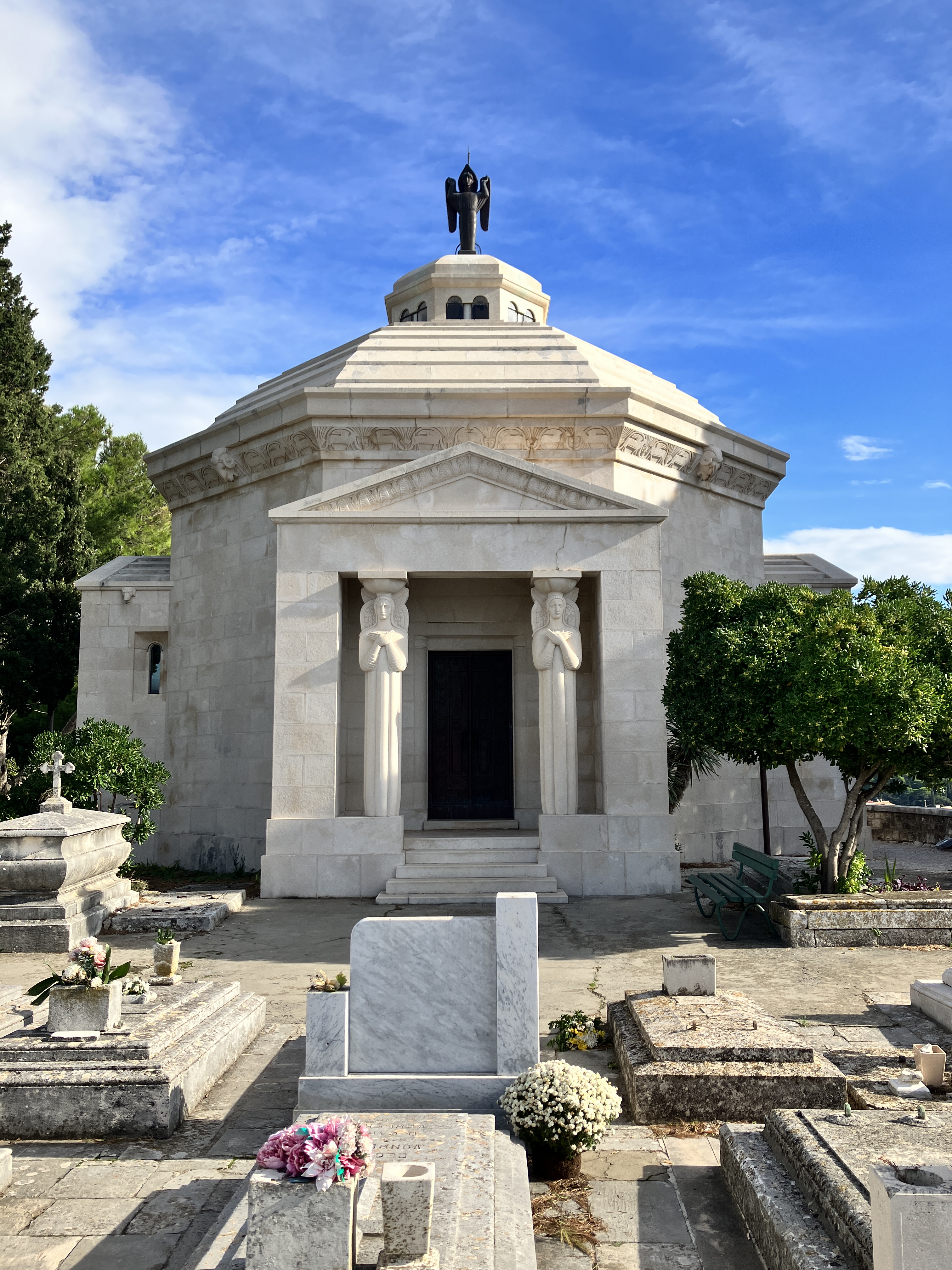

It was an unexpected lesson, but we both saw it was something worth hearing. When Ivo finally said all he wanted to say, he concluded by explaining that he likes to share what he knows with visitors, but can only do that during the low season. That day, we were the lucky recipients. To me, Ivo was a perfect example of how friendly and open Croatians are and how proud they are of their history. It’s a well deserved pride.
That was Dubrovnik in as small a nutshell as I could get it. Next stop: Split, which is appropriately named since it’s my final stop of this trip and the city from which I will depart. It’s also where we will meet with my friends Jill and Don. I cannot wait!





 tales of wander
Leave a comment