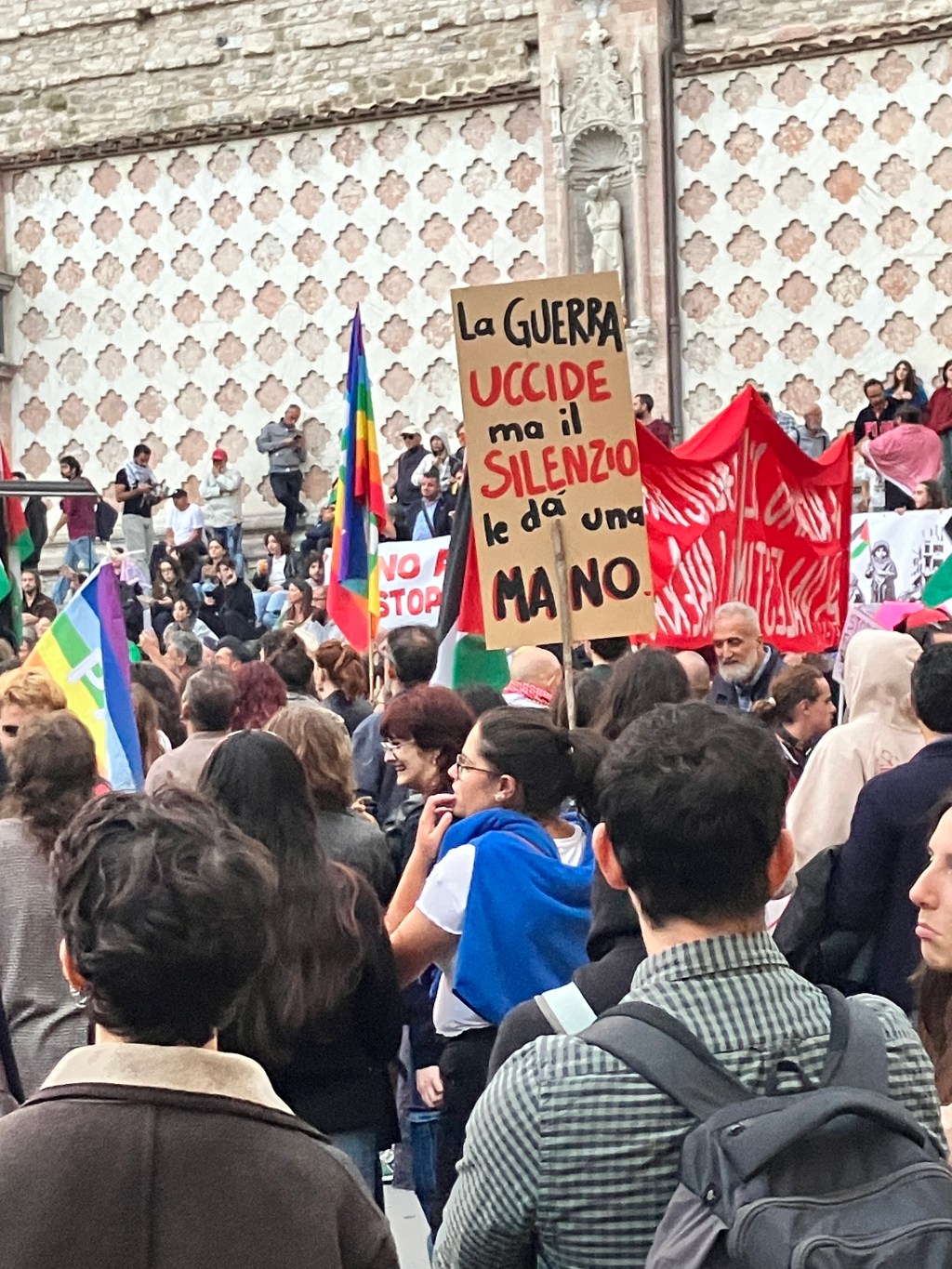
Before I dive into the hill towns of Umbria, I wanted to say a few words about strikes because an upcoming general strike has been reported internationally, which led to a few people asking me questions.
I mentioned in a previous post that I don’t do a lot of research about my destinations before a trip nowadays—most of it is done while I’m there. Because of this, I wasn’t aware that strikes were common in Italy and didn’t become aware until it had the potential to disrupt my train from Lucca. At that point, I started doing some research (and was aided in this by my friend Jill, who’s traveled frequently in Italy). From what I’ve learned, Italy has very strong labor unions and frequently strike for various reasons (the most common being typical, such as pay, conditions, etc.). However, this past month several of the strikes were to protest the war in Gaza and show support for the Palestinians. In fact, I’ve encountered several protests while I’ve been here—some small and some much larger.
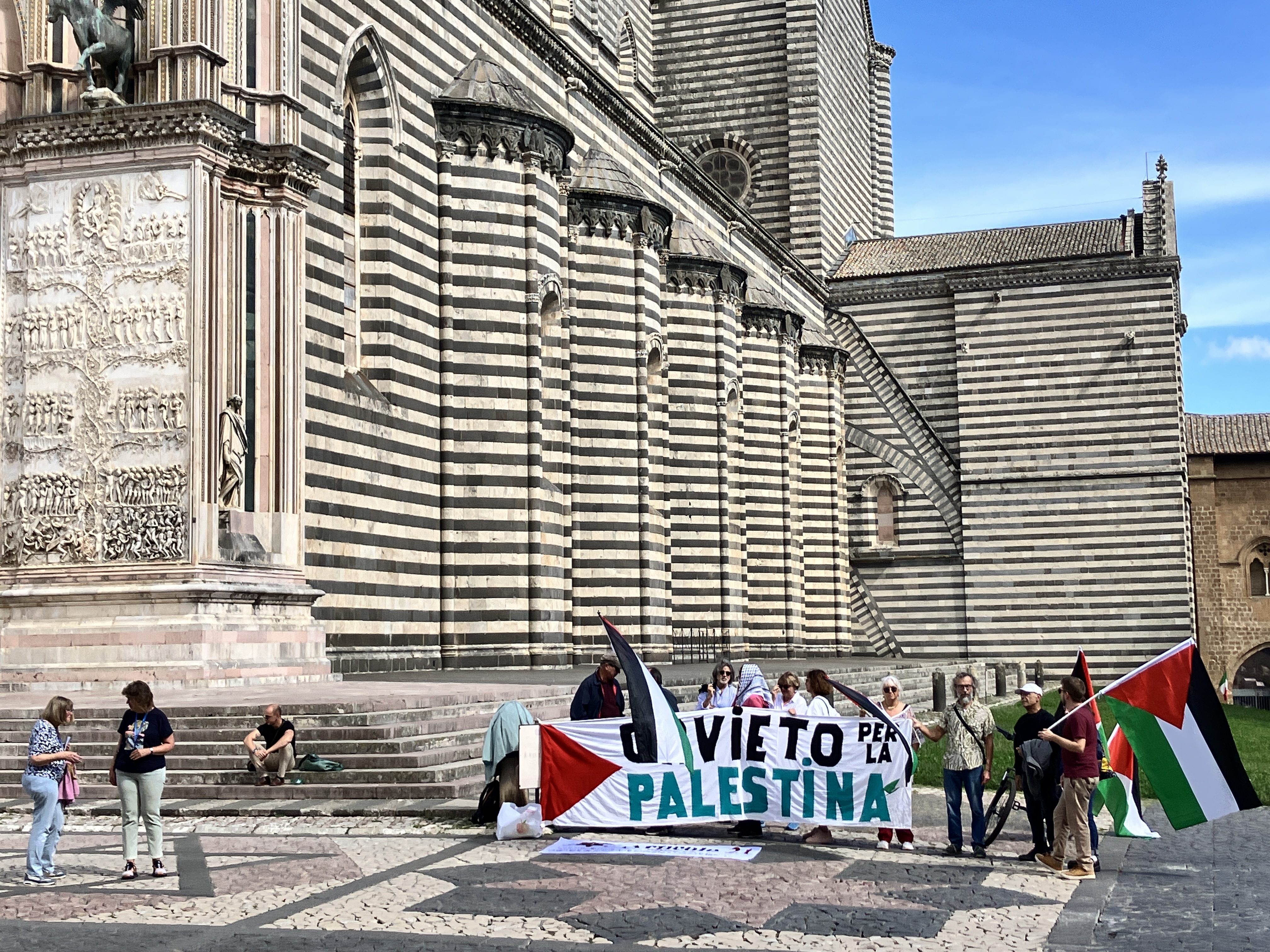

Thankfully, Italy is very accommodating in that it publishes the dates, sectors, and regions that will be striking so you can plan accordingly. So far, I’ve been lucky that the strikes haven’t impacted me (knock wood…I’m still here and don’t want to jinx myself). Others in my cycling group were less lucky and had to take a very expensive cab ride to their next destination…which is exactly what the locals do, incidentally. They simply work around it.
Now back to the scheduled program…
As I said in my last post, I chose Perugia because it’s a great home base from which to explore the hill towns of Umbria. I originally wanted to see at least four while I was here, but I found I needed a bit more rest in between, so here are the ones I selected:
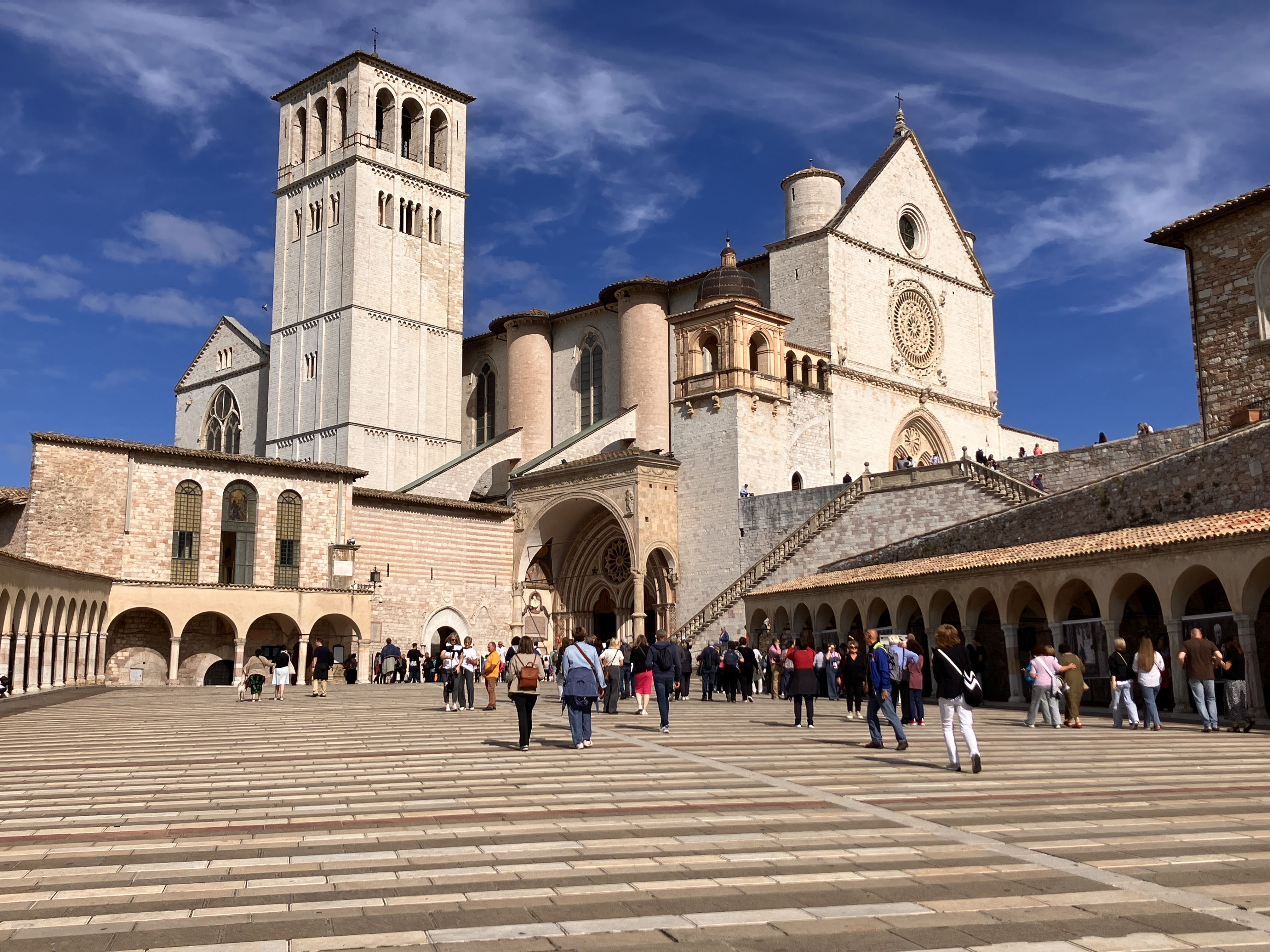
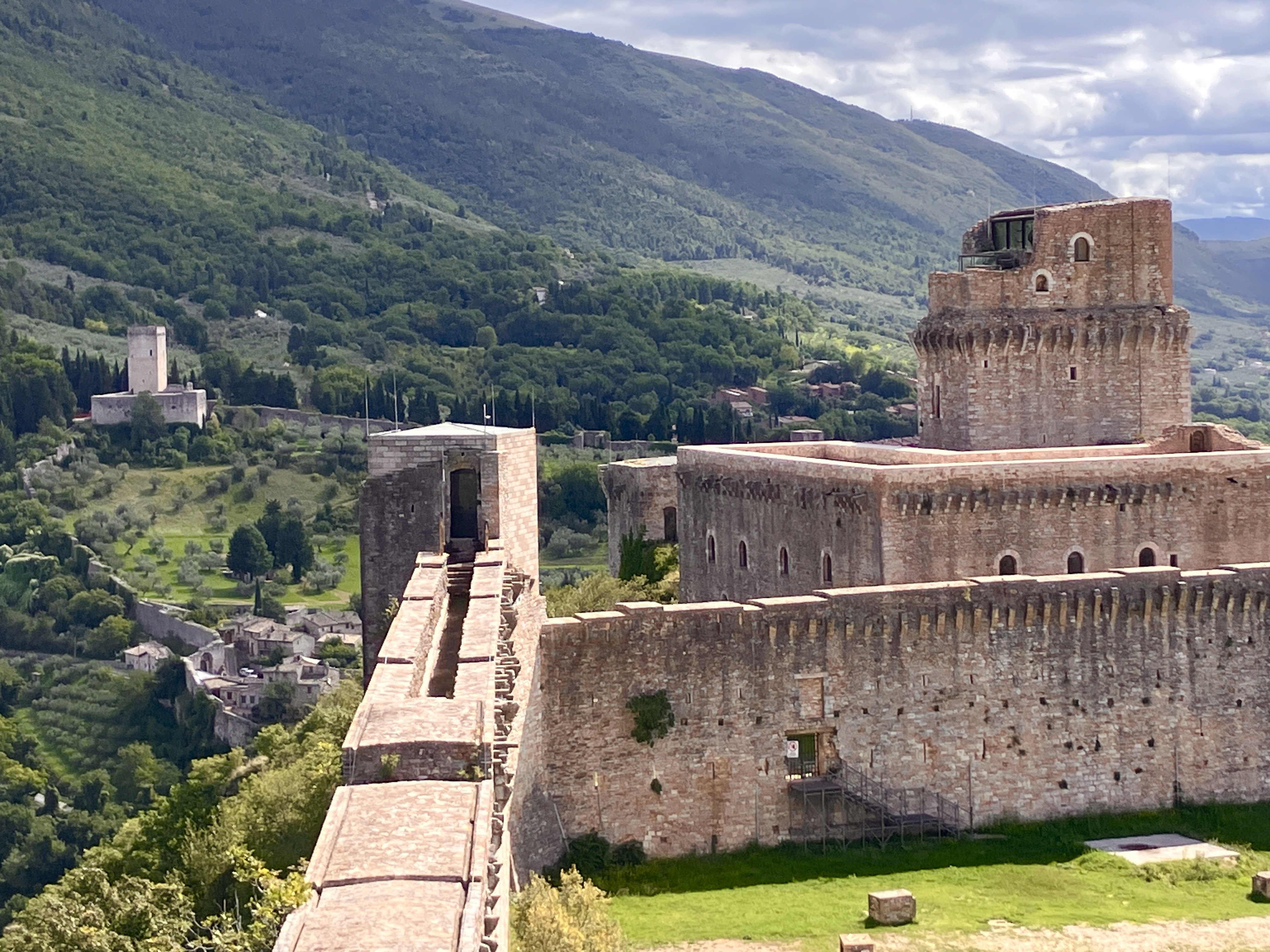
Assisi. This is one of the easiest day trips to make outside of Perugia as it’s about 25 minutes away by train. Assisi is another fortified medieval city on a hilltop (Umbria is full of these), a UNESCO World Heritage site, and best known as the birthplace of St Francis, whose tomb is located inside the Basilica of San Francesco d’Assisi. The Basilica was built in the 13th century and is considered the most important pilgrimage site in the country. Upon arriving in Assisi, I made the Basilica my first stop (it’s hard not to—it’s so massive it cannot be ignored), then had a fun afternoon exploring Assisi’s other historical sites—my favorite being Rocca Maggiore, which is the 12th century fortress that looms above the town. On this day, there was a Banksy exhibition inside that made it even more interesting.



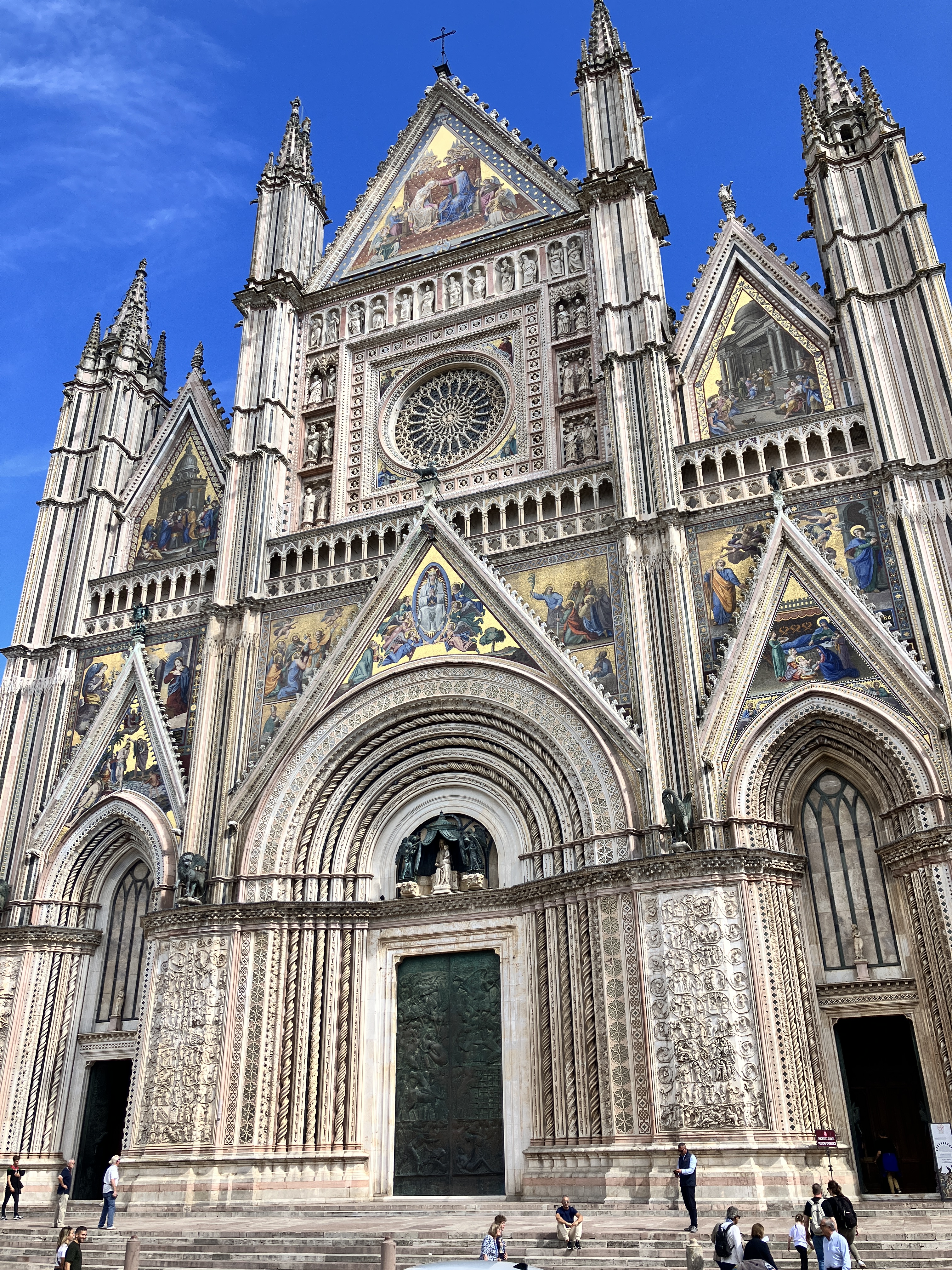
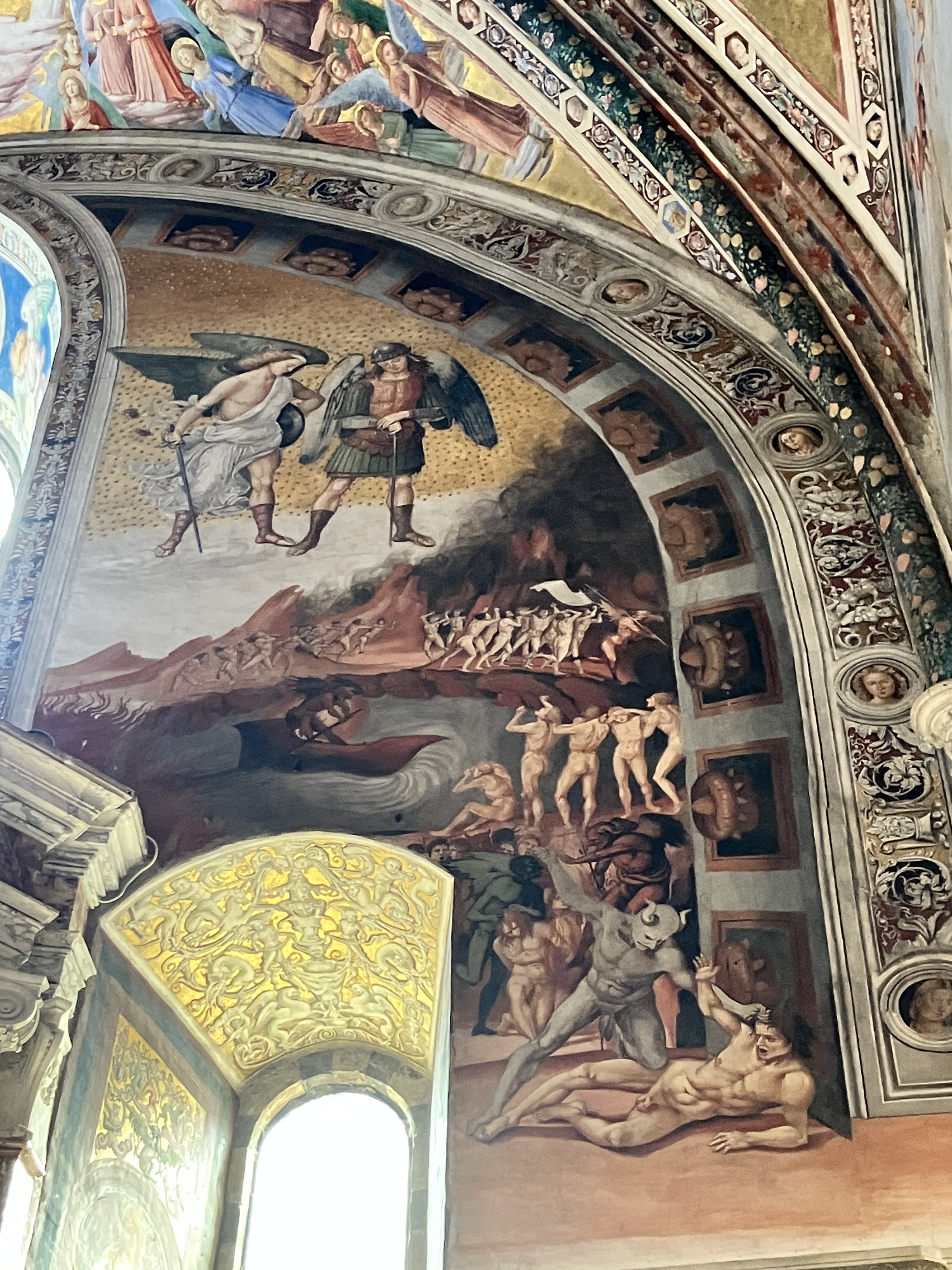
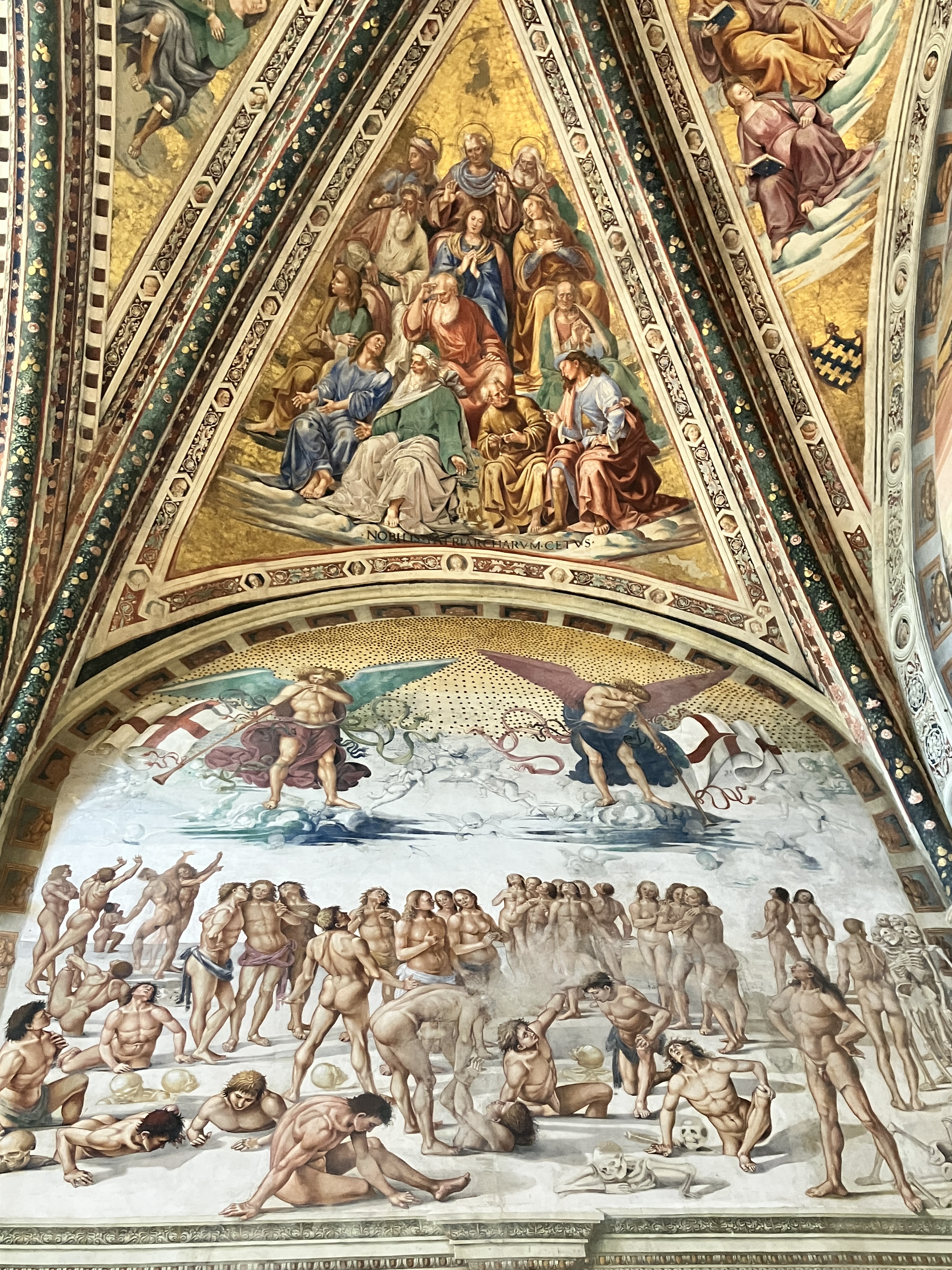
Orvieto. Yet another charming town known for—yawn—another blasted cathedral. Yes, I get cathedral fatigue as much as anyone—I mean, after a while, they all just blend in with each other. However, the Duomo di Orvieto was a refreshing exception. This 14th century cathedral stands out not just because of its extraordinarily intricate facade and its mixed architectural elements, but because of what’s inside. Inside the Duomo are two chapels that flank the nave. In one resides the Corporal of Bolsena, which is the relic the Duomo was built to house. I suppose that would be interesting enough to some, but of particular interest to me was the other chapel—the Chapel of Saint Brizio—upon whose walls are painted elaborate frescoes that depict the Apocalypse in frightening (though beautifully rendered) detail. This Duomo is art, ancient history, architecture, and Renaissance-era graphic horror novel in one breathtaking package.


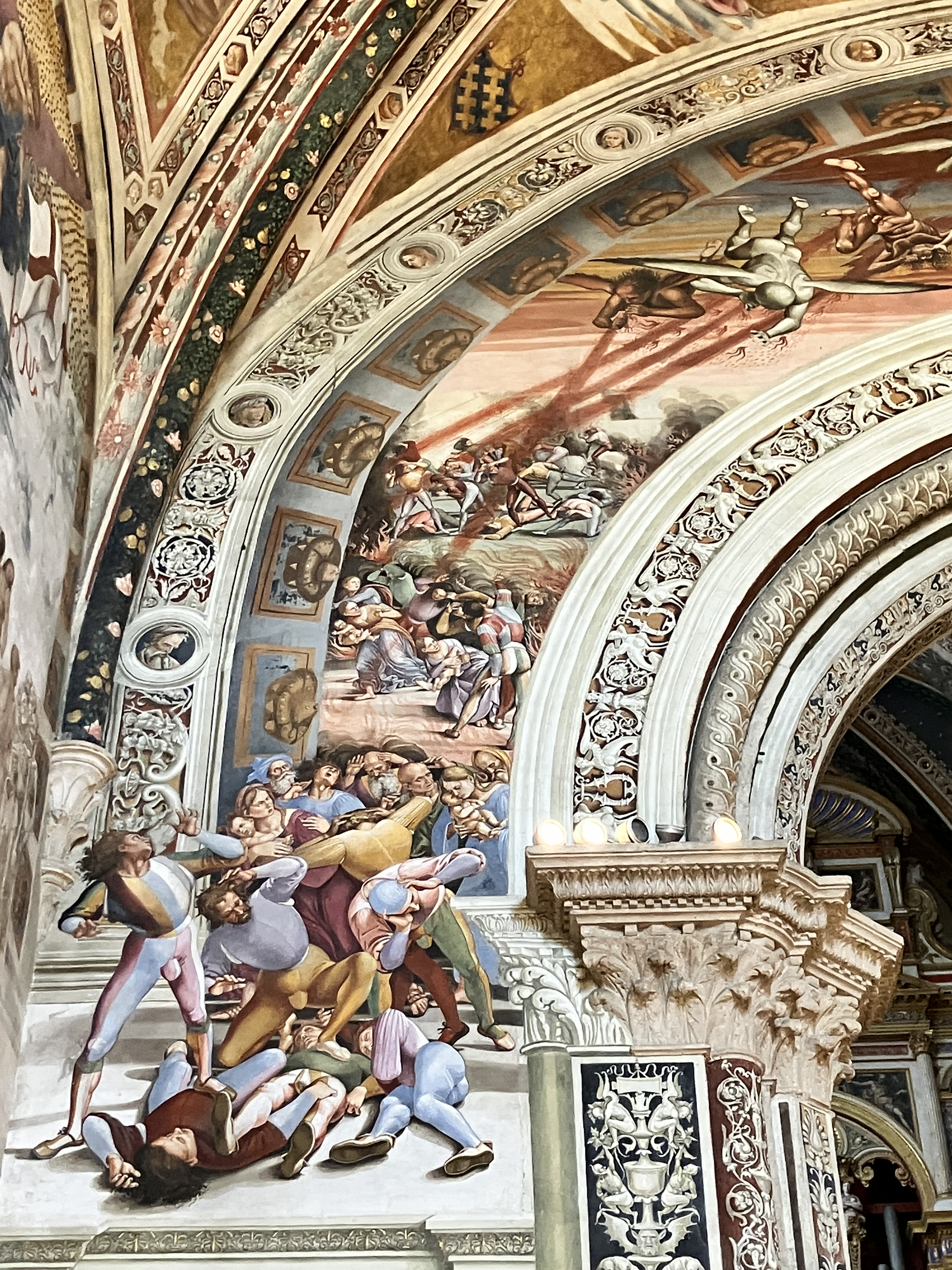
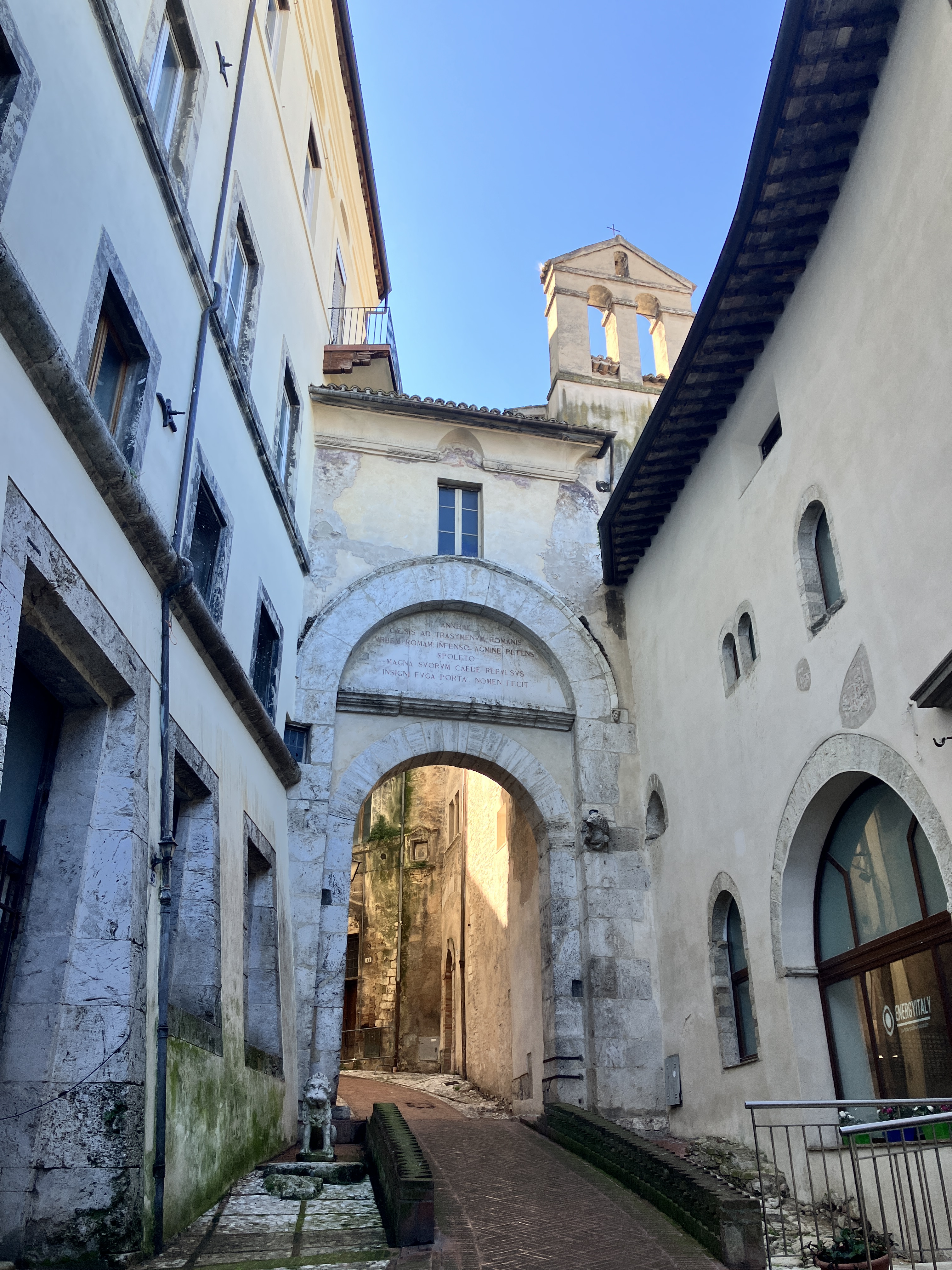
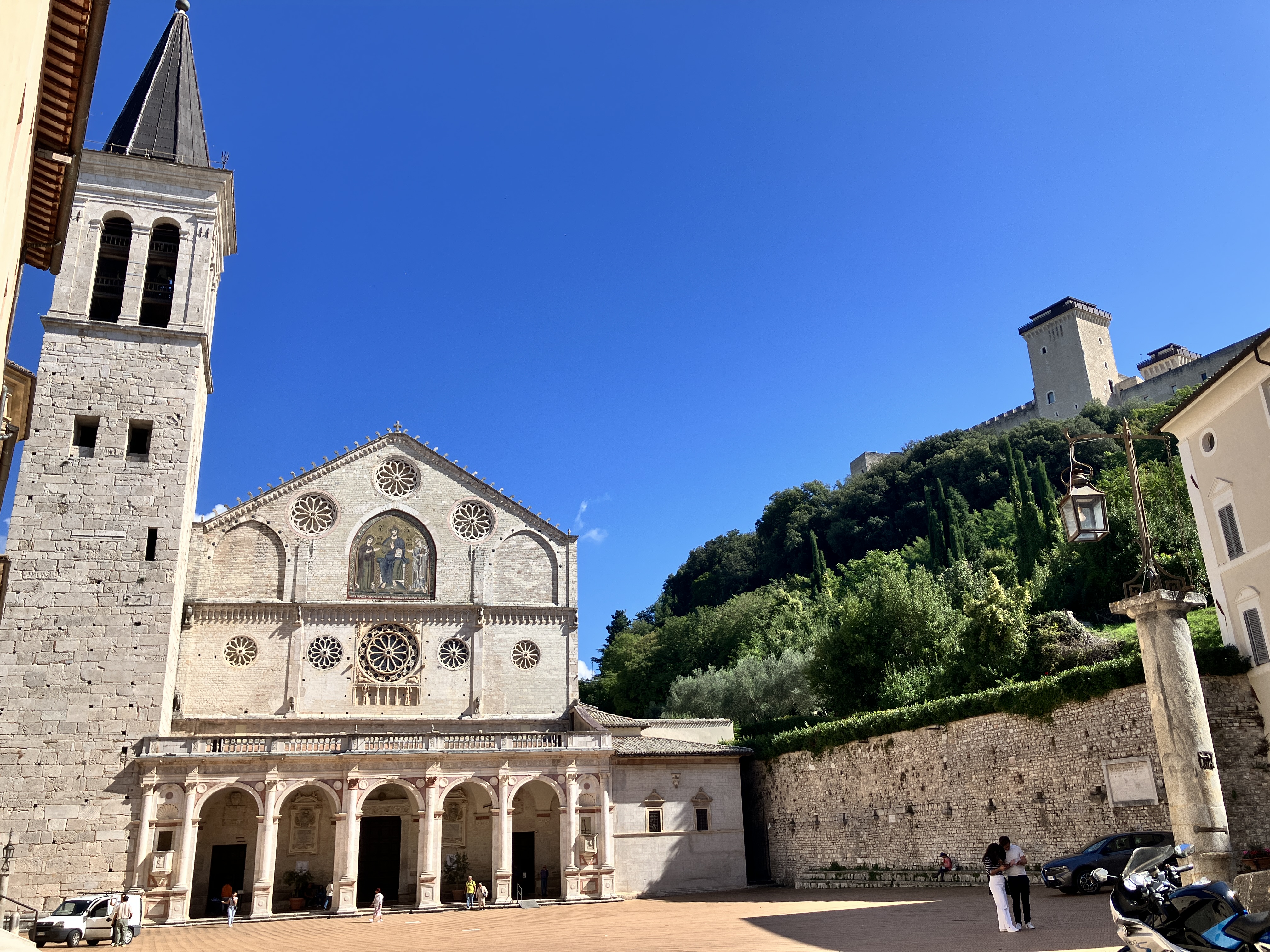
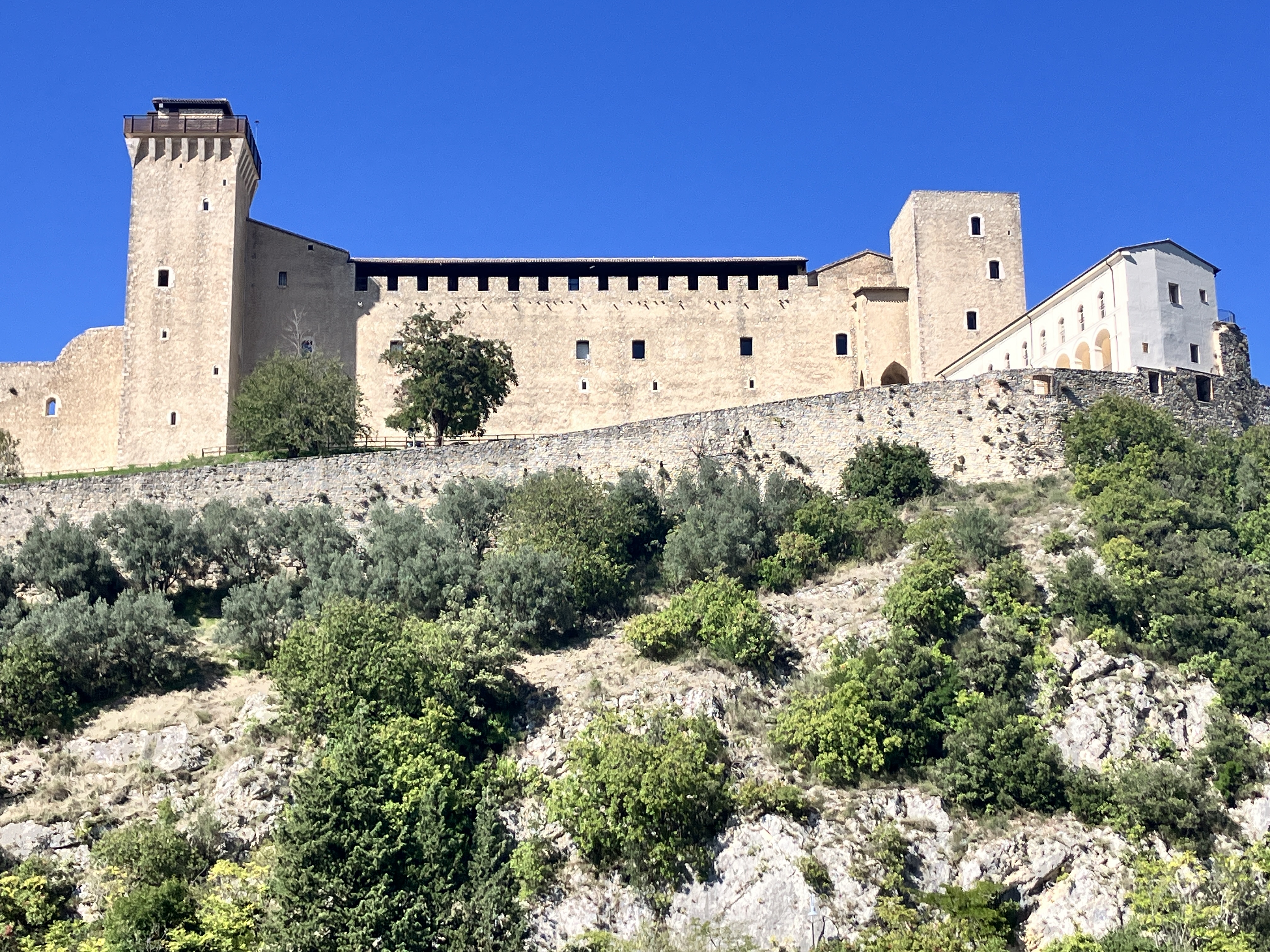
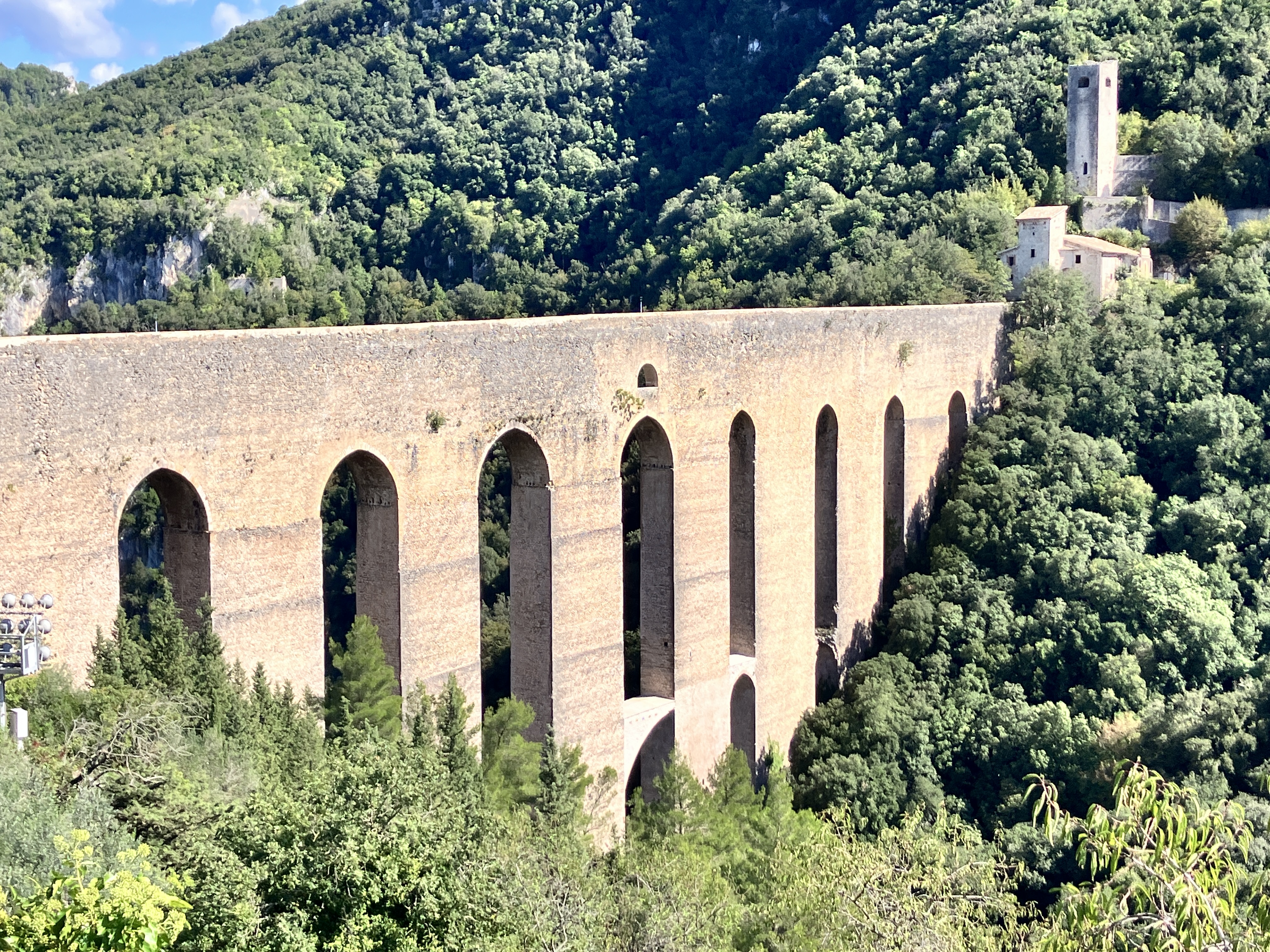
Spoleto. I selected Spoleto because it has many historical sites that date back to Roman times, including a Basilica and a Roman amphitheater. Unfortunately, I discovered these (and several other) sites were closed for restoration; in fact, there was scaffolding and netting all over the historic center due to a mix of preservation projects, restoration, and the installation of a power line. Doh! This made it hard to truly appreciate Spoleto in the way I’d hoped. I did get to appreciate a few important sites, however: Rocca Albornoziana, a 14th-century fortress that looms over the town and the Ponte delle Torri, a beautiful 13th-century aqueduct. The latter has been closed in recent years due to restoration after an earthquake, so I was pleased to see that it was now open for pedestrians to walk across. I spent a lovely afternoon walking the path around the fortress, across the aqueduct, and exploring Spoleto’s Duomo, the Cathedral of Santa Maria Assunta. I also appreciated how Spoleto, like Perugia, provides escalators in a few keys spots to make it easier for people to get up and down its steep walkways (alas, if only I’d found them when I needed them!).


That concludes my time in Umbria. I can honestly say that I will miss all the medieval charm, but Naples and its culinary delights awaits…




 tales of wander
Leave a comment