Sometimes I fancy that air travel is less science than science fiction. It feels like a small miracle every time I step on a plane, then jump into the future on the other side of the world. In my science fiction scenario, I imagine my molecules breaking down when I leave one place, then clumsily reassembling themselves on the other side. This time, the reassembly process was particularly faulty because I experienced “airplane ear,” complete with dizziness and odd stereo popping in my ear, as though something inside my head was tuning a radio channel. I’ve also had the most intense bout of jet lag in recent memory. There’s a toll to be paid for crossing time and space, and the travel gods will take it.
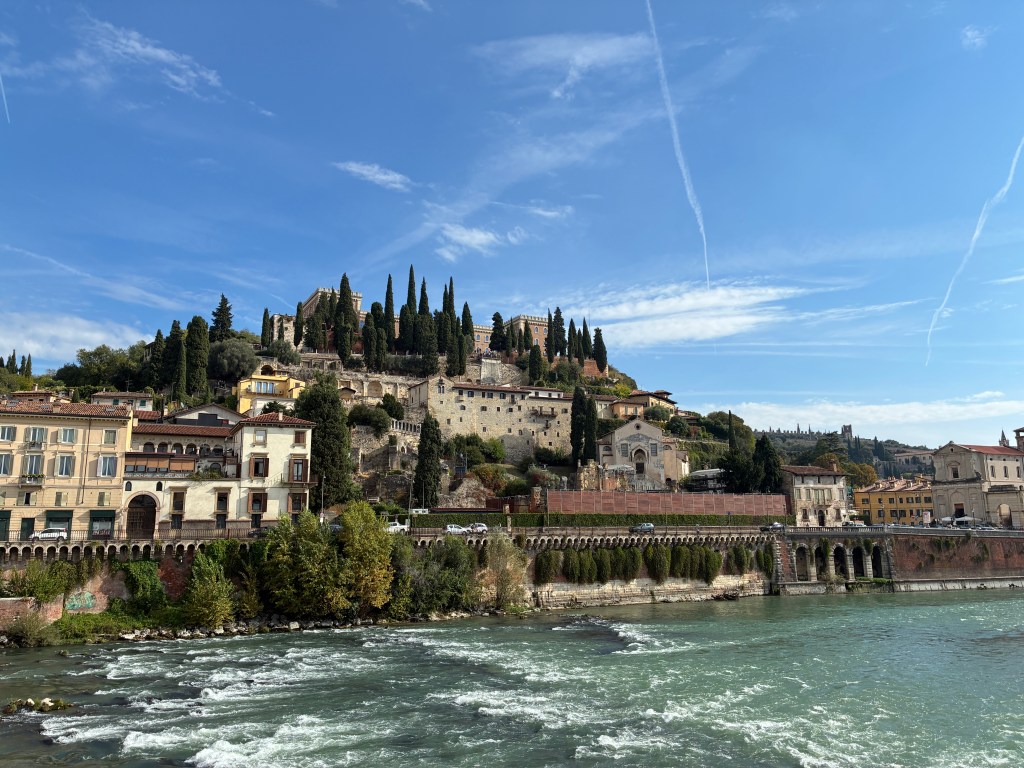
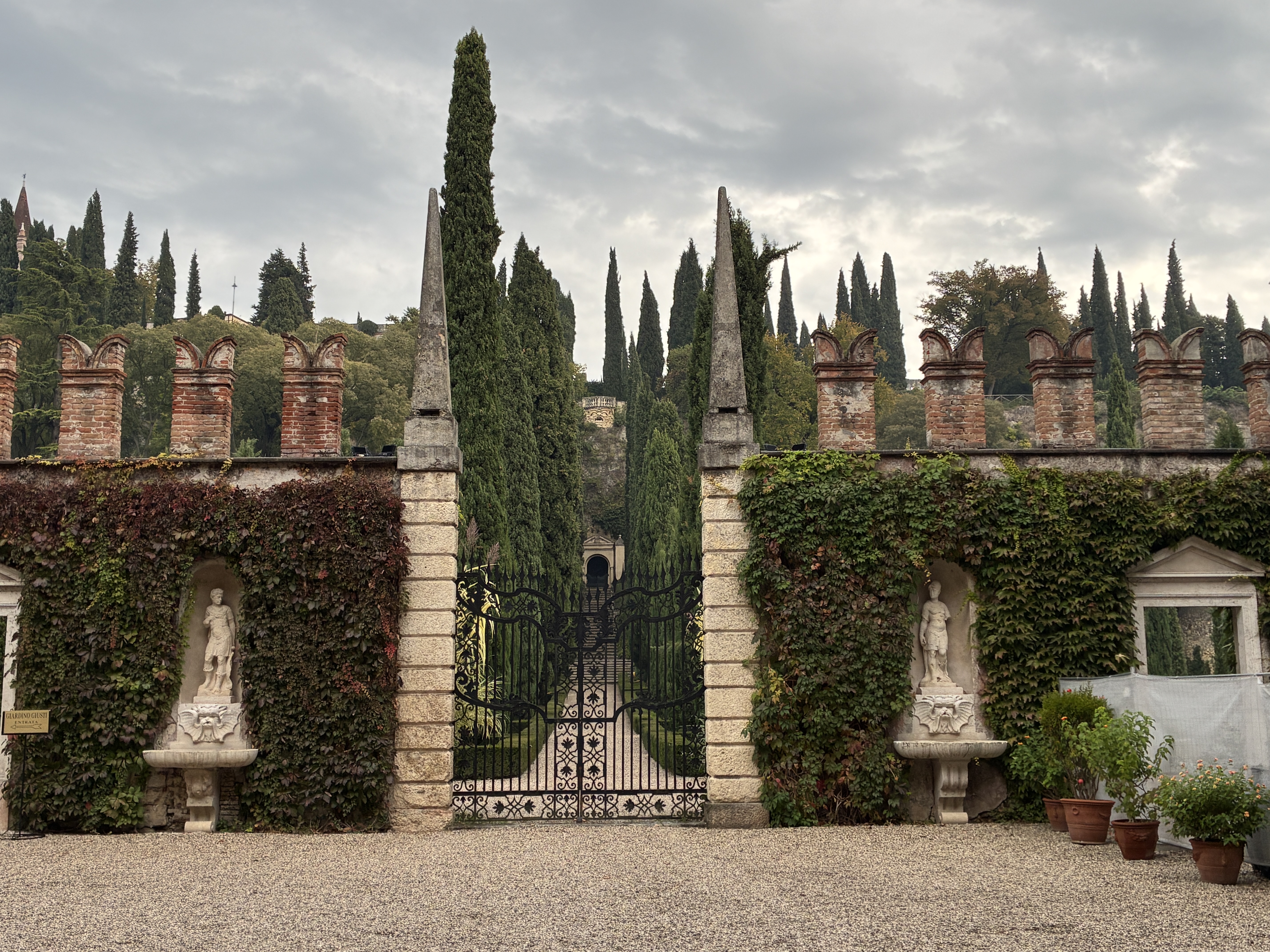
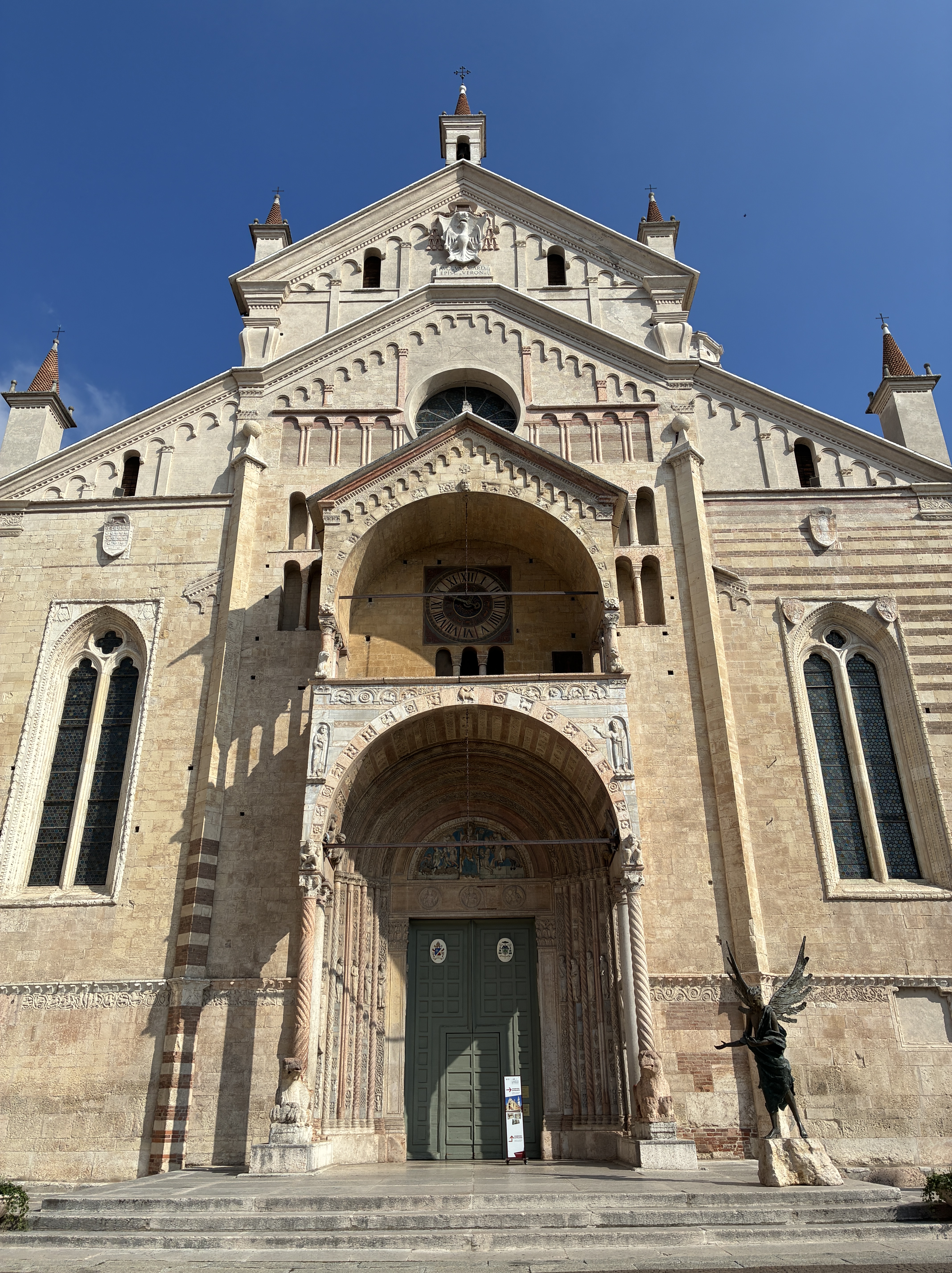
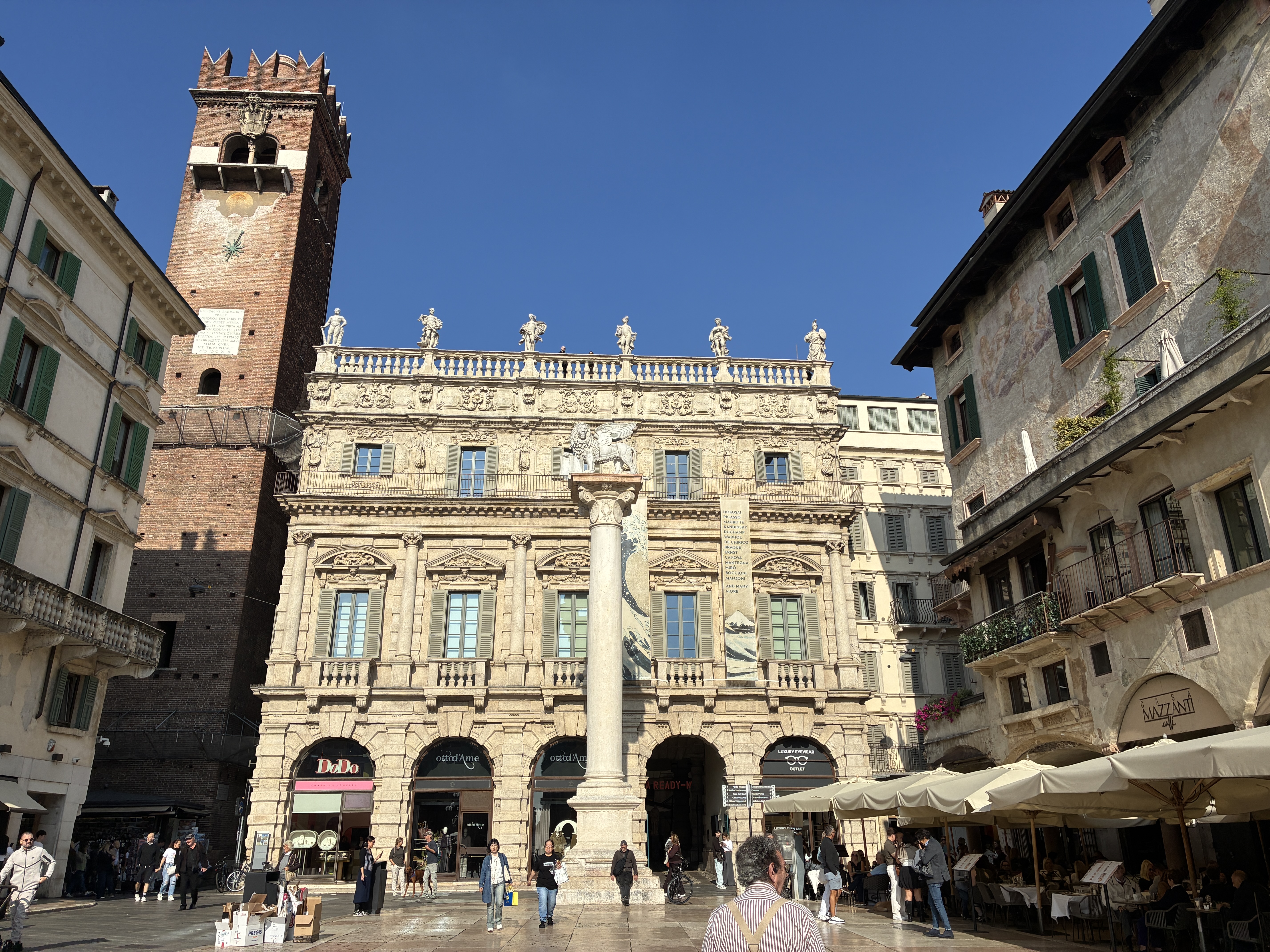
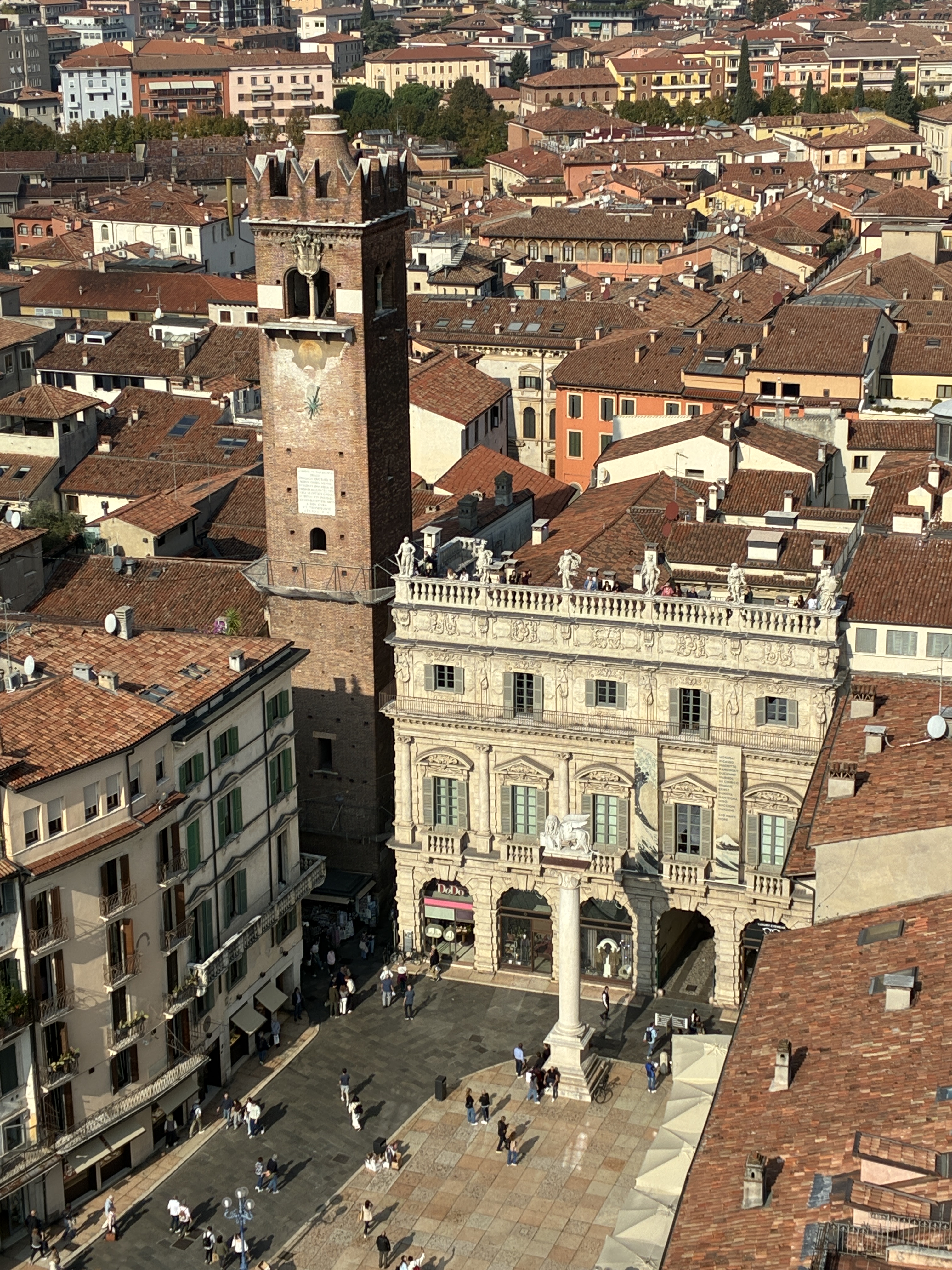
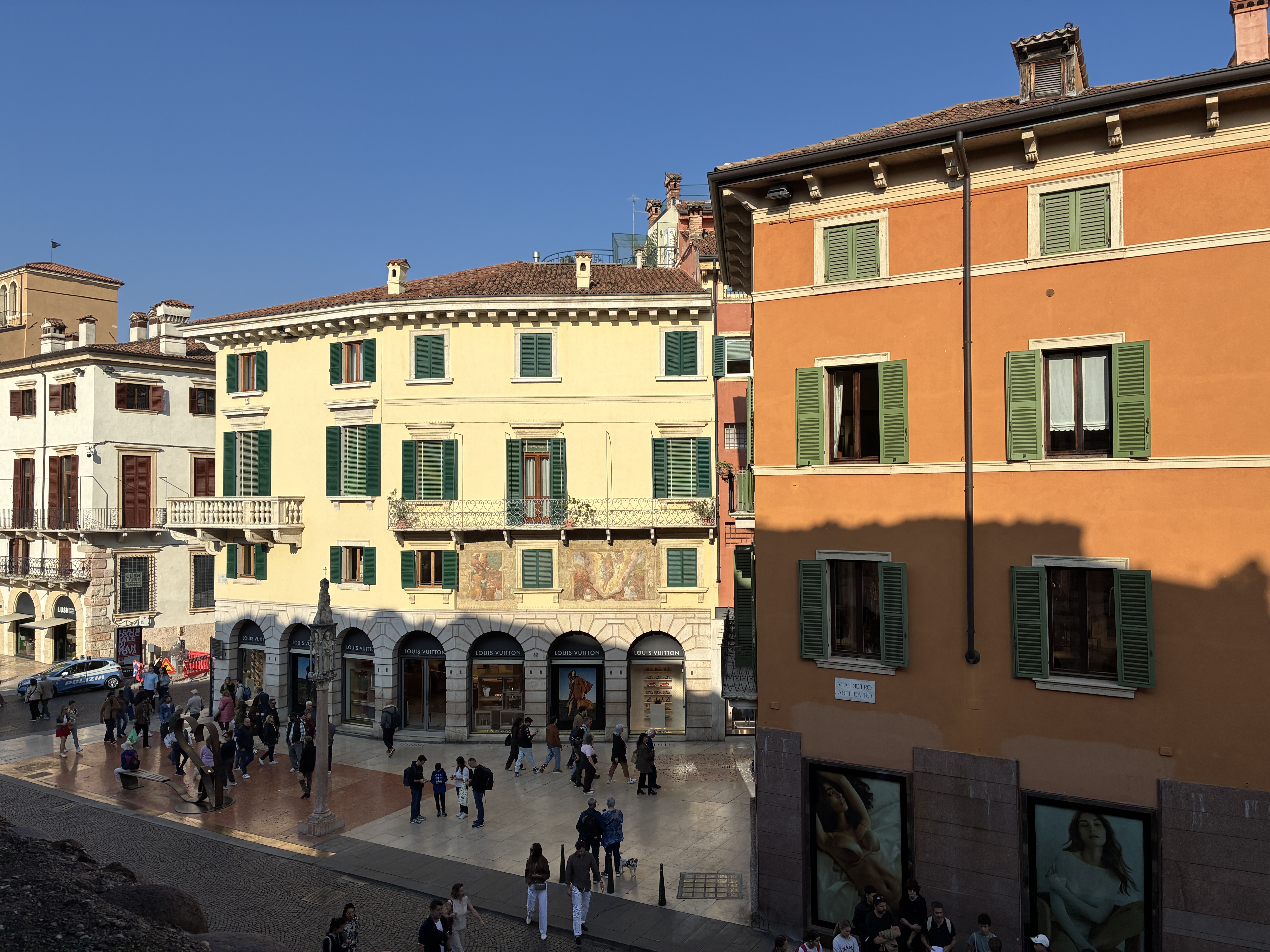
Nevertheless, I’ve done my best to power through because I didn’t want to miss my opportunity to appreciate Verona, which is a charming UNESCO world heritage city for being an “exceptional example of a fortified urban landscape that evolved over two millennia.” Verona’s old town is nestled into the curve of the river Adige, with many bridges that connect the old city and the new. While here, I enjoyed roaming the old town, visiting numerous notable cathedrals with beautiful frescoes painted within them, exploring a Roman theater and climbing the steps to Castel San Pietro above it, and much more.
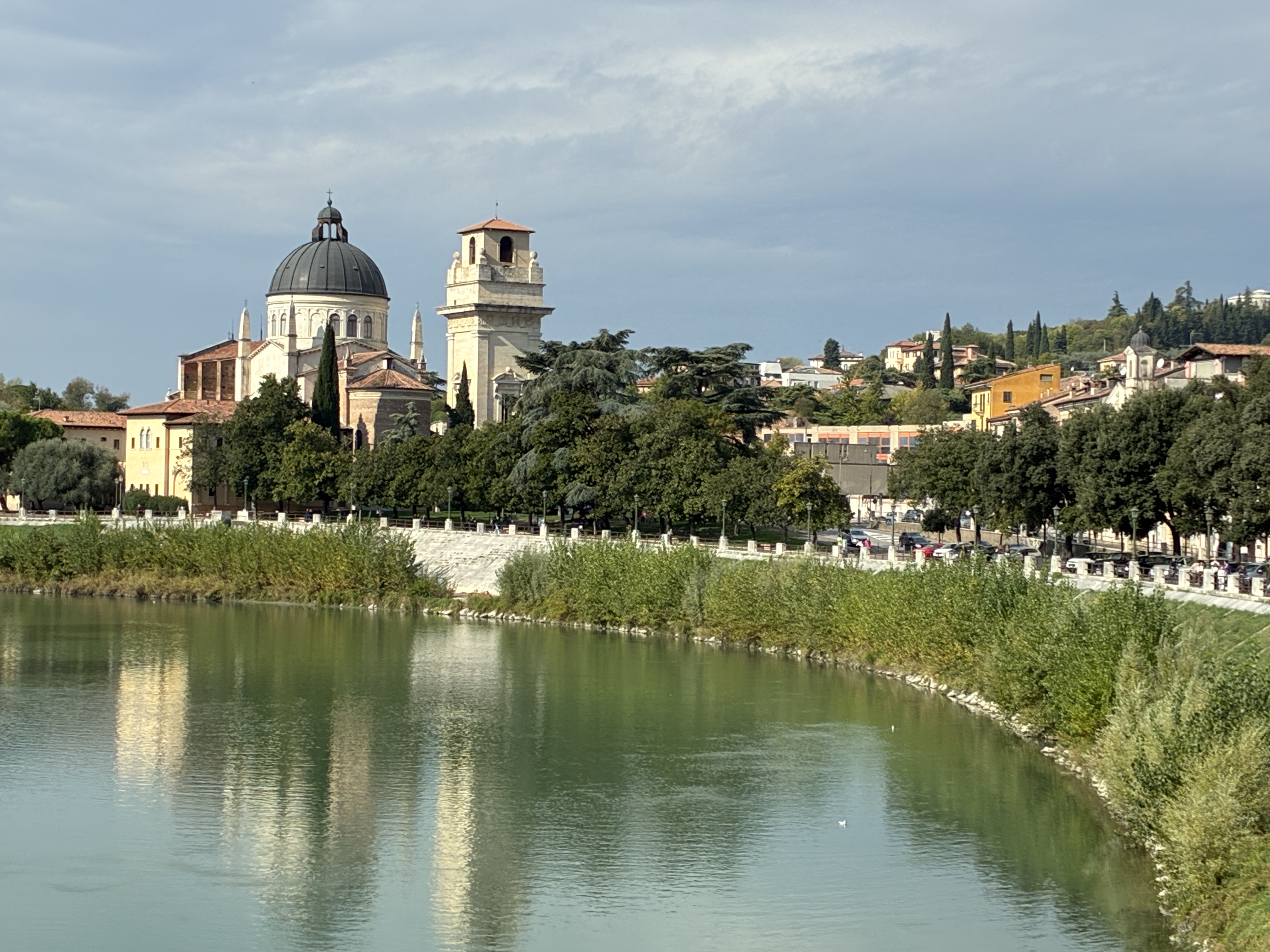
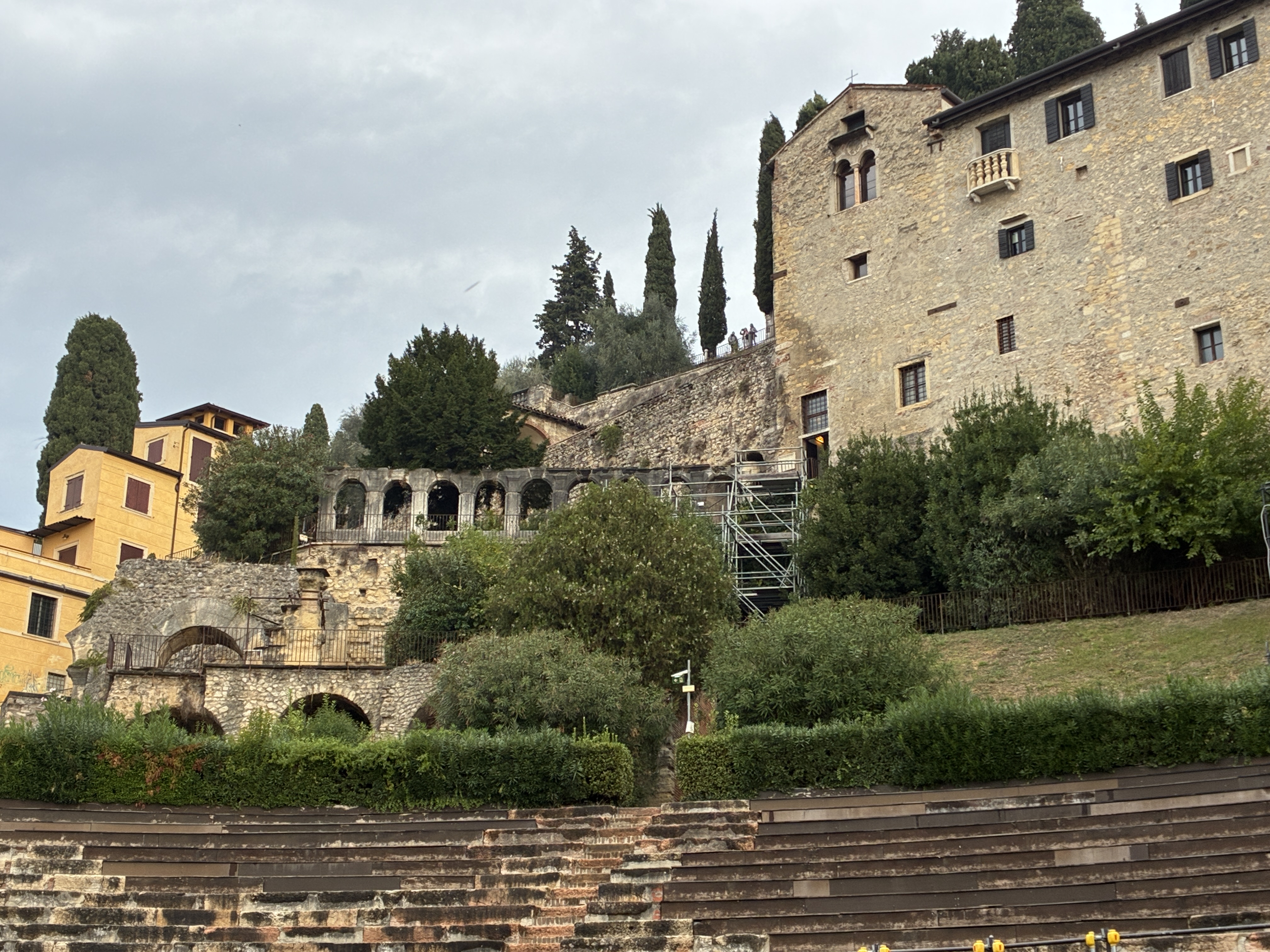
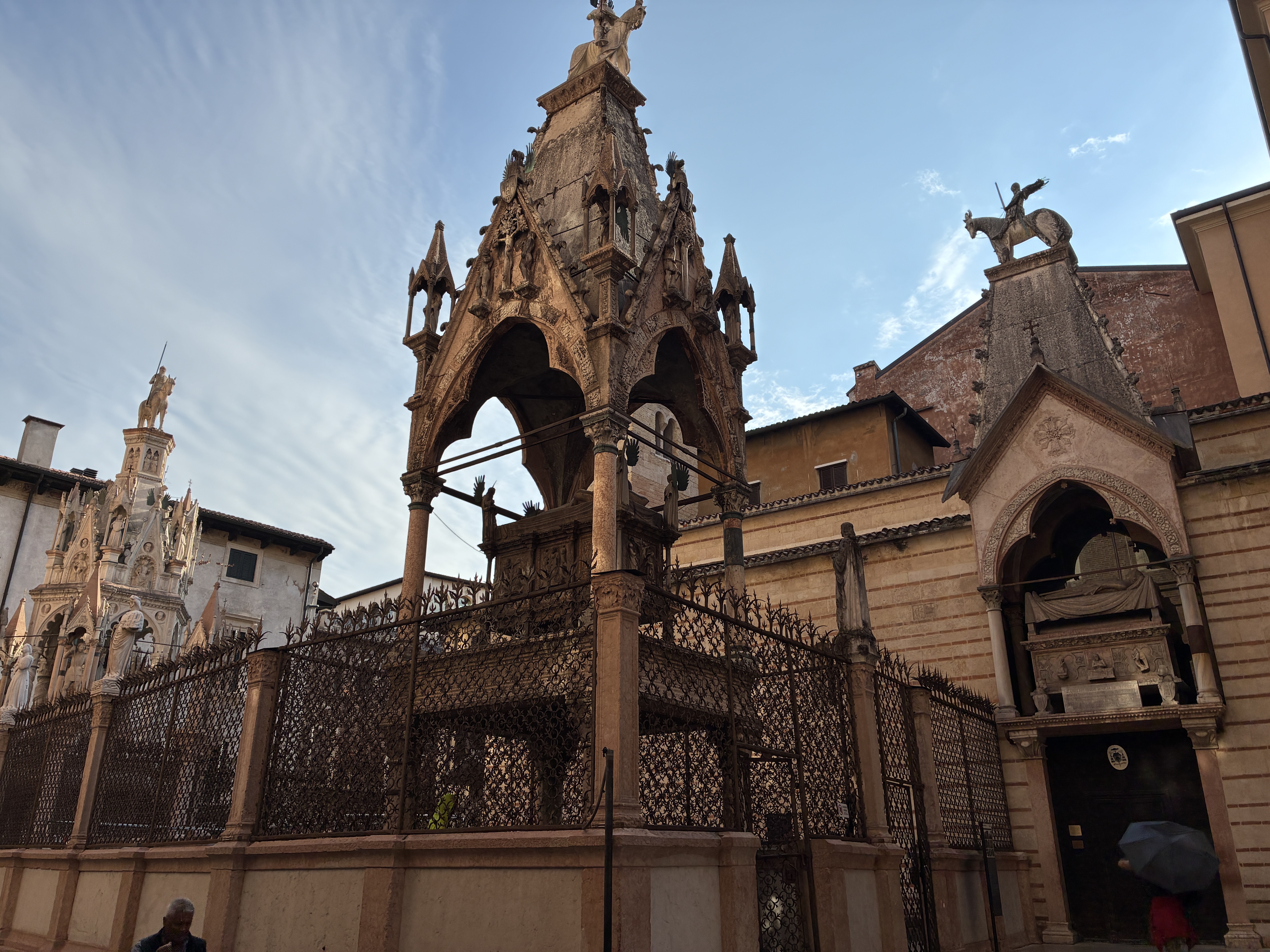
Here are a couple of notable highlights in Verona (and one lowlight):
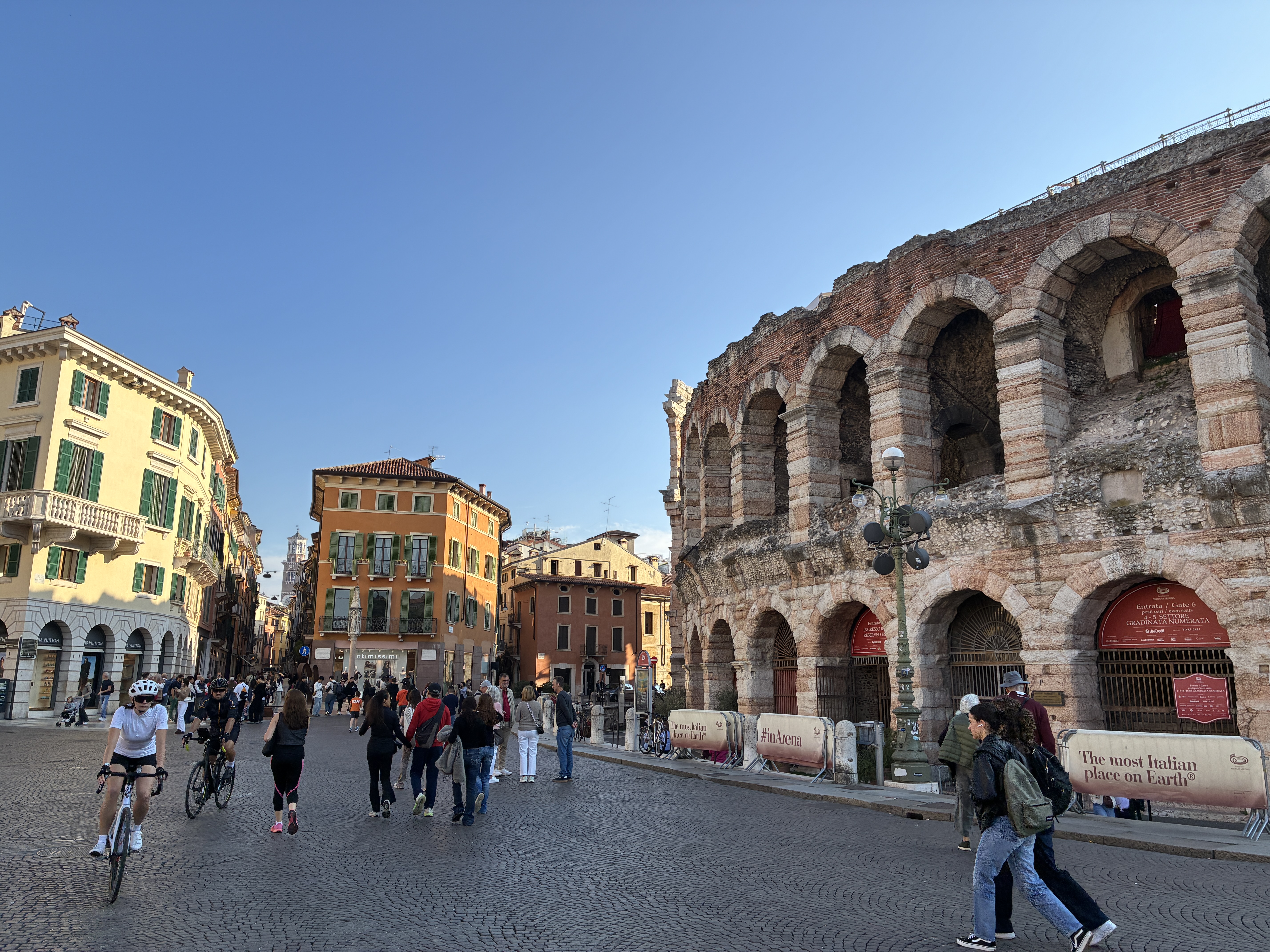
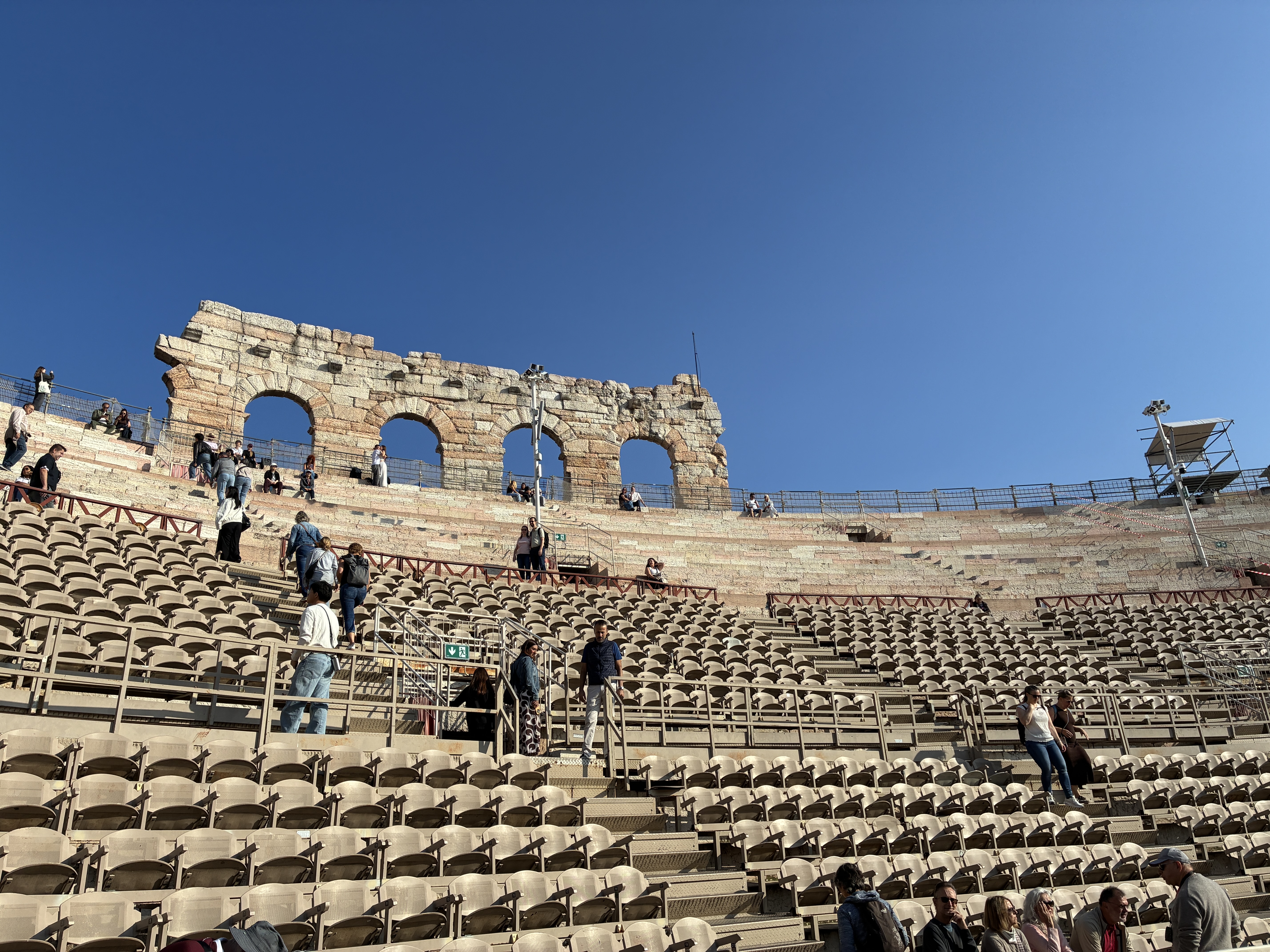
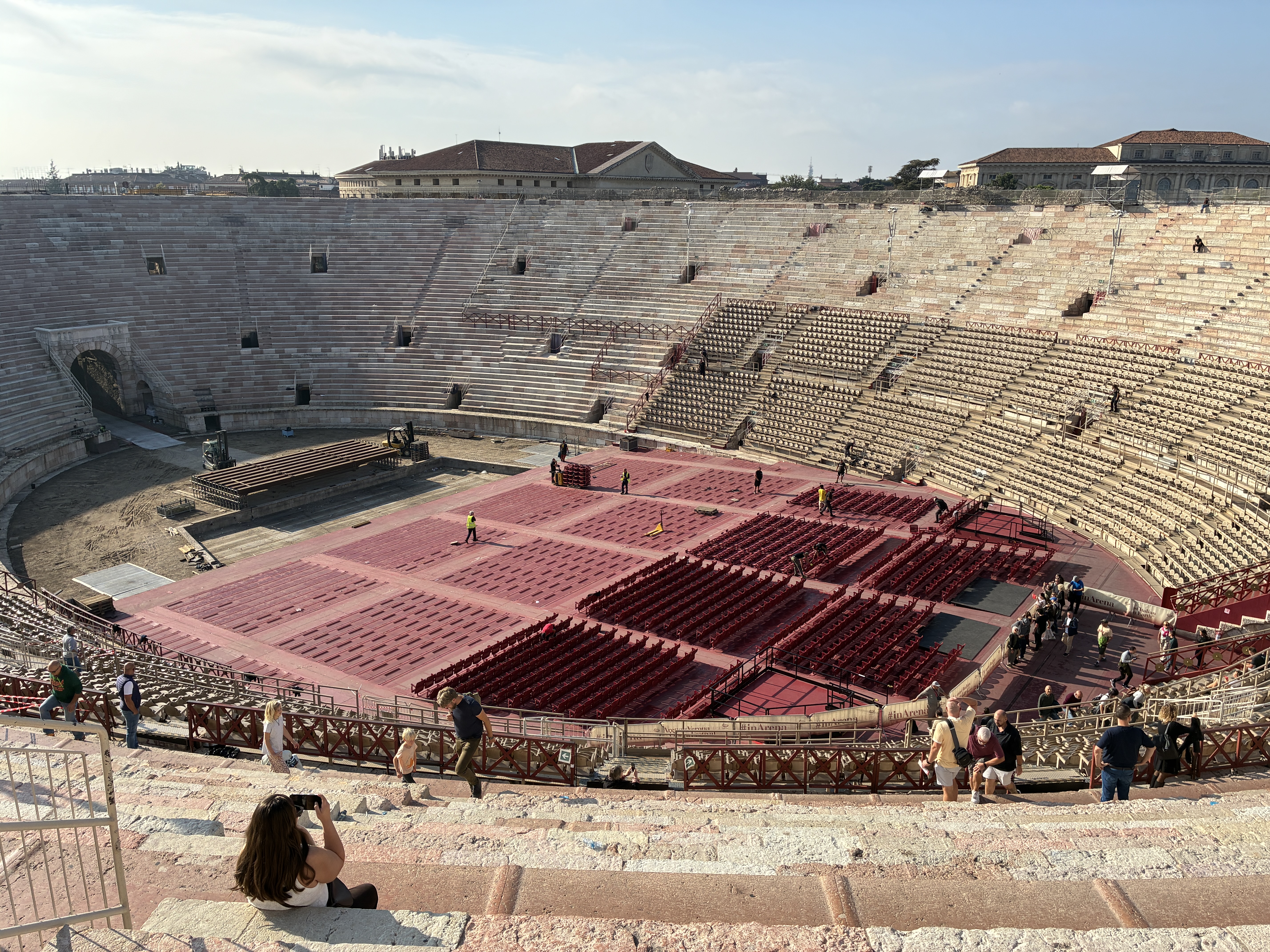
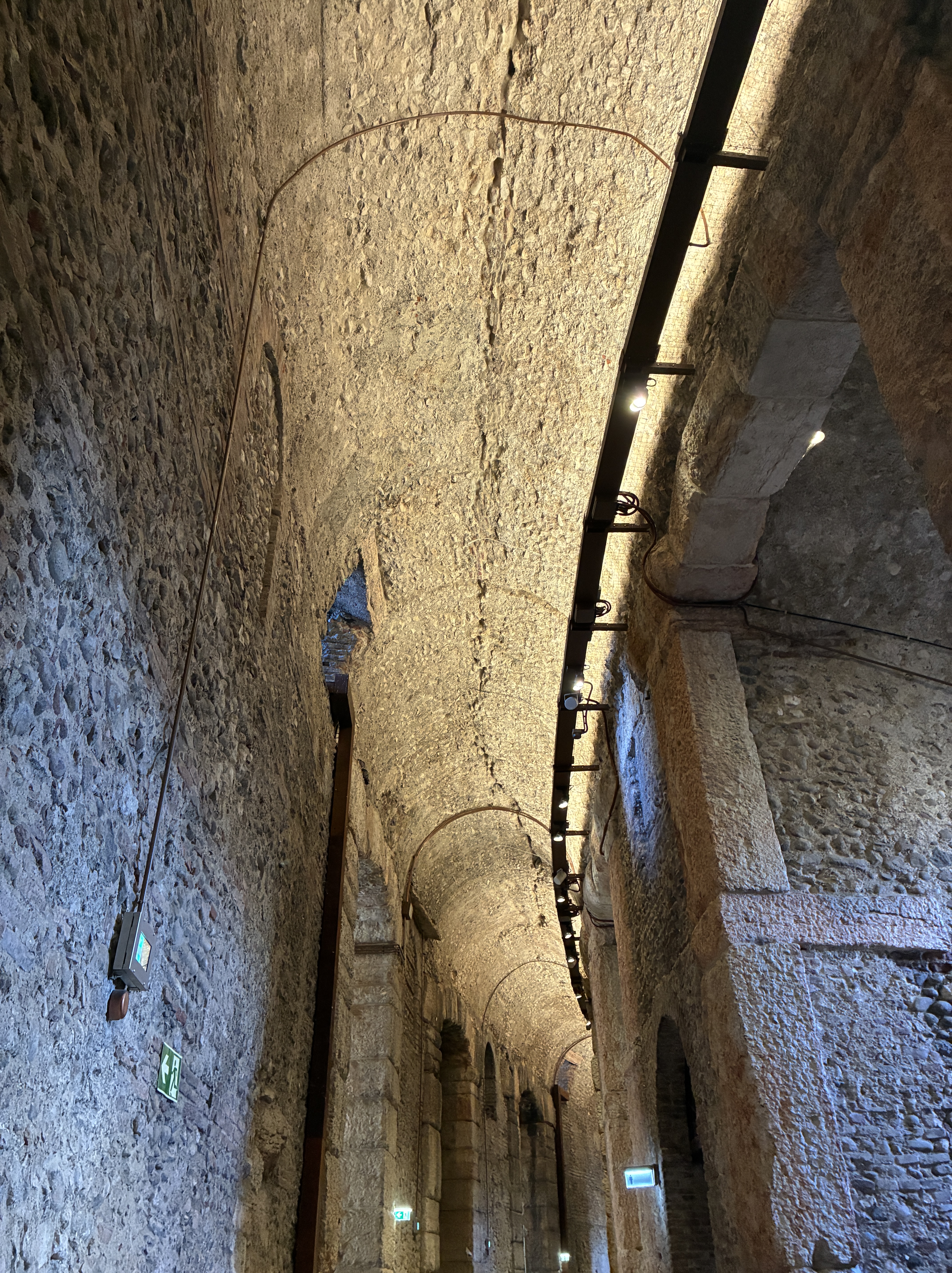
The Arena di Verona
Verona’s most important attraction is one of the world’s oldest and best preserved Roman amphitheaters. Construction on the Arena began around the 1st century AD and completed about 30AD, making it older than Rome’s Colosseum. I was still dizzy the day I visited, so had to be particularly careful climbing the slippery stones to get to the top row of the Arena, where I could look down at bustling Piazza Bra below. The Arena is still used today as a venue for concerts and opera, but has been used for many forms of public spectacles in its past, including the showing of exotic animals, gladiatorial games, jousts, and “spectacular public executions.”
Castelvecchio (“Old castle”)
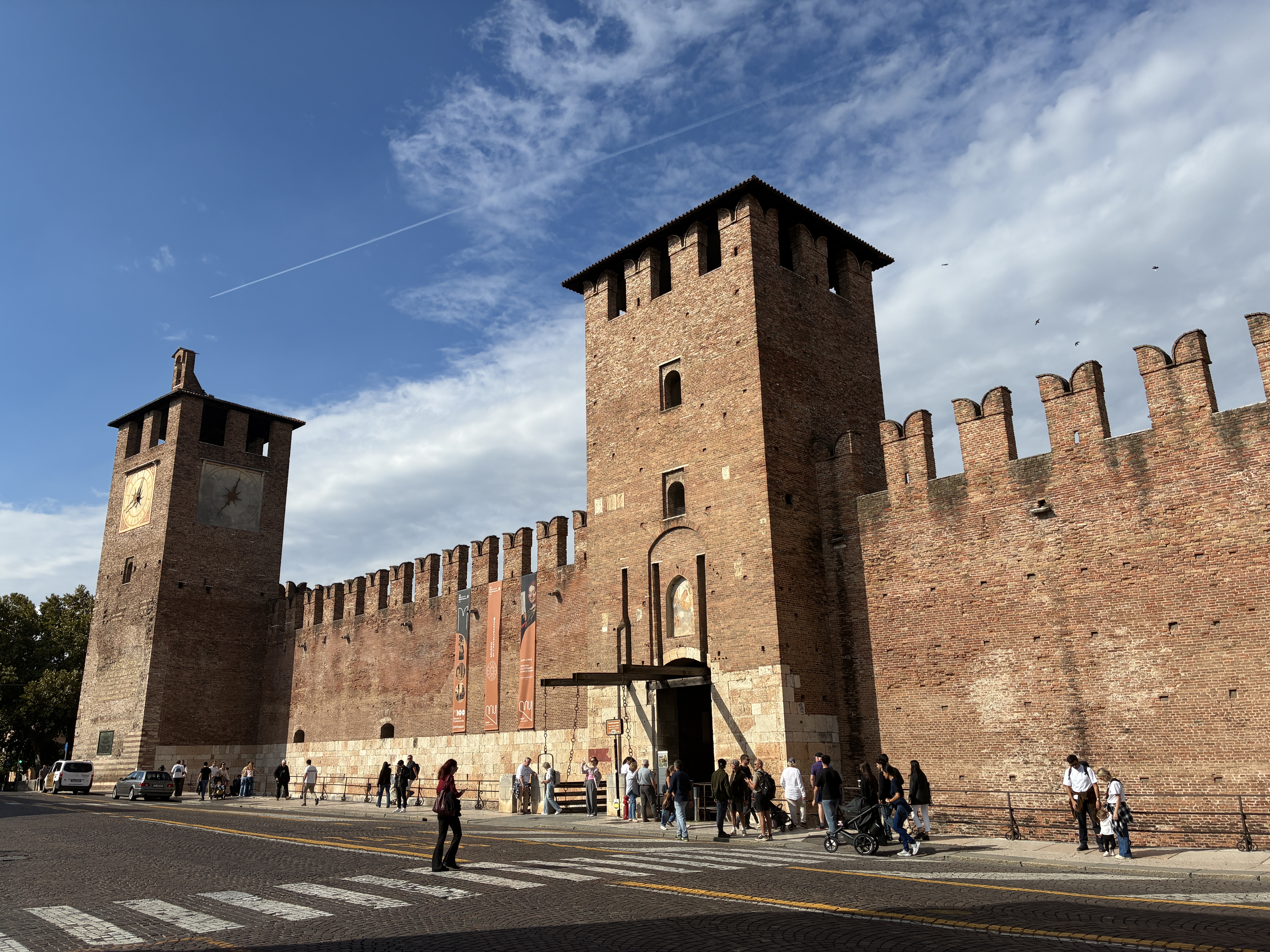
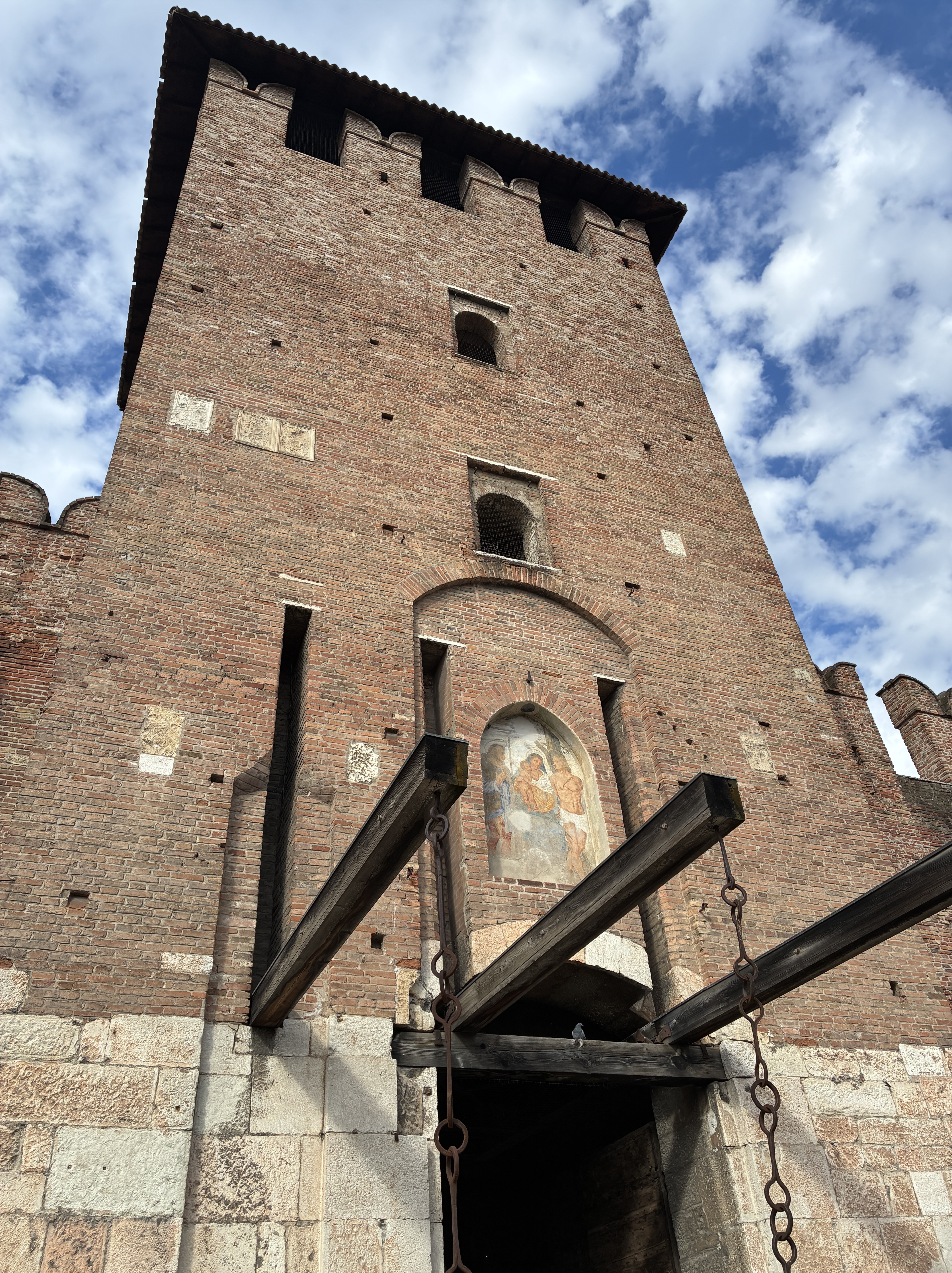
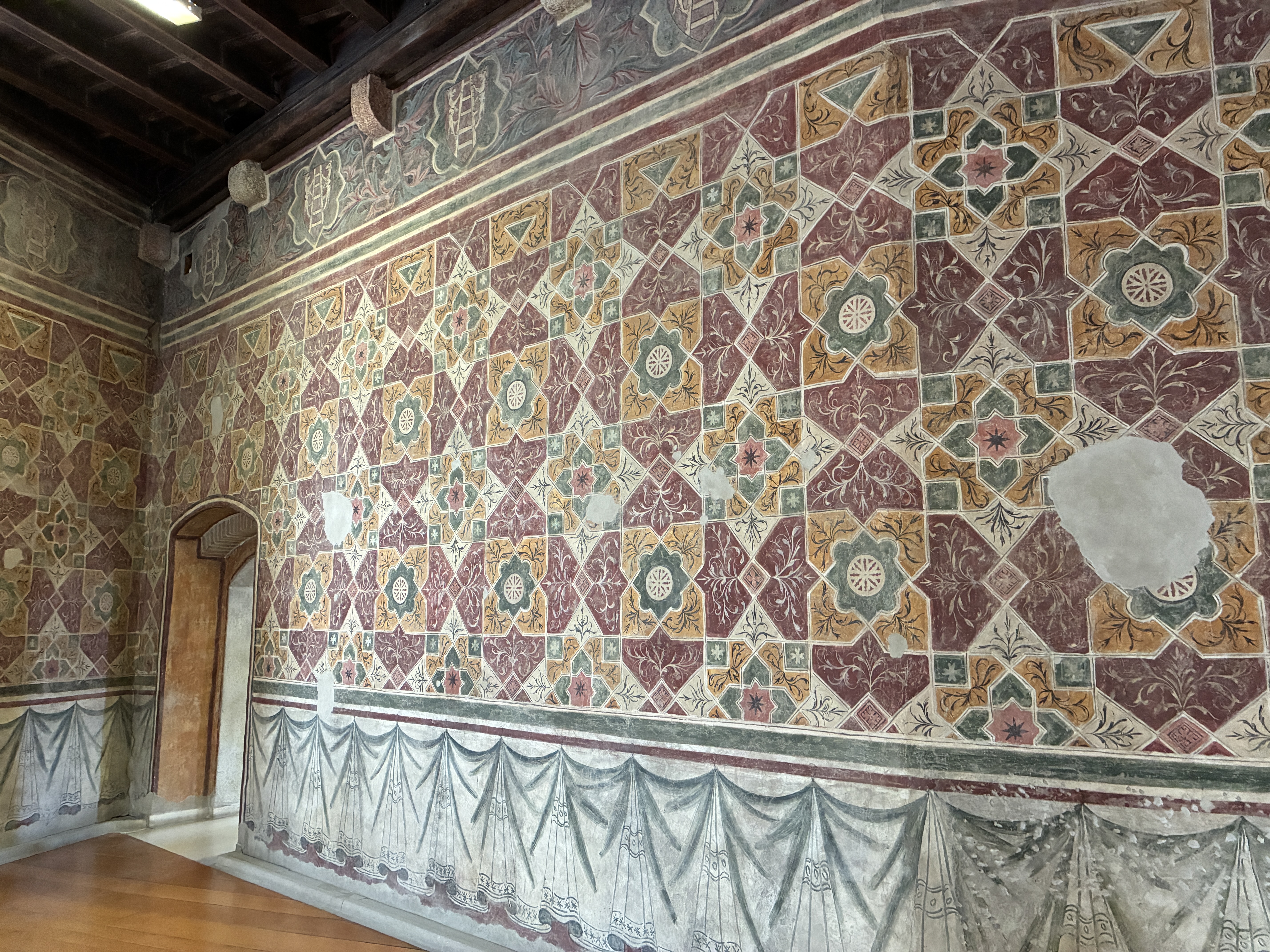
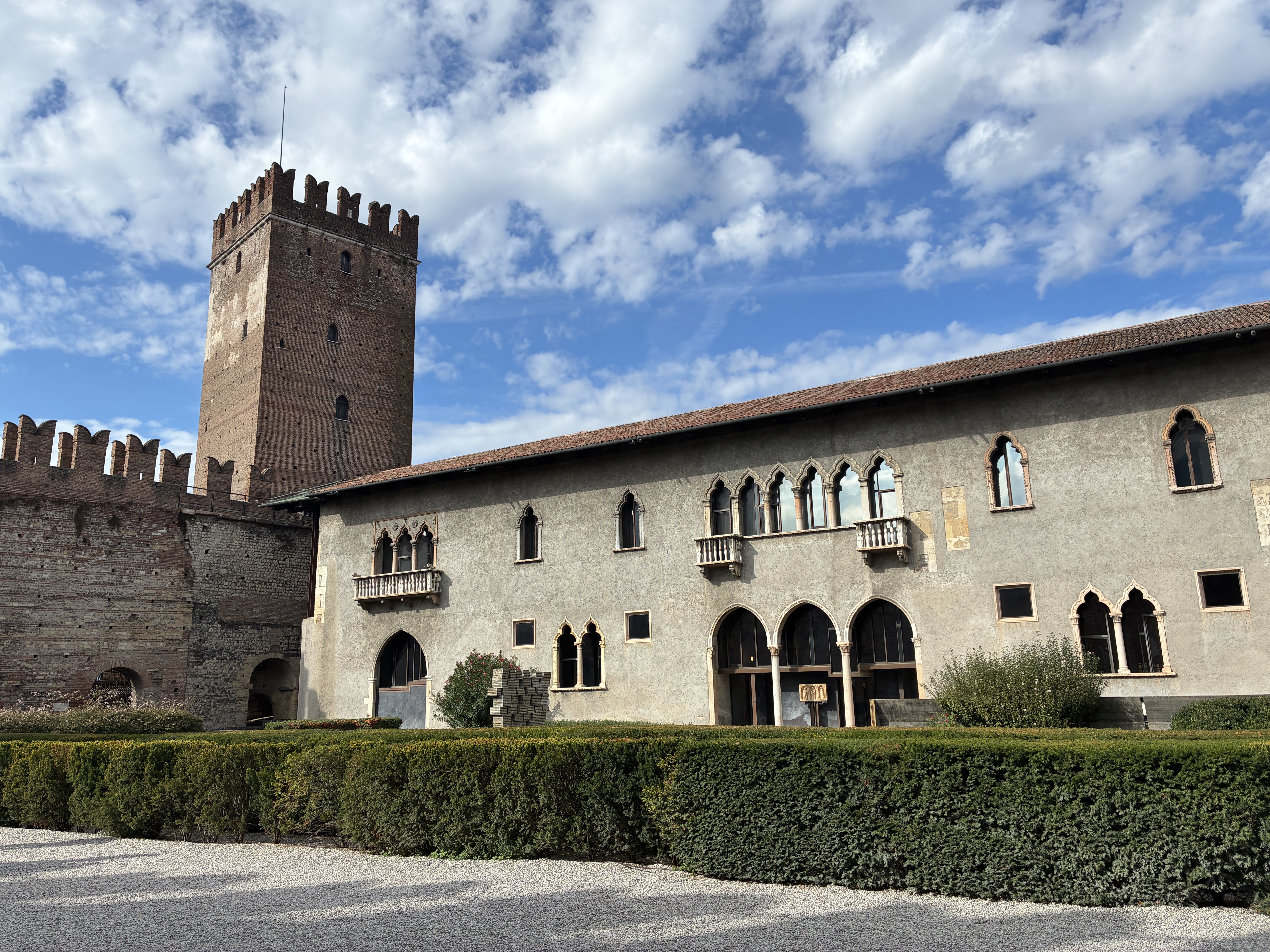
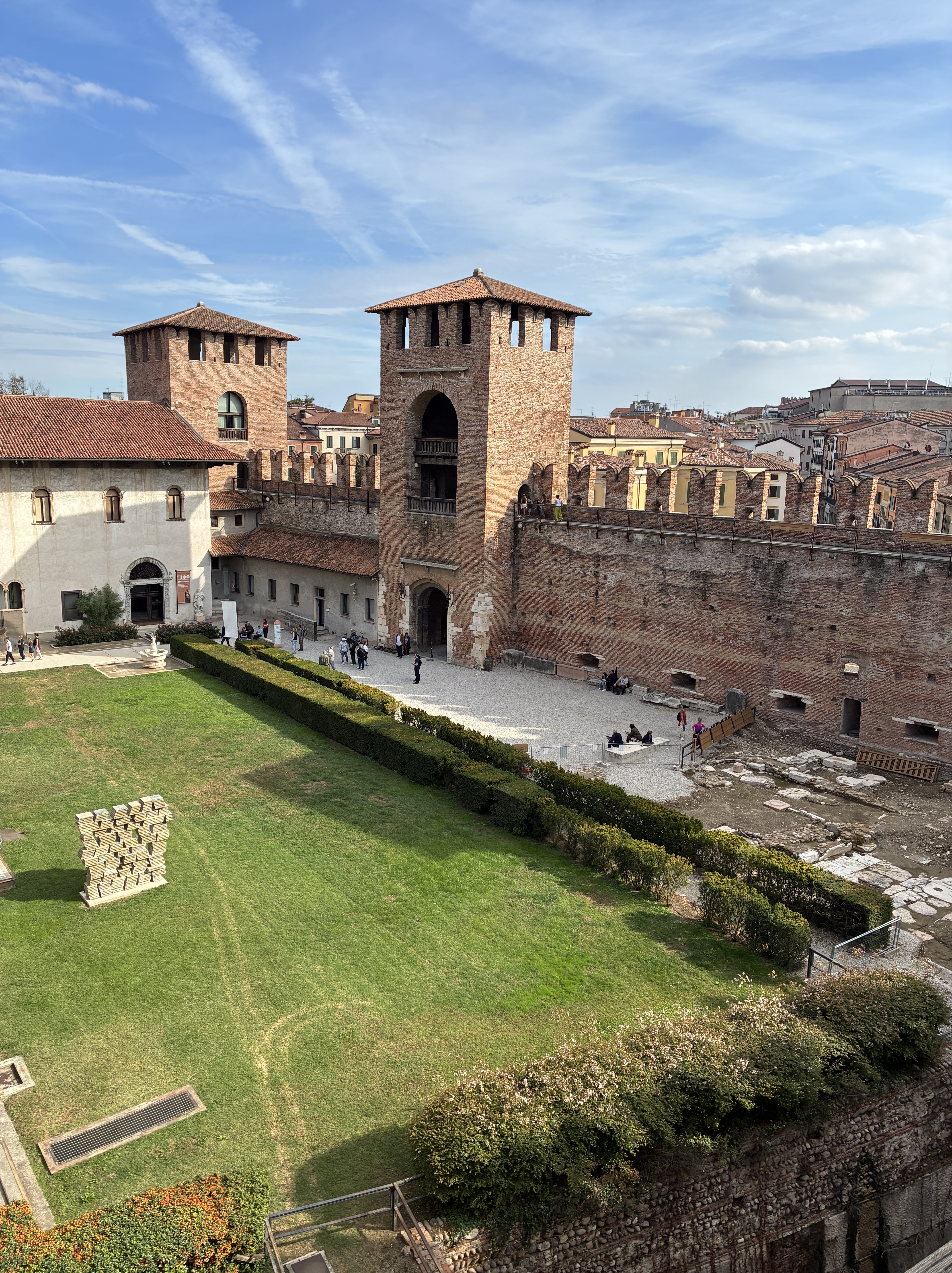
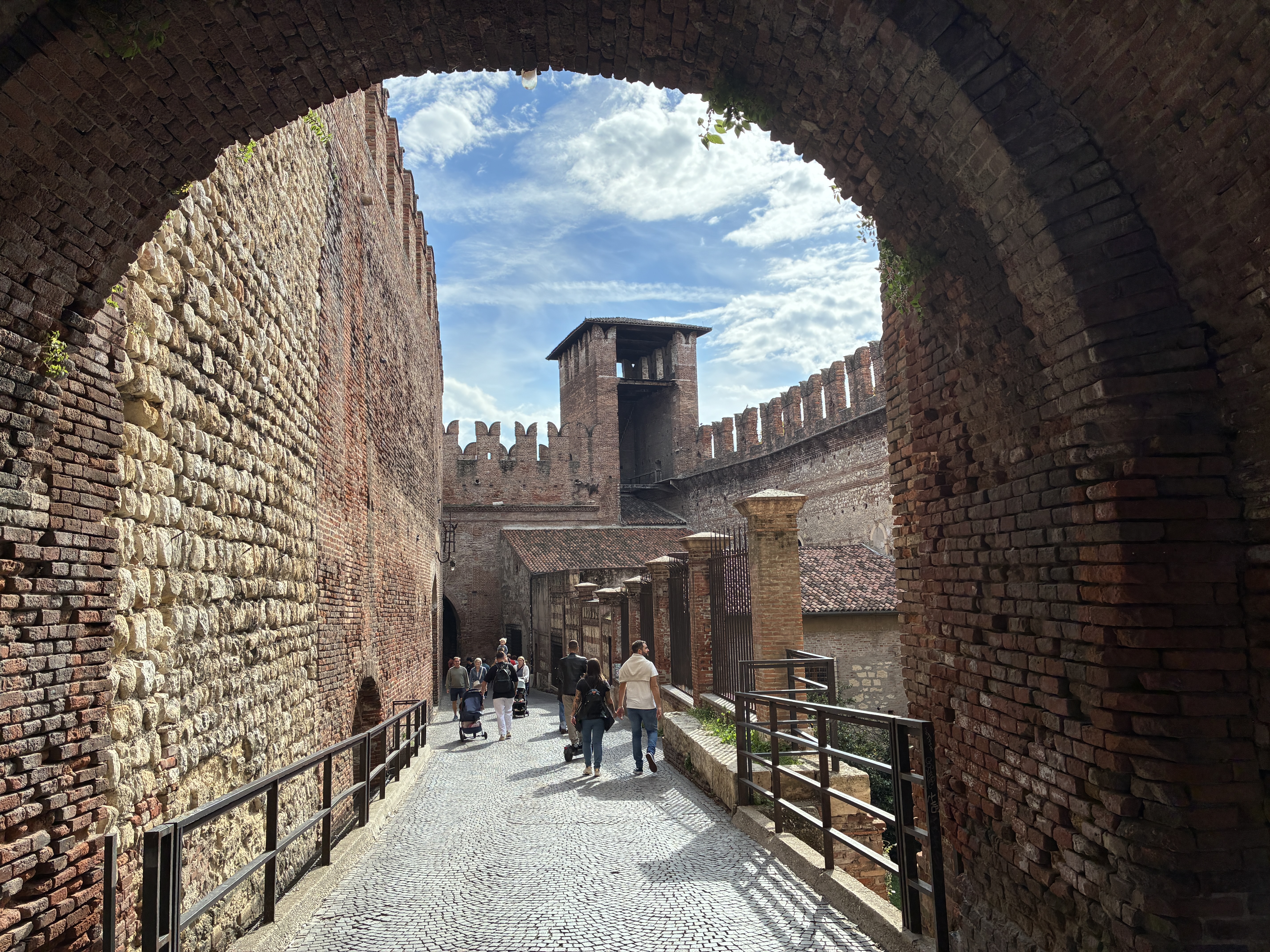
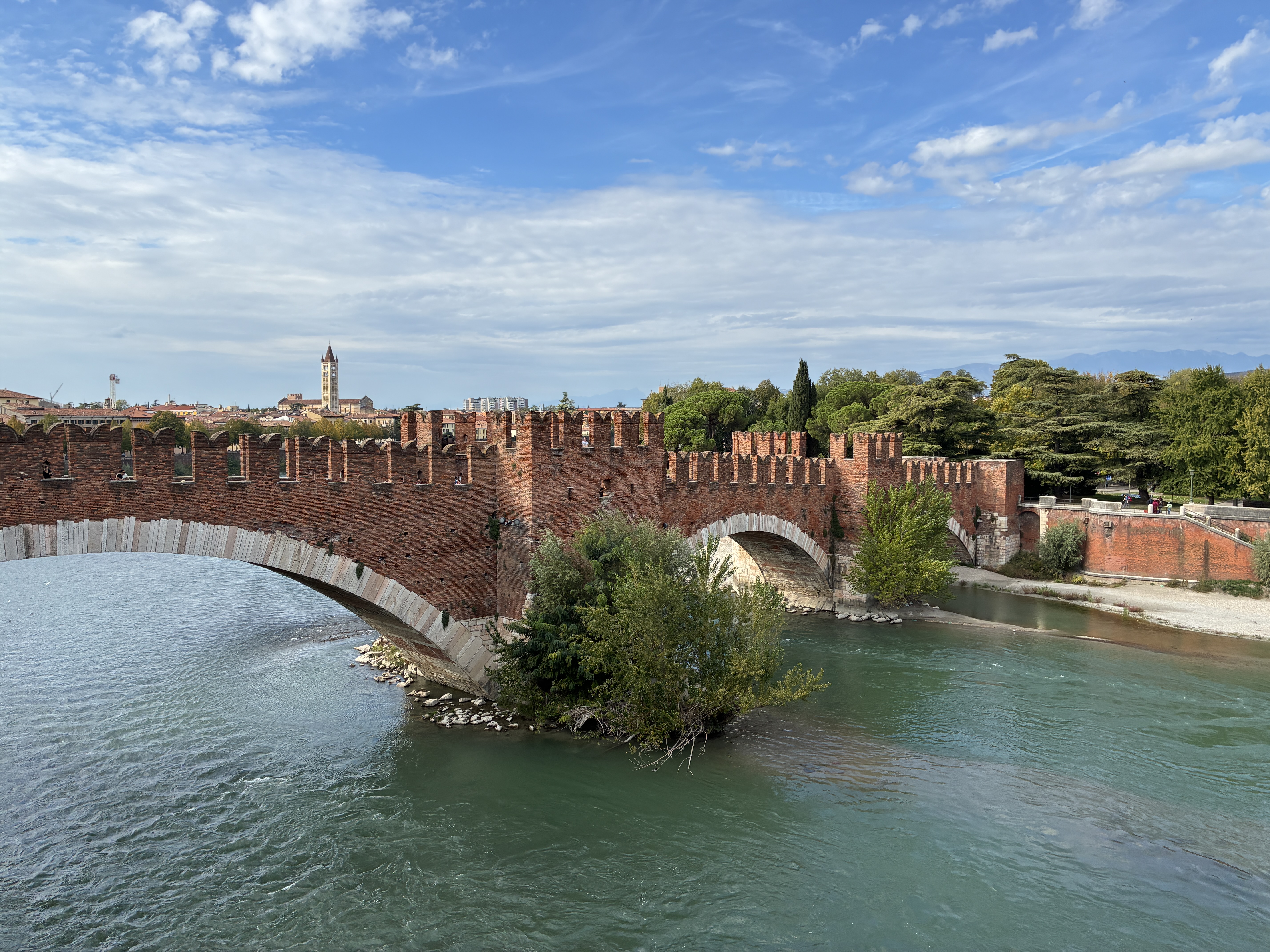
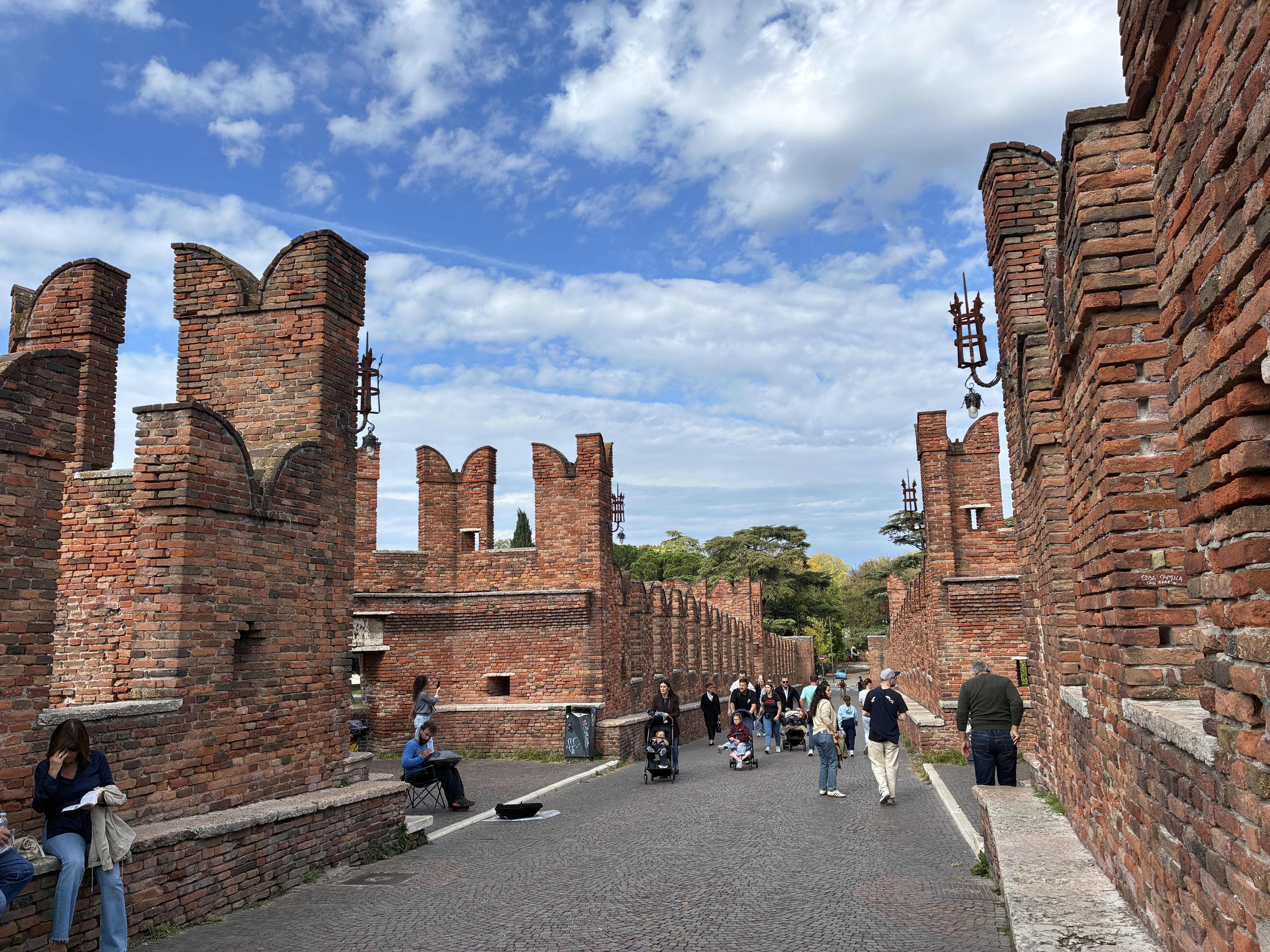
I’d say this is Verona’s second most important attraction after the Arena. This beautifully restored medieval castle was originally built in 1354 by Cangrande II della Scala, a member of the Scaligeri dynasty, which ruled over Verona during the medieval times and has a history fit for a primetime mini-series—full of fratricide, illegitimate heirs, then more fratricide between the illegitimate heirs—at which point the public had had enough of the murderous Scaligeri and drove the last one out. Even though Verona prospered greatly during the Scaligeri dynasty, the later rulers were unpopular—so much so that there’s a gorgeous bridge behind the castle (Castelvecchio bridge) that Cangrande II della Scala built not for the benefit of the city’s inhabitants, but so he could escape with his family should the city rise against him. He was known to be a cruel tyrant, but I think the very existence of this bridge says a lot about how self-serving he was (sounds familiar, come to think of it). The museum inside has a wonderful collection of medieval artifacts, sculpture, and Renaissance paintings and the castle itself is so well restored that you can roam its ramparts and imagine what it was like centuries ago. Hands down, this was my favorite site to visit.
Casa di Giulietta (“Juliet’s House”)
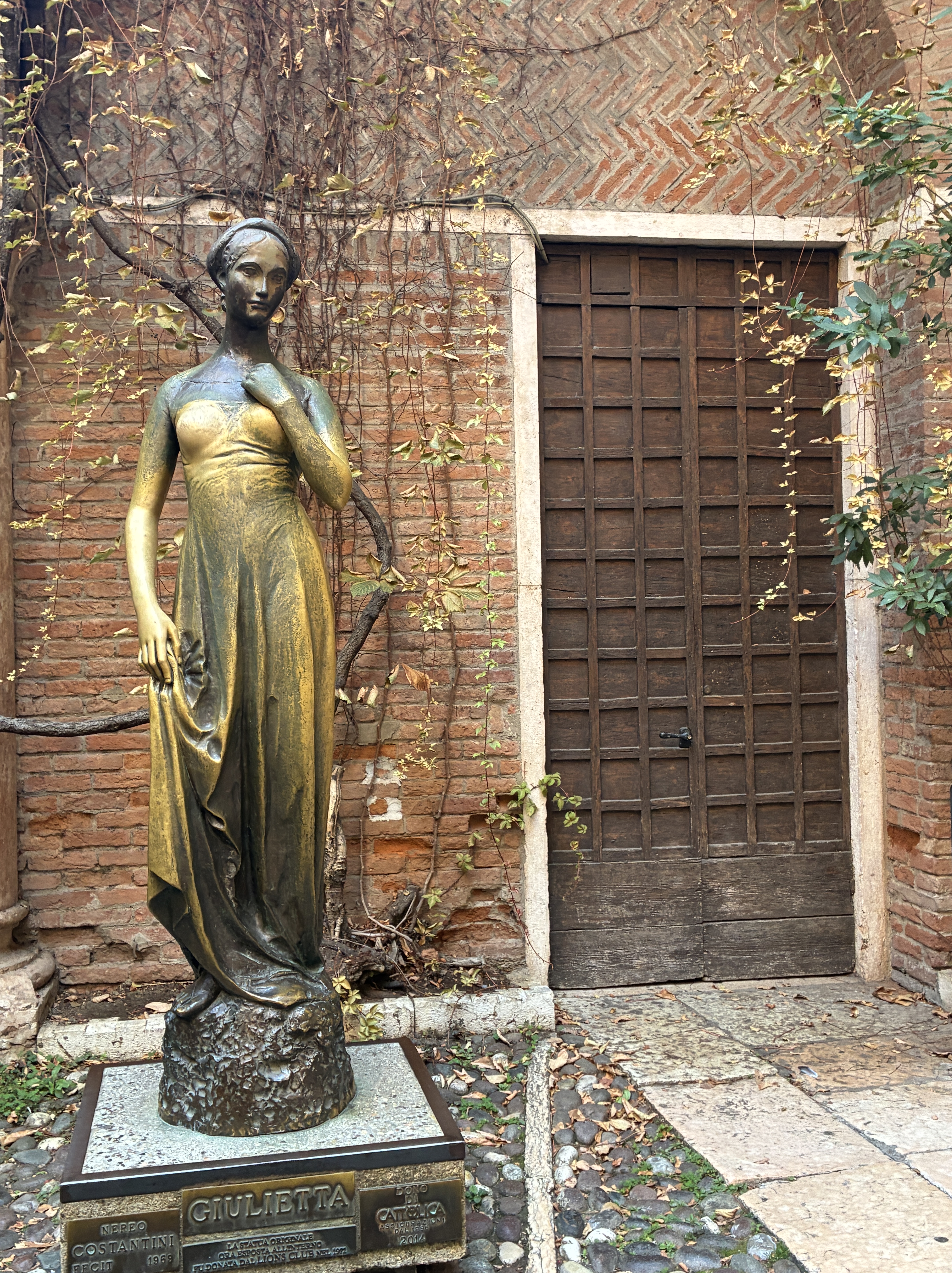
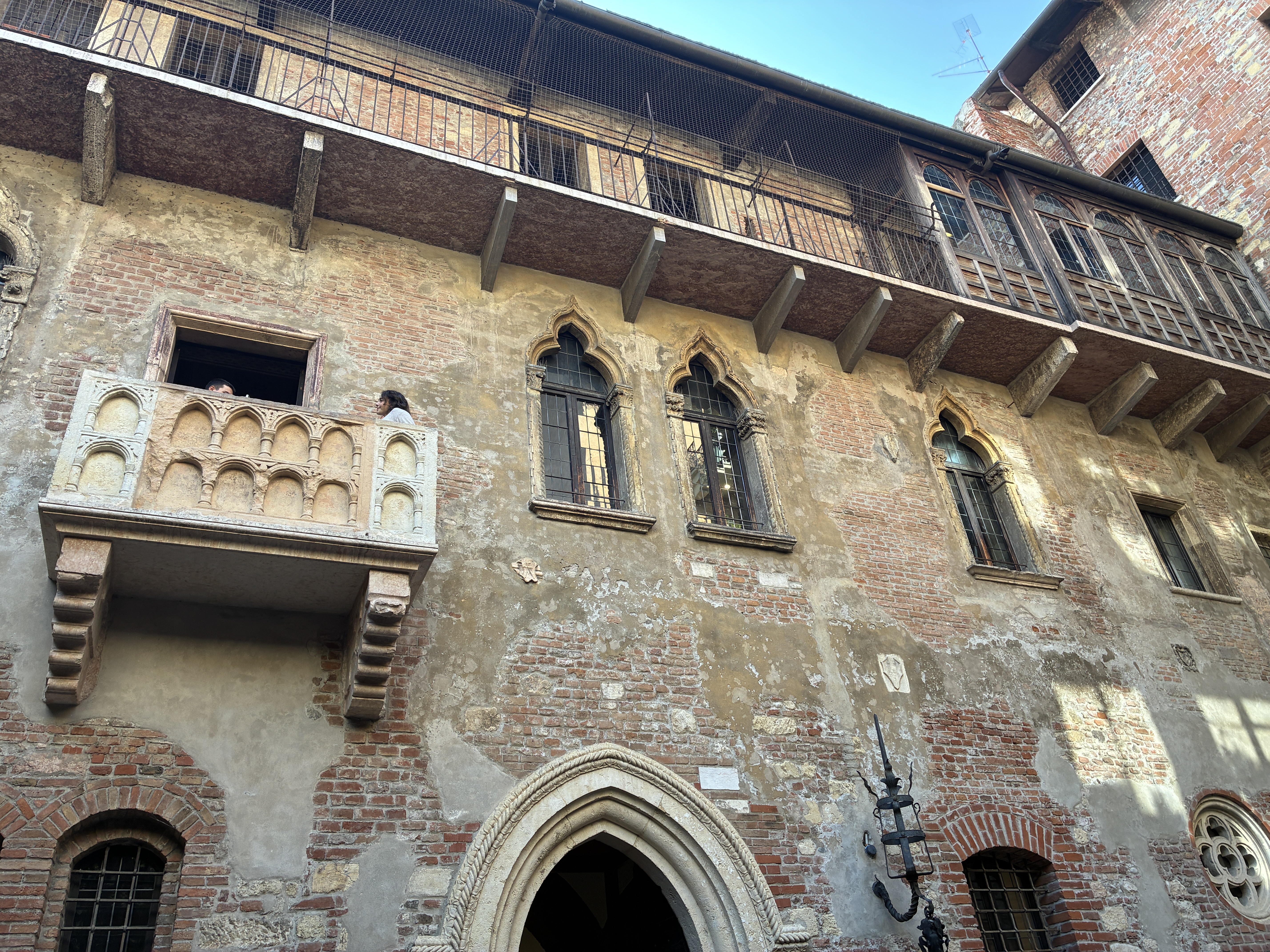
Though this attraction gets top billing in all the tourism guides, I just don’t get it. In fact, it’s not even the sort of place I’d visit if it weren’t included in the Verona Card (many cities have these nifty cards that you can purchase for a flat fee that give you entry into major sites). If you know me personally, you know I’m a theater lover—in fact, I’ve been a volunteer for my local theater longer than I care to say (lest I date myself). I’m no stranger to Shakespeare and can appreciate that Verona is the setting of “Romeo and Juliet”—I can appreciate that fact without being led to believe that Juliet was a real person who had a real balcony upon which she delivered a real iconic monologue in which she laments falling in love with a Montague because damn, that’s gonna cause a lot of problems.
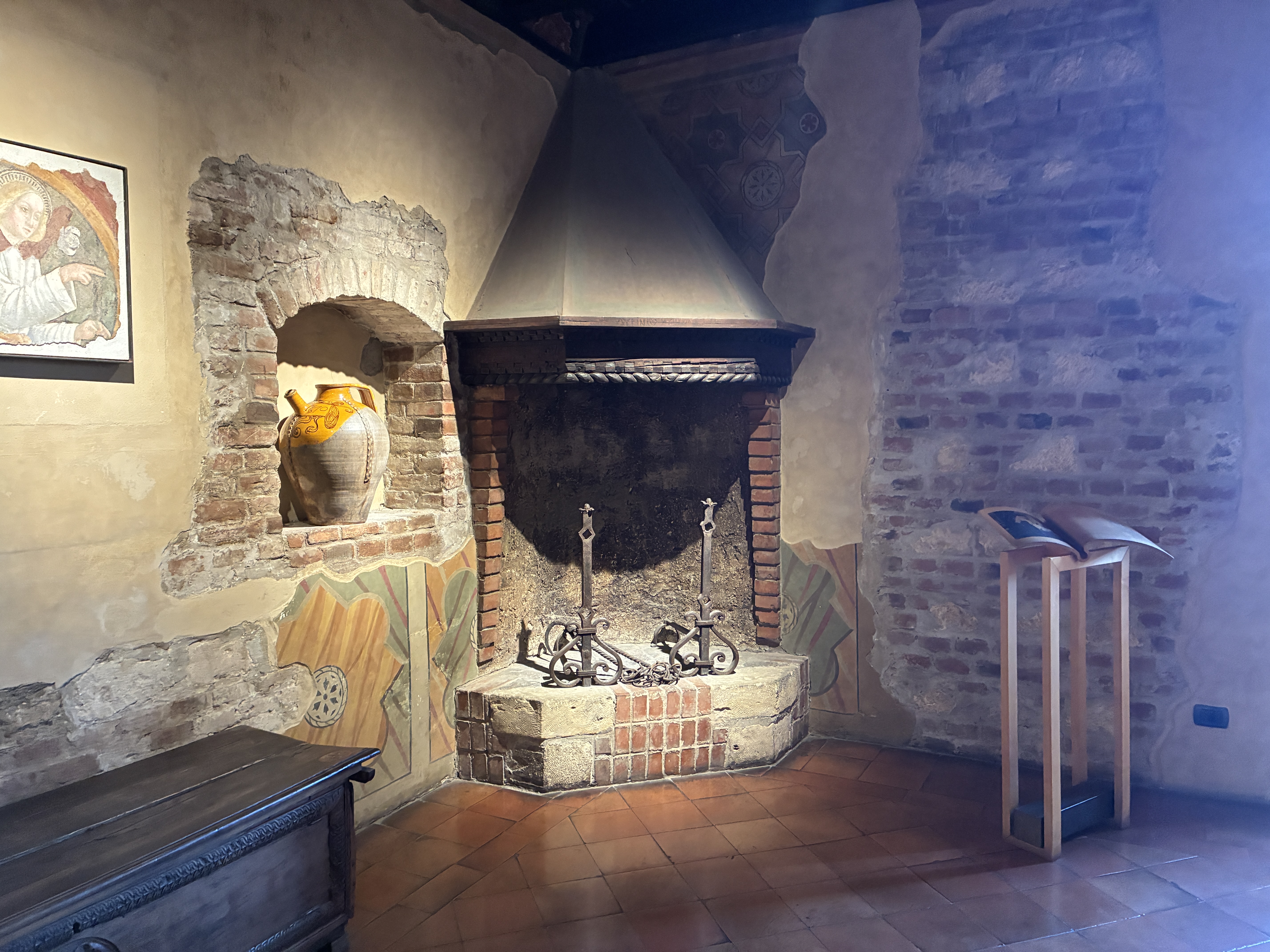
There was a gaggle of tourists lined up to get a peek at this balcony and touch the bronze bosom of her statue (said to bring good luck in love, of course), but the truth is: though the story was loosely based on actual feuding families, Romeo and Juliet are fictional characters. That said, Juliet’s house is (spoiler alert)… not her house. It’s a 14th-century house that once belonged to a wealthy merchant family that sold spices. The dilapidated house was purchased, restored, and a balcony was built from a salvaged sarcophagus (which is actually kind of poetic). Then, it was made into a museum and dubbed “Juliet’s House” through a savvy 20th-century marketing campaign that truly took off. (There’s even a “Juliet’s tomb” elsewhere in the city, if you can believe it—and some people do.) If you’re into visiting a museum that has no actual significance than to pay homage to the story of “Romeo and Juliet” while giving you a glimpse of a restored 14th-century Veronese house (or if you’re just going because it’s included in your Verona Card, like me), then I suppose it’s worth a visit, kind of.
That was Verona in a nutshell. But wait! What light on yonder hills do break? It is the east, and cycling is the sun…




Leave a Reply