I dated myself with that title (and also identified myself as an American), but I just couldn’t help it. That’s my first memory of bologna—not the city, but the fake-pink sandwich staple that stuffed many a childhood lunchbox. It came with a catchy marketing slogan and an earworm of a tune that commercial children would sing so mothers knew just which brand to buy: bologna’s first name was O-S-C-A-R.
Actually, I’ve learned that Bologna has three nicknames, and none of them are Oscar. Consult any Bologna travel site and you’ll learn they’re “La Dotta” (the learned one), “La Rossa” (the red one), and “La Grassa” (the fat one).
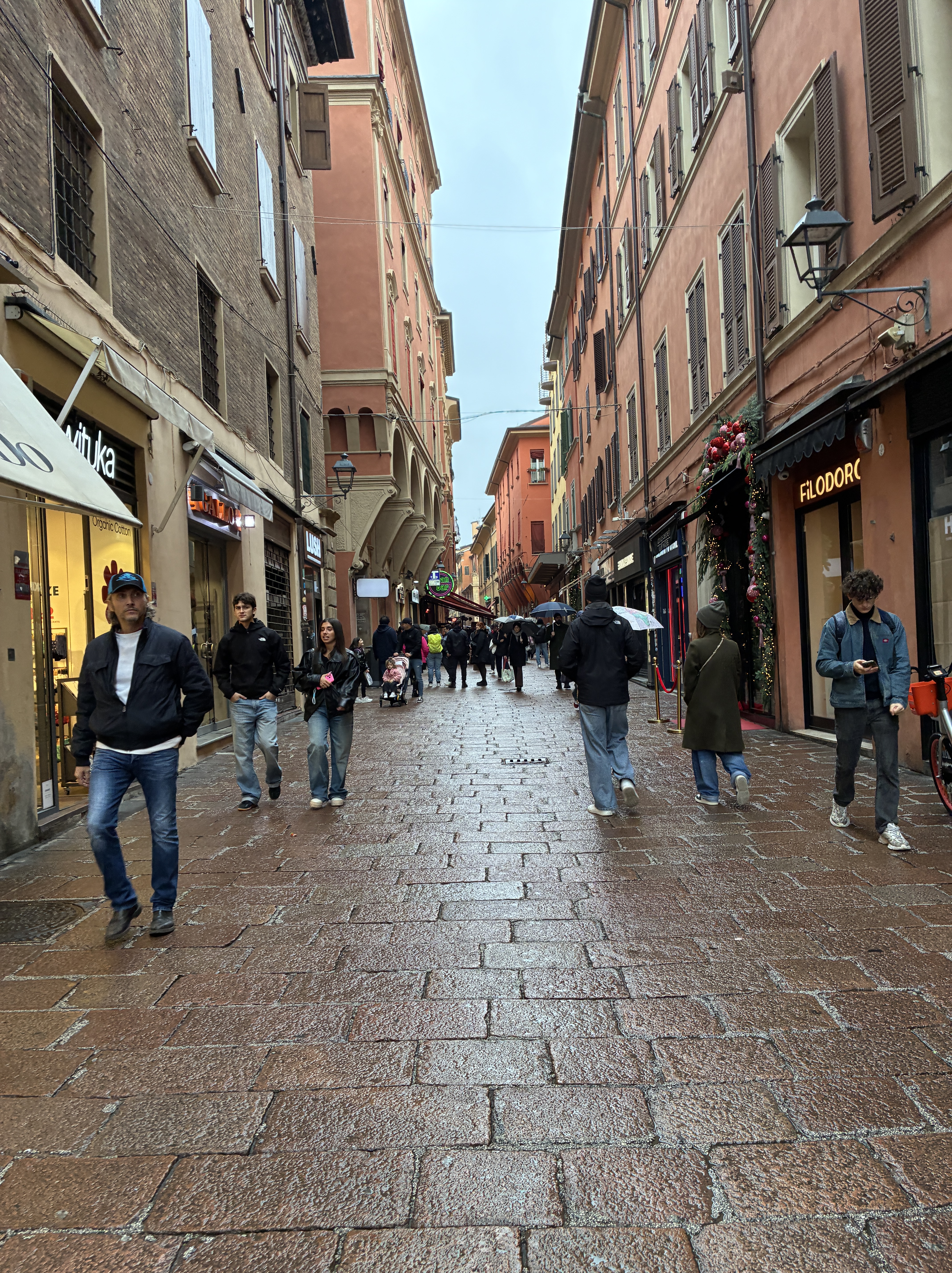
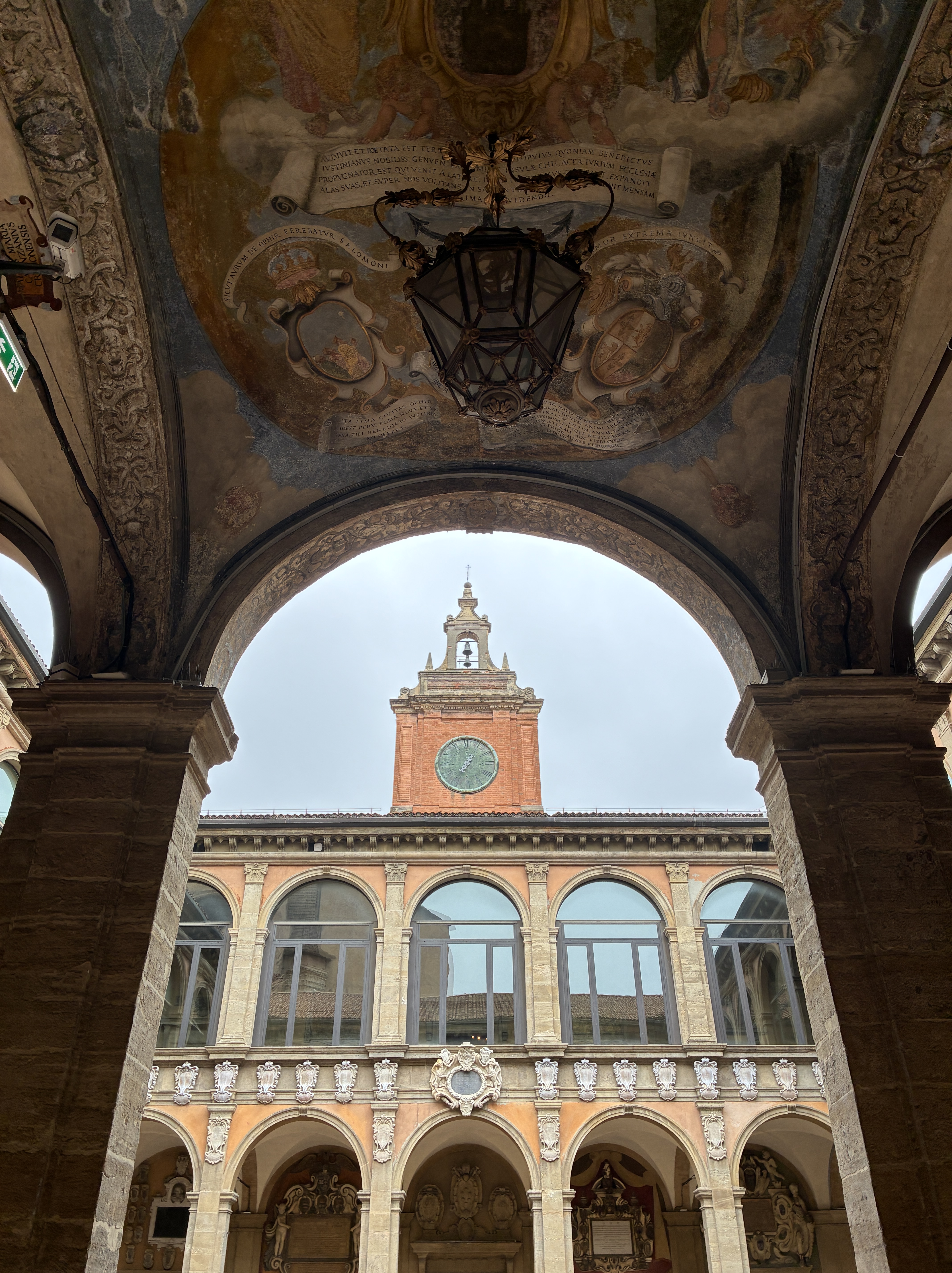
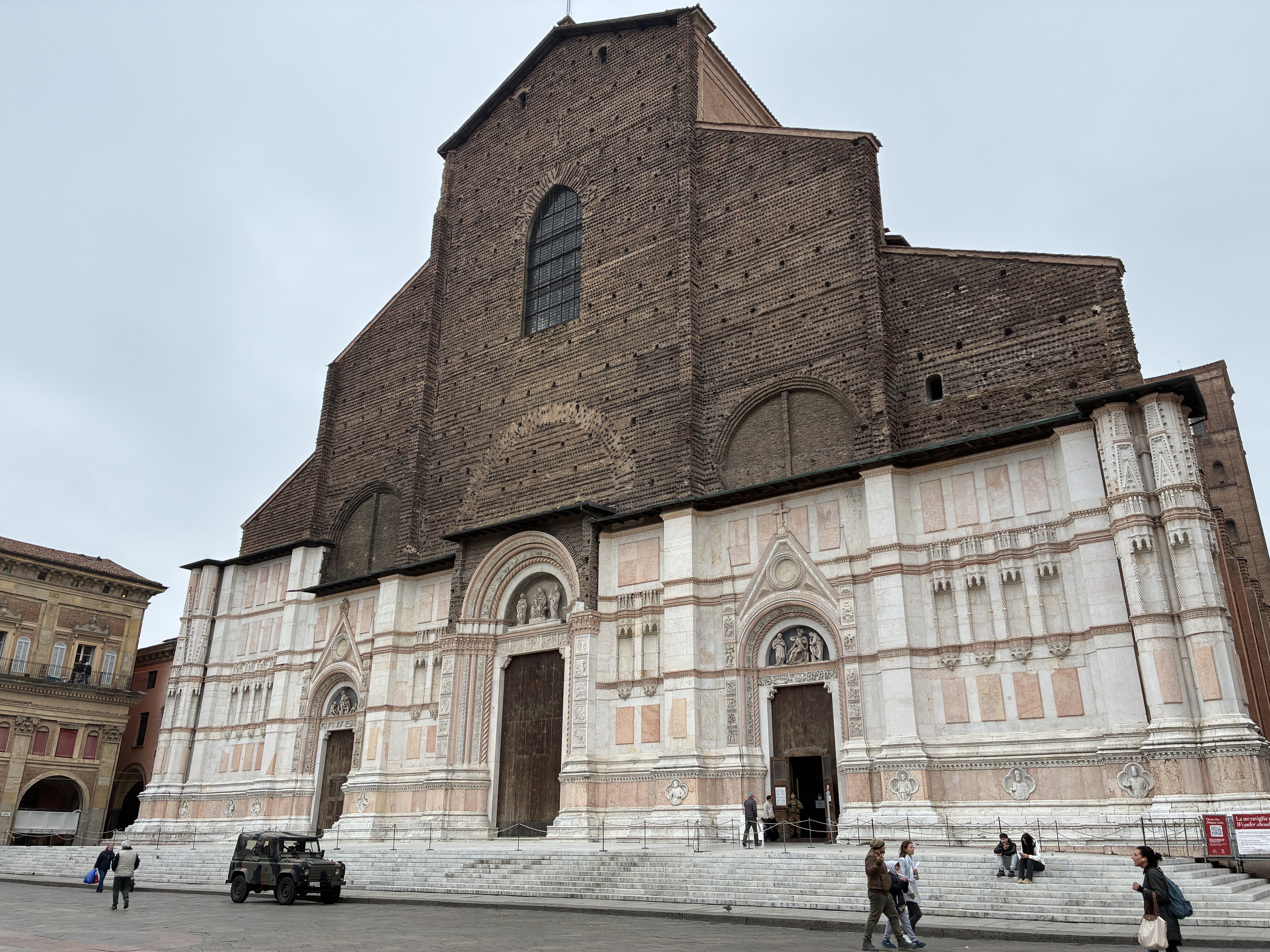
“The learned” comes from the University of Bologna, which was founded in 1088 and is considered the oldest continuously operating university in the world. Students still fill the streets, which gives the old town a youthful, slightly chaotic energy. For unknown reasons, they’re usually wearing black. (This must be how adults looked at my generation once upon a time.)
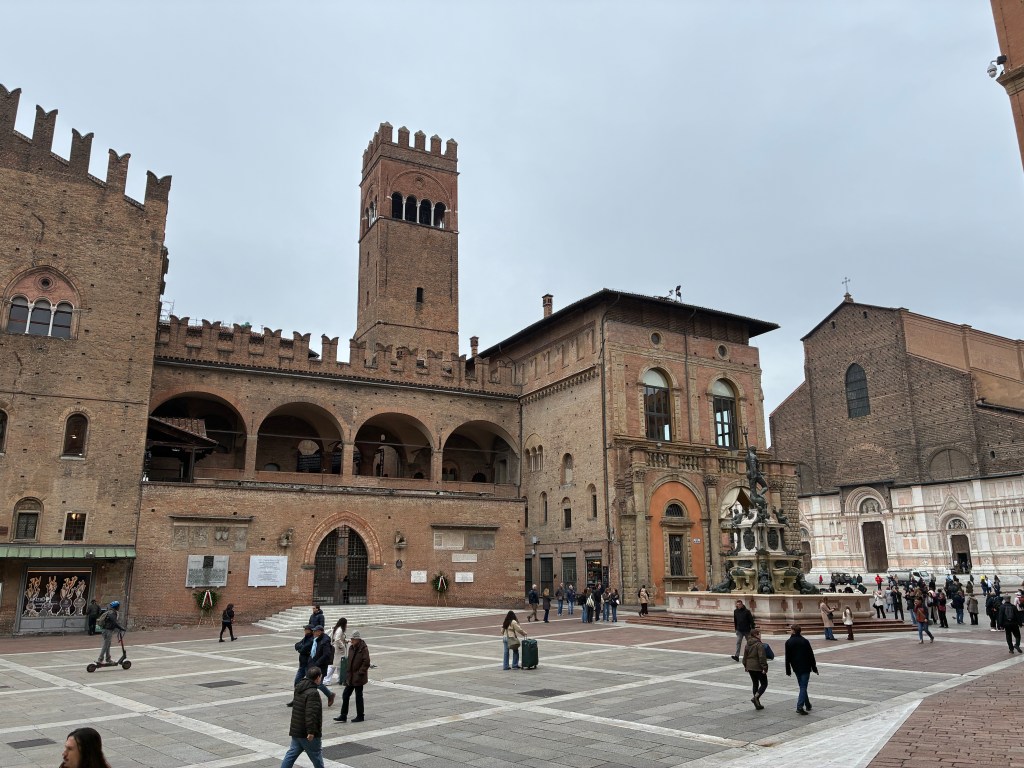
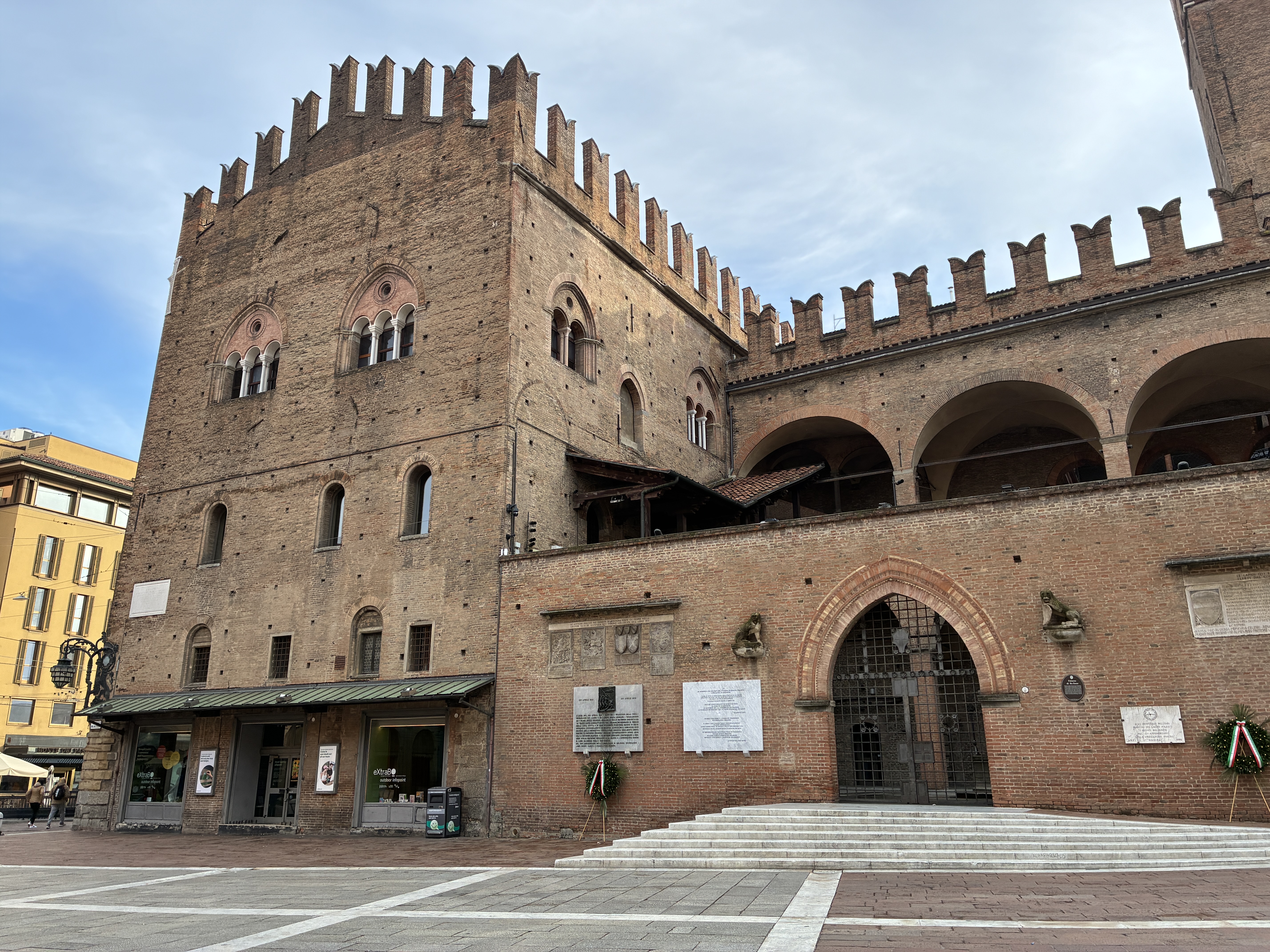
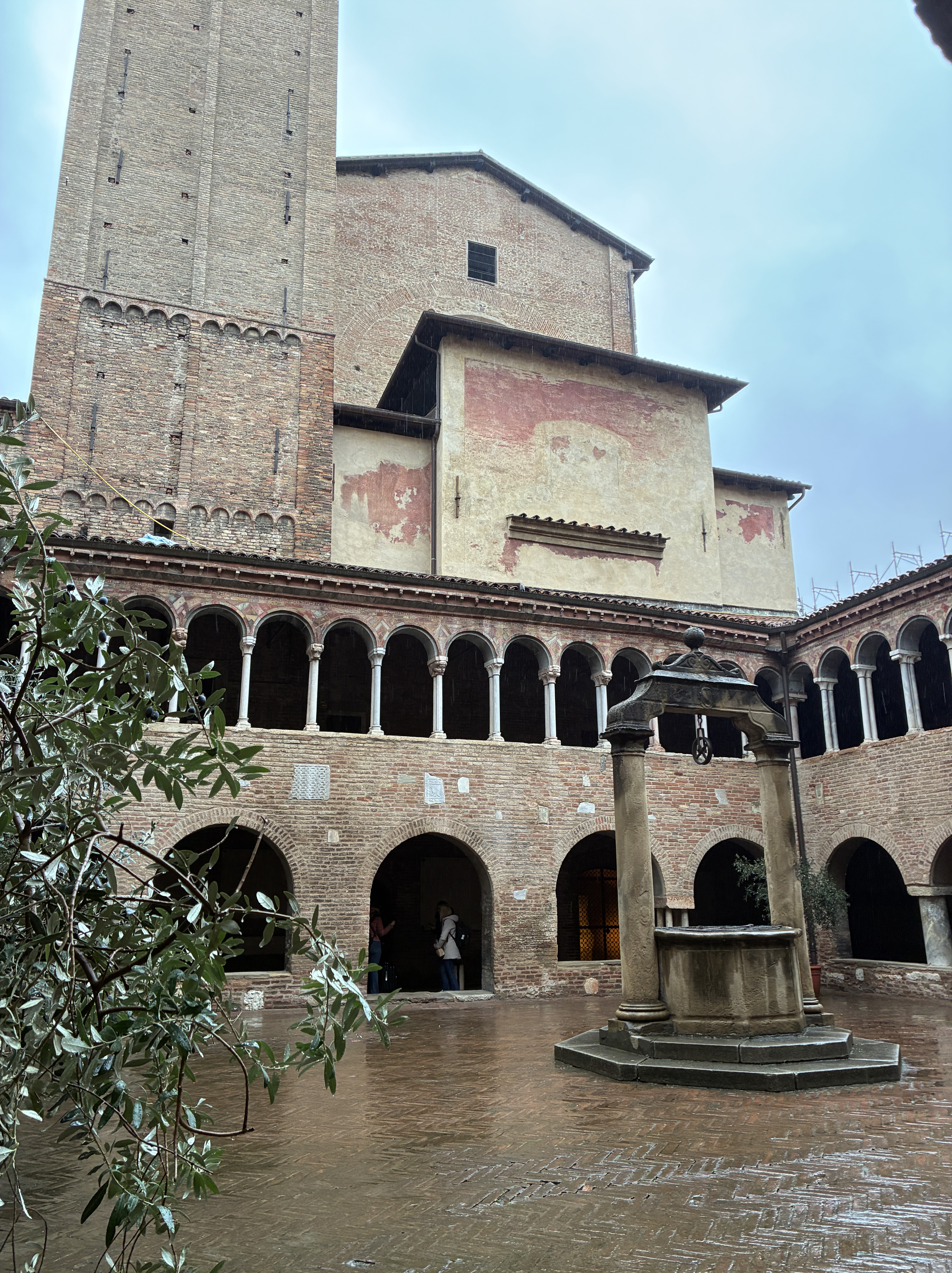
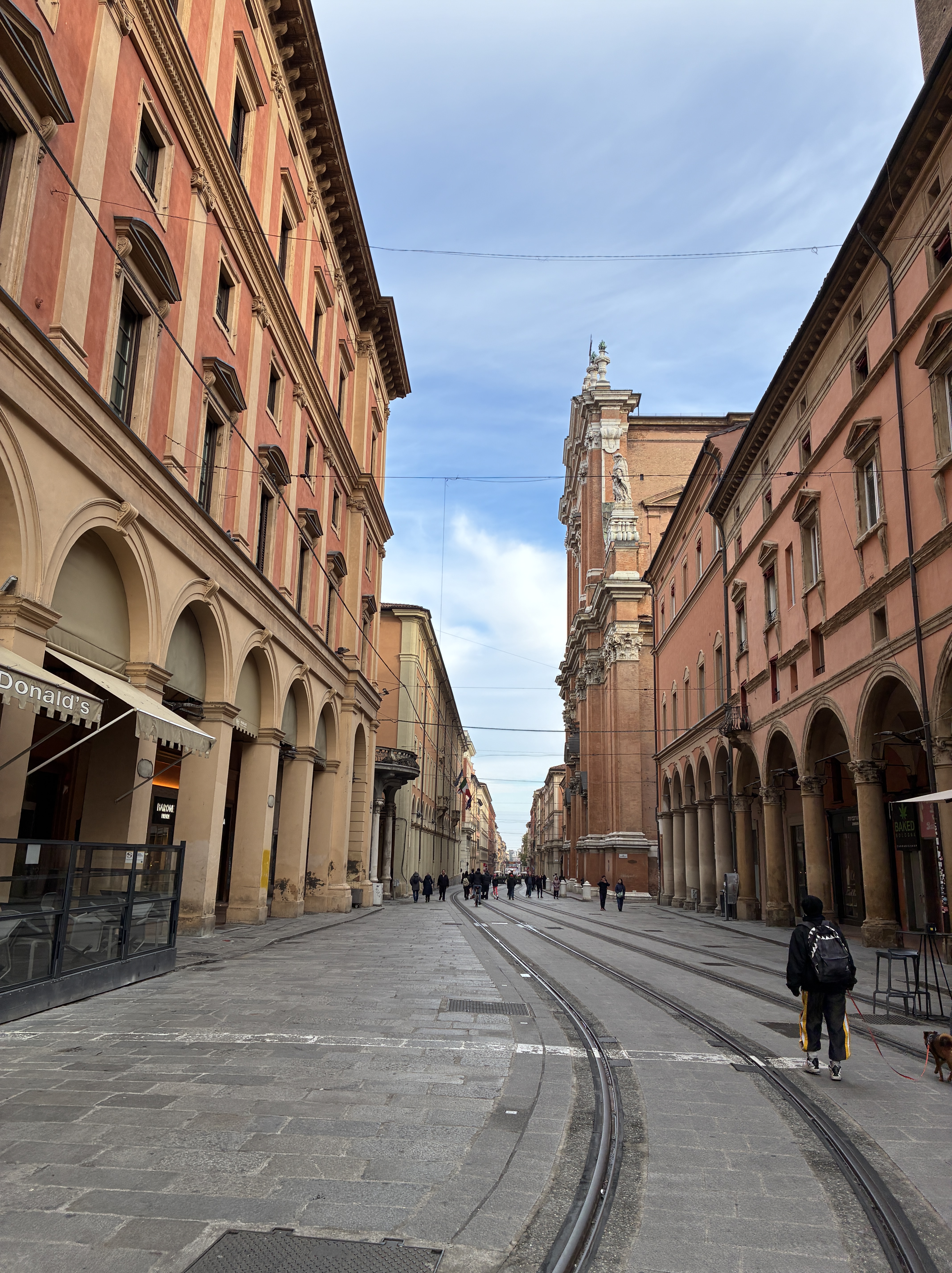
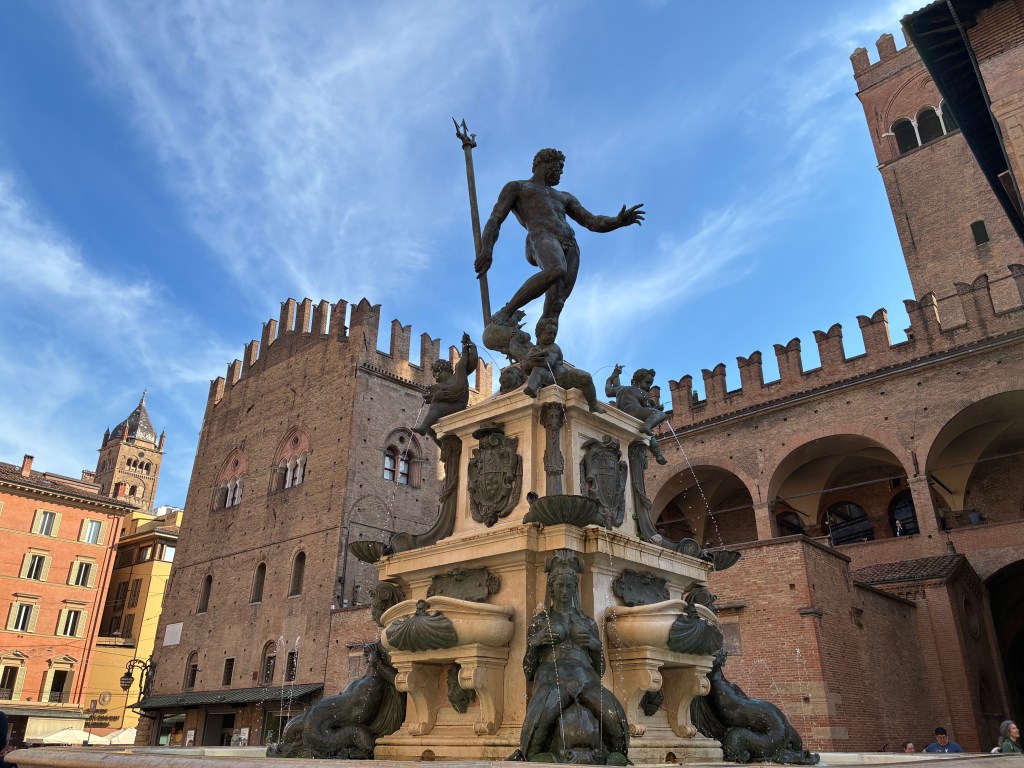
“The red” comes from the terracotta rooftops and the medieval/Renaissance-era architecture, which was built with brick formed from the red clay of the Po Valley plains.
And “La Grassa” comes from being considered the food capital of Italy. Bologna is the home of bolognese sauce, tortellini, lasagne, and mortadella. It also sits in the Emilia-Romagna region, which produces Parmigiano-Reggiano, balsamic vinegar, and Parma ham.
Being in the food capital of Italy, I’ve learned some important things:
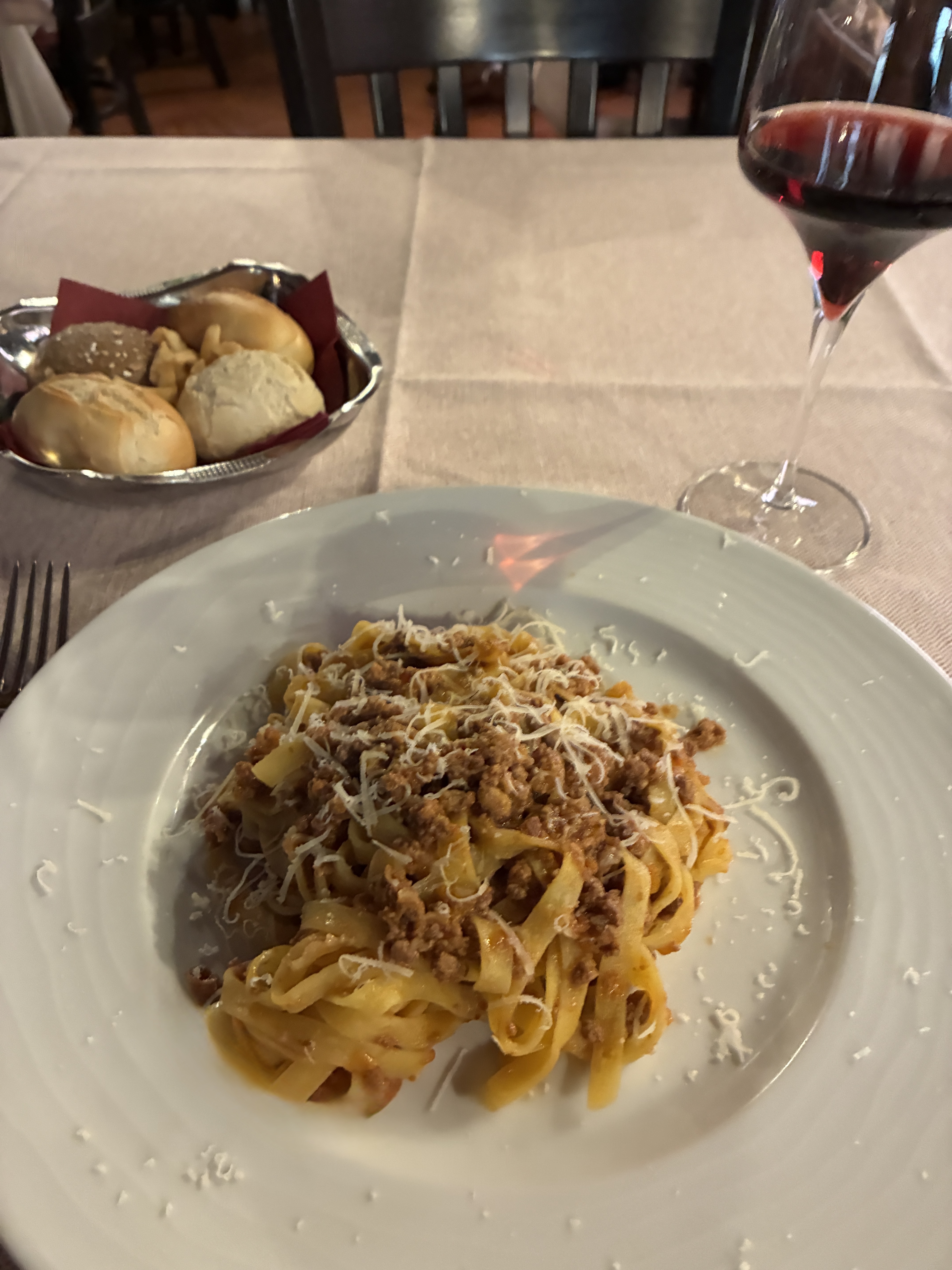
- You will not find “spaghetti bolognese” here—what you’ll find is “tagliatelle al ragu.” (“Spaghetti” bolognese is what foreigners do because they either don’t know better or can’t find tagliatelle.) Tagliatelle is a flatter, wider egg noodle that holds up better to the hearty, meat-forward bolognese (which is a lot less saucy than we make it).
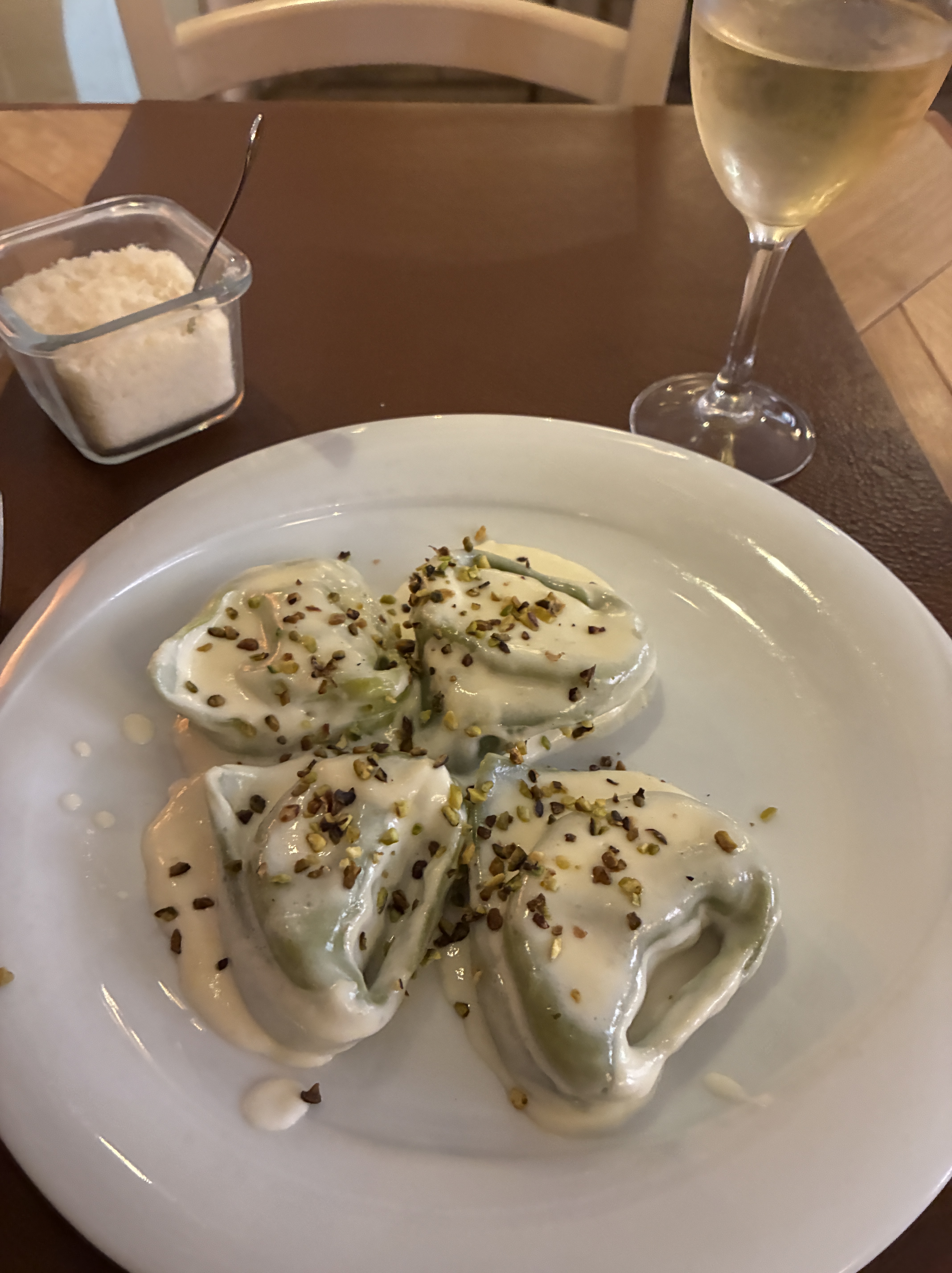
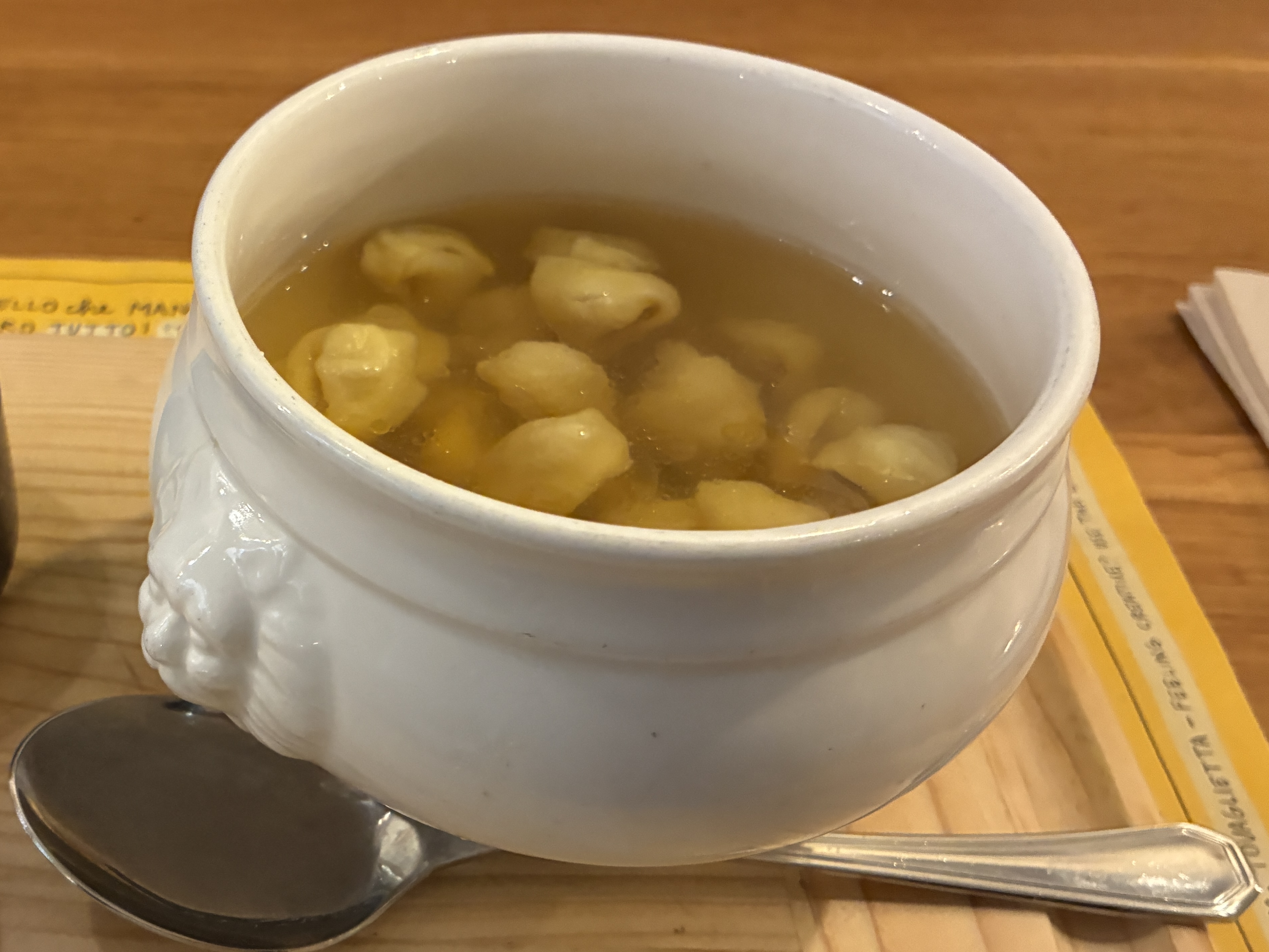
- There’s so much more to stuffed pasta than ravioli and tortellini! There’s cappelletti, which is larger than a tortellini and shaped like a hat (both cappelletti and tortellini are often served in broths); there’s balanzoni, which is a larger spinach pasta stuffed with ricotta and mortadella; and there’s cappellacci, which is similar to balanzoni, but has a golden dough stuffed with squash.
- Speaking of tortellini, in Bologna “real” tortellini is stuffed with meat—usually a mixture of pork, prosciutto, mortadella, parmesan, egg, and nutmeg (yep, that’s basically pork, pork, and pork). If it’s stuffed with something else (like ricotta), it’s not tortellini, it’s tortelloni.
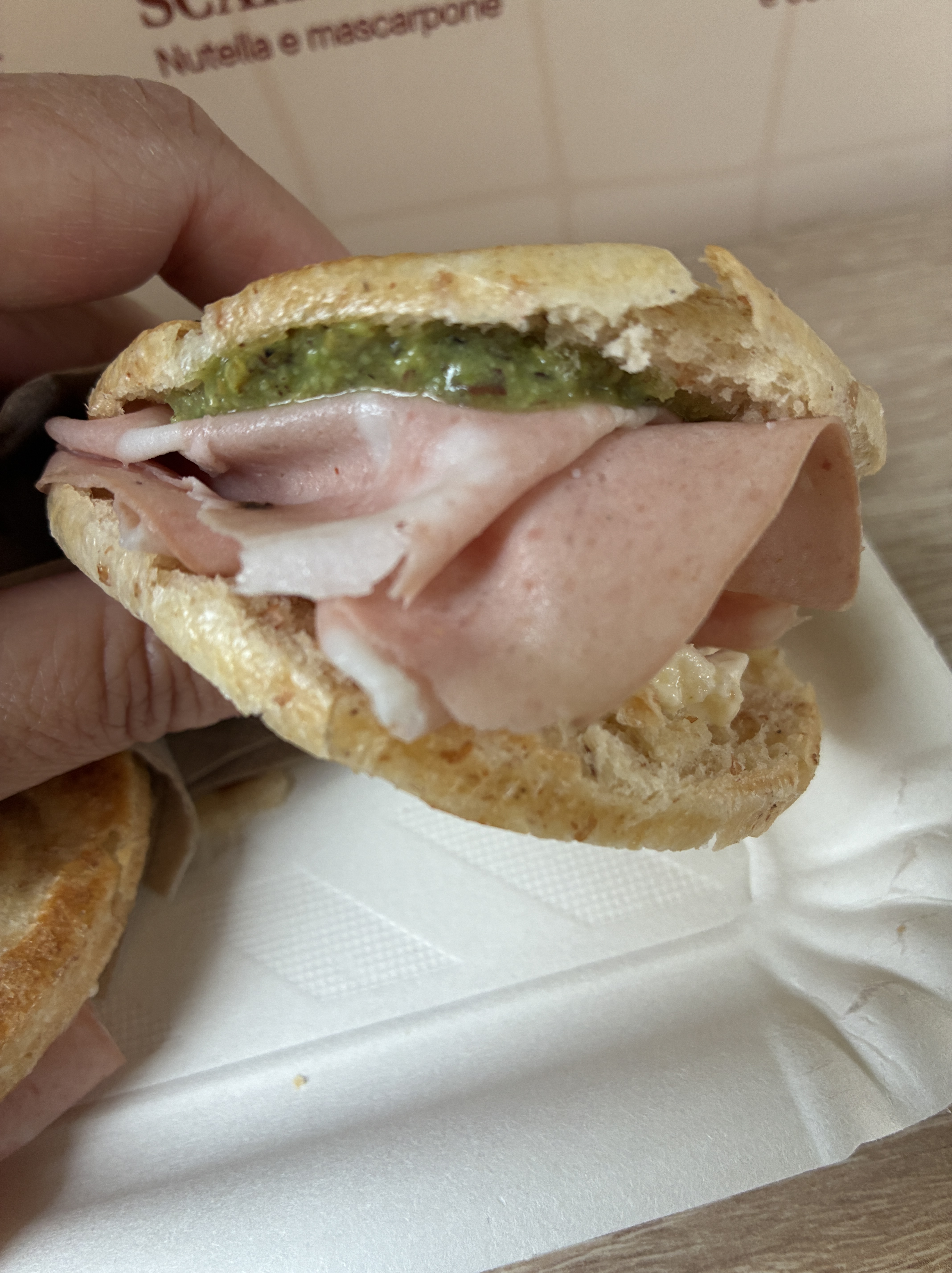
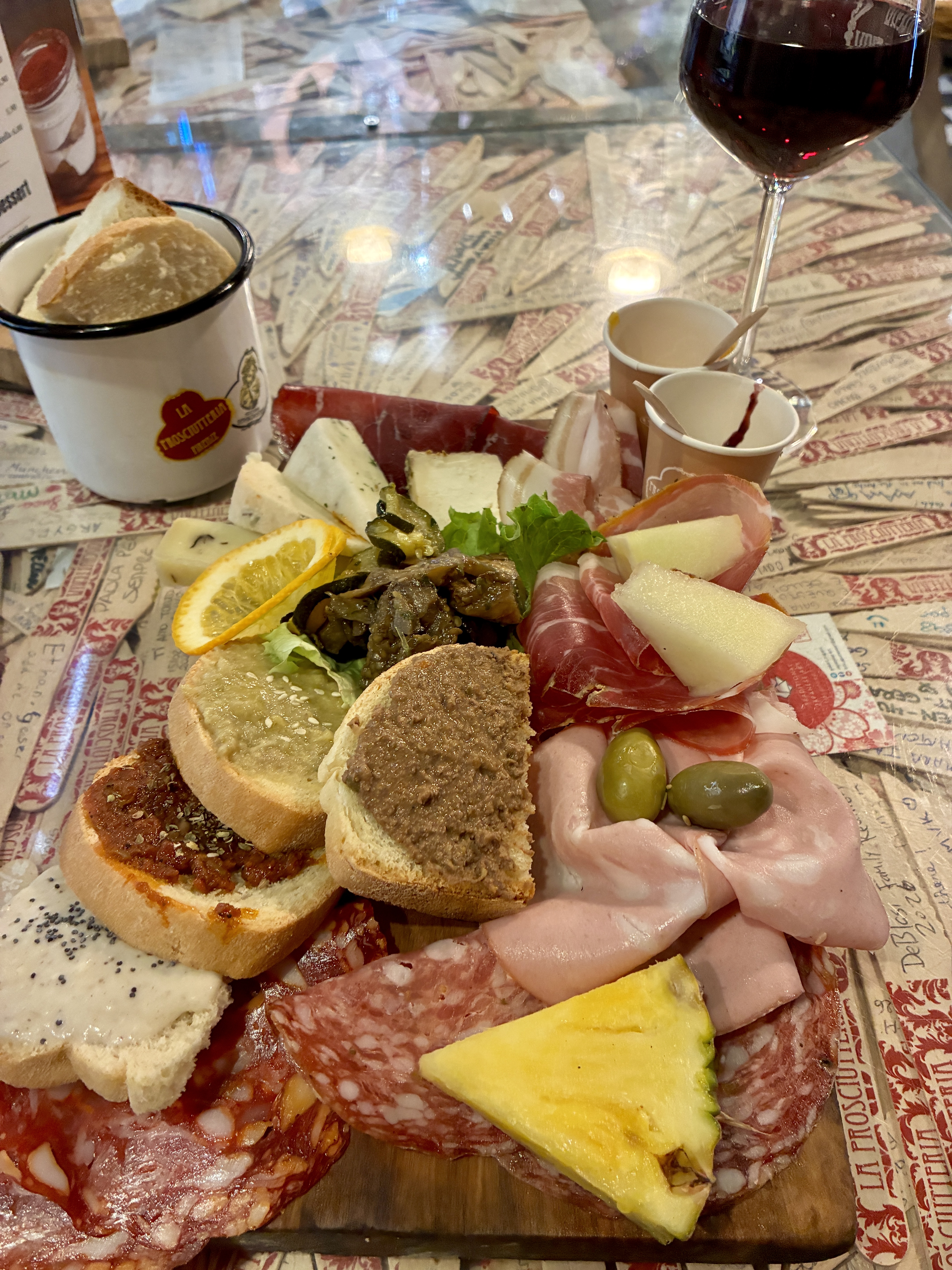
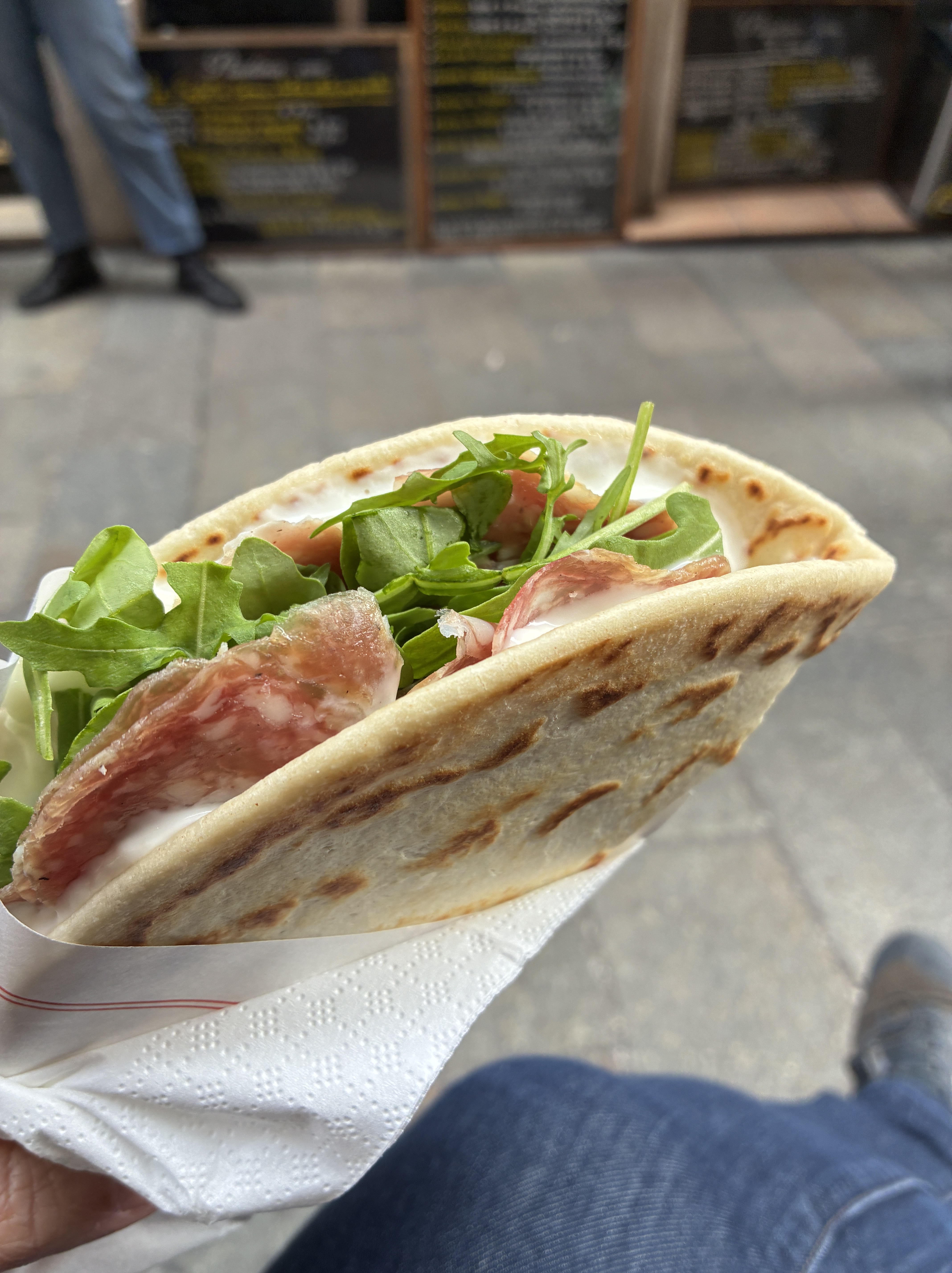
- While mortadella inspired what we call bologna, it bears only a passing resemblance in color and taste (and zero resemblance in texture). Actual mortadella is paper thin, silky, and practically melts in your mouth. Though I don’t like bologna, I’ve thoroughly enjoyed mortadella as part of charcuterie boards, in a piadina (a sandwich made of unleavened flatbread), and stuffed in a tigella (small, round flatbreads) with squacquerone (a tangy local cheese).
Needless to say, while I’ve attempted to dial back my food and wine consumption a little, it clearly hasn’t been a lot.
The land of the covered archways
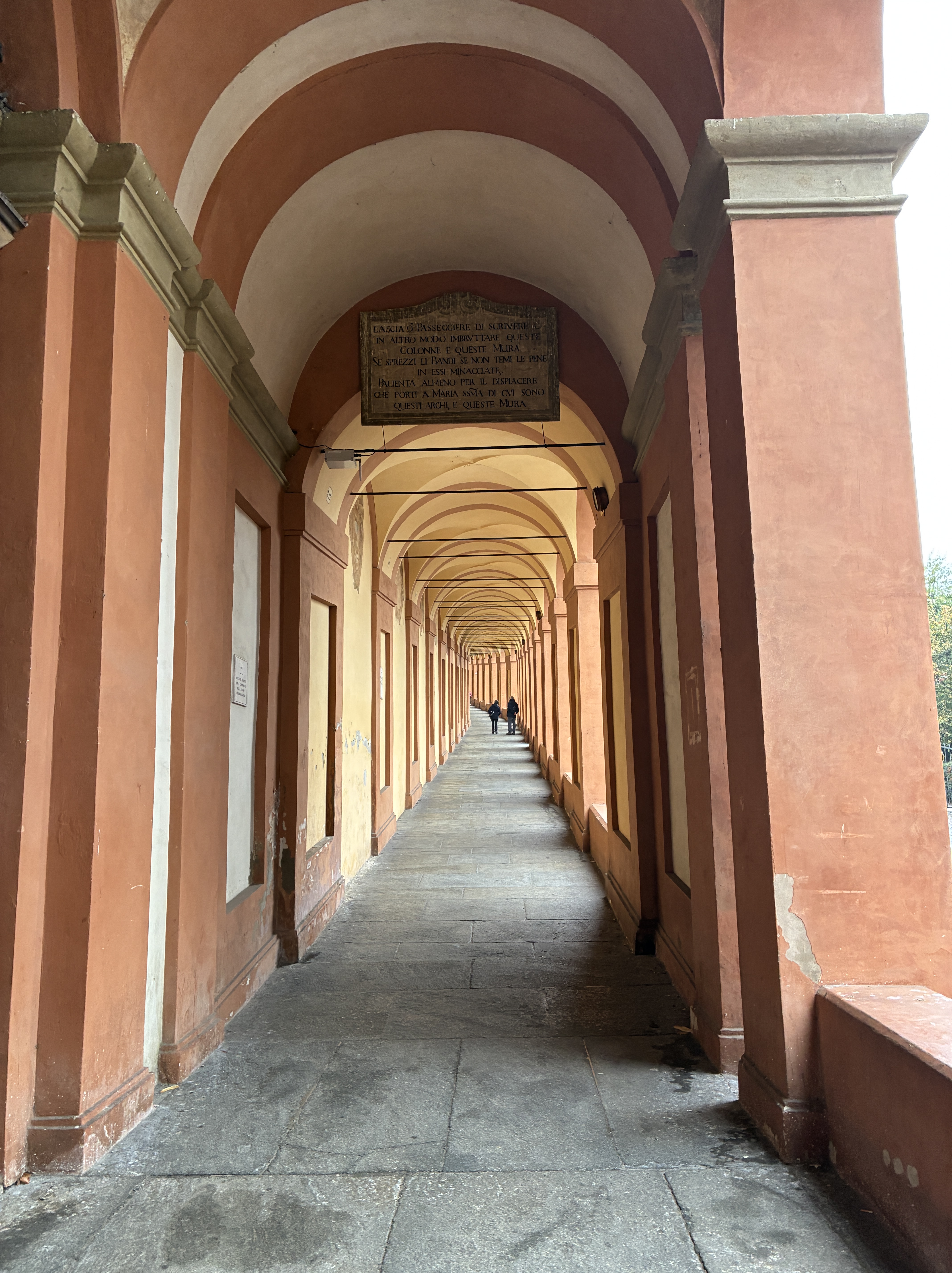
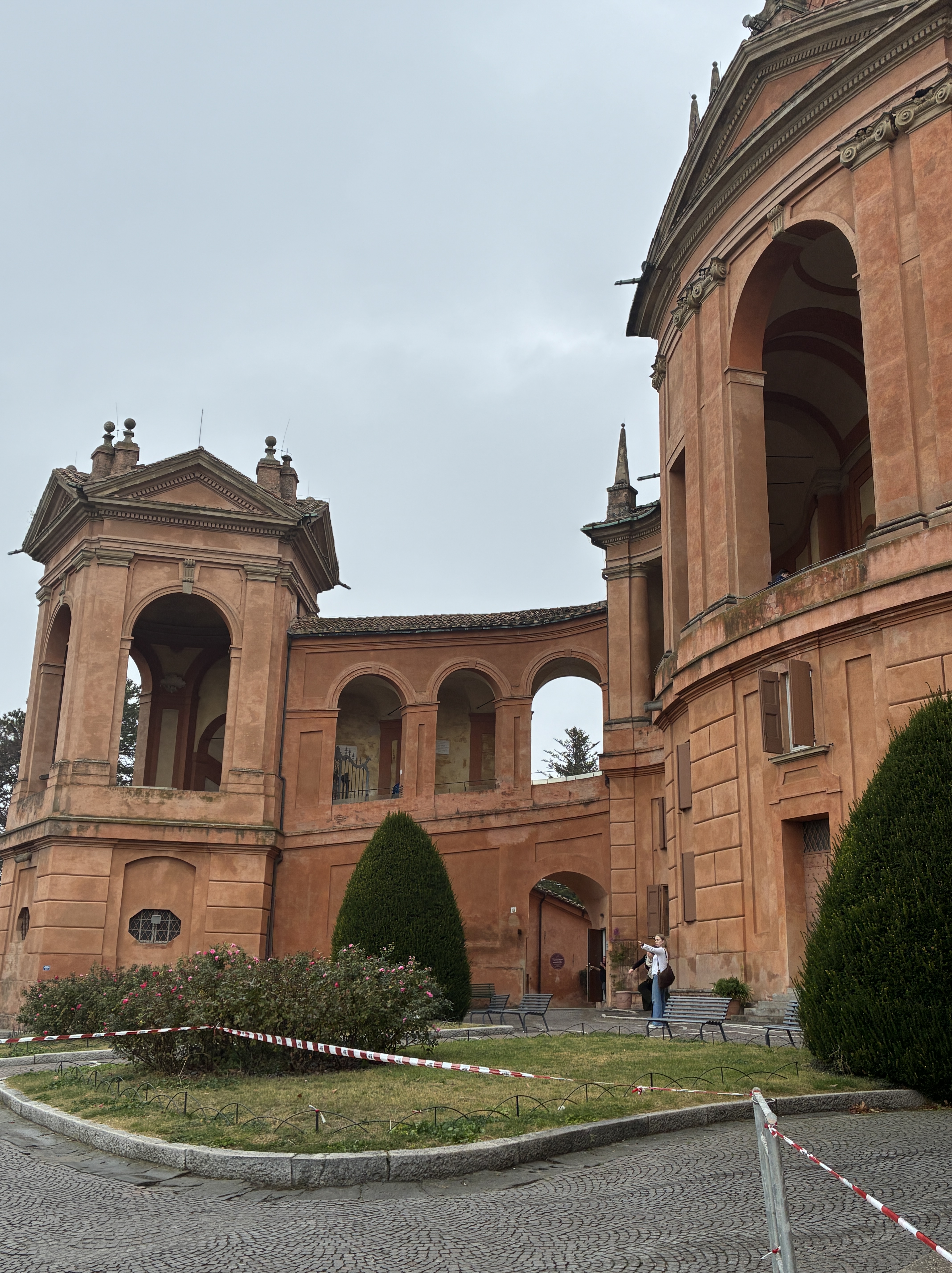
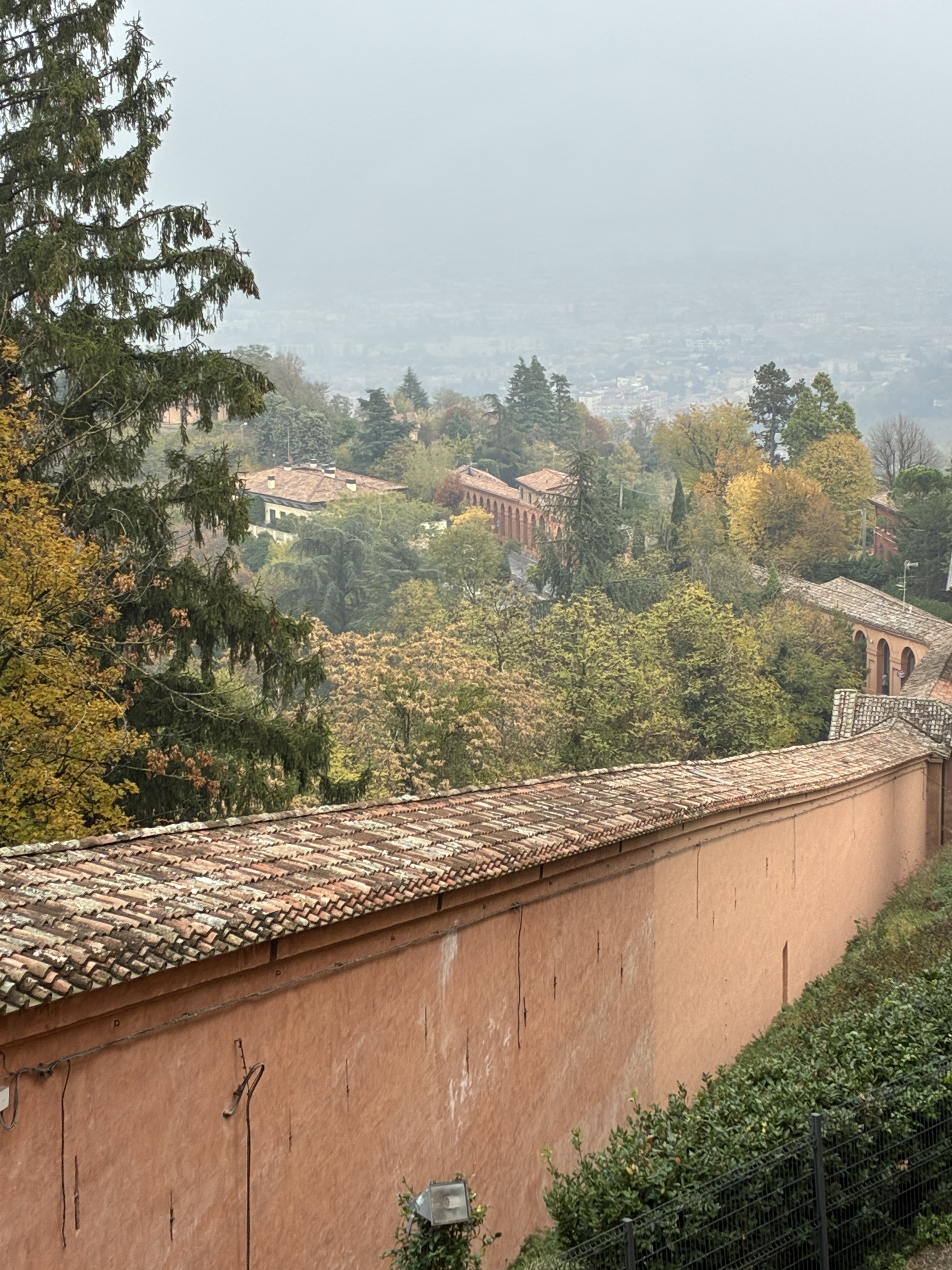
I’ve had some great weather since I arrived in Italy, but it finally turned when I got to Bologna. While this was disappointing because it put the kibosh on my cycling plans, it also couldn’t have happened in a better place. As it happens, UNESCO recognized Bologna for its porticoes in 2021—there’s nearly 25 miles of them all over town—which means there’s very little scrambling for cover when it rains. Bologna also has the Portico di San Luca walk, which is the longest covered walkway in the world at 2.4 miles and 666 arches. I did this on one rainy day and the only ‘wet’ I got was not from rain, but from sweat (much of it climbs uphill to the Sanctuary of the Madonna San Luca).
Ravenna’s timeless art
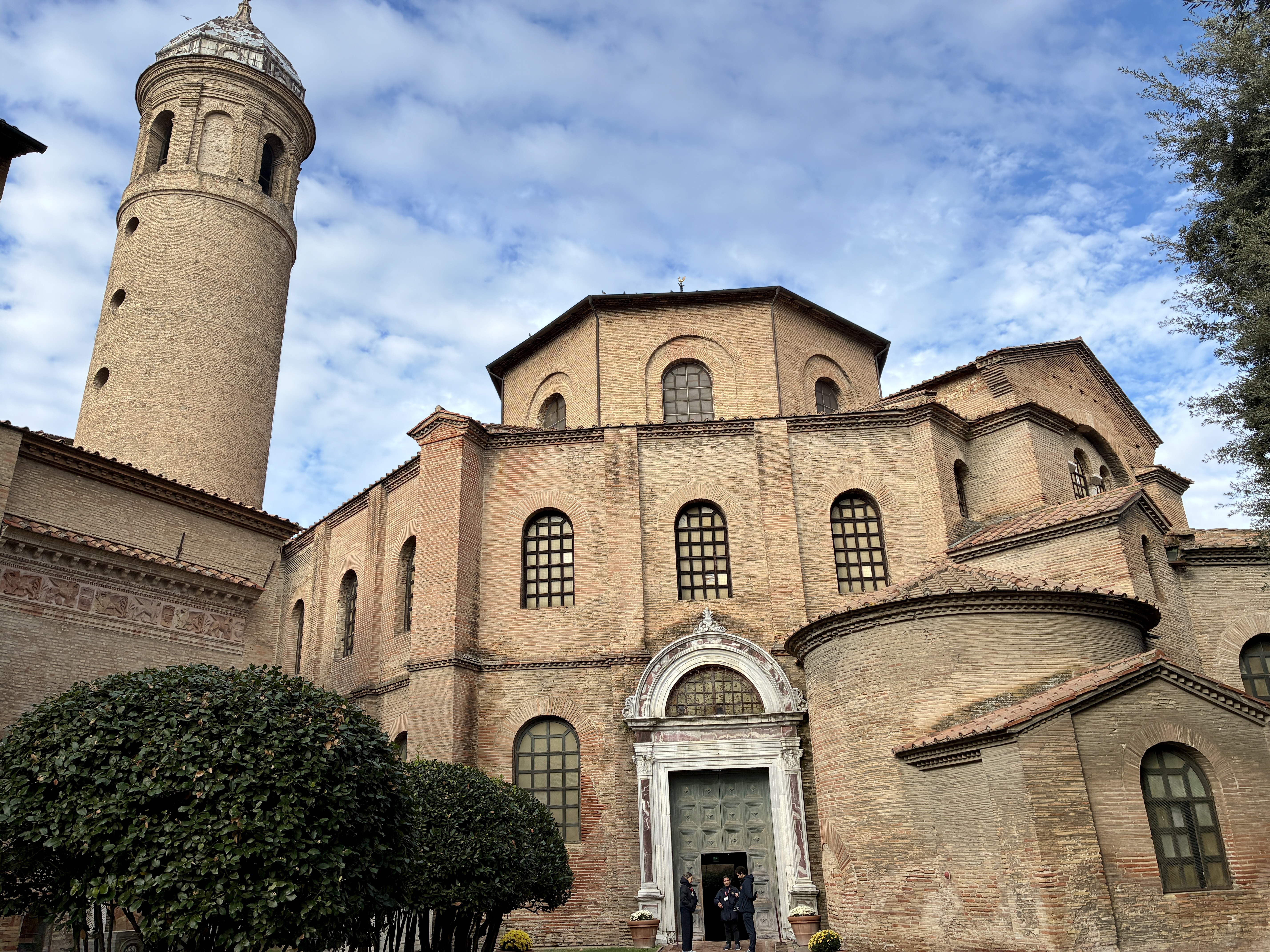
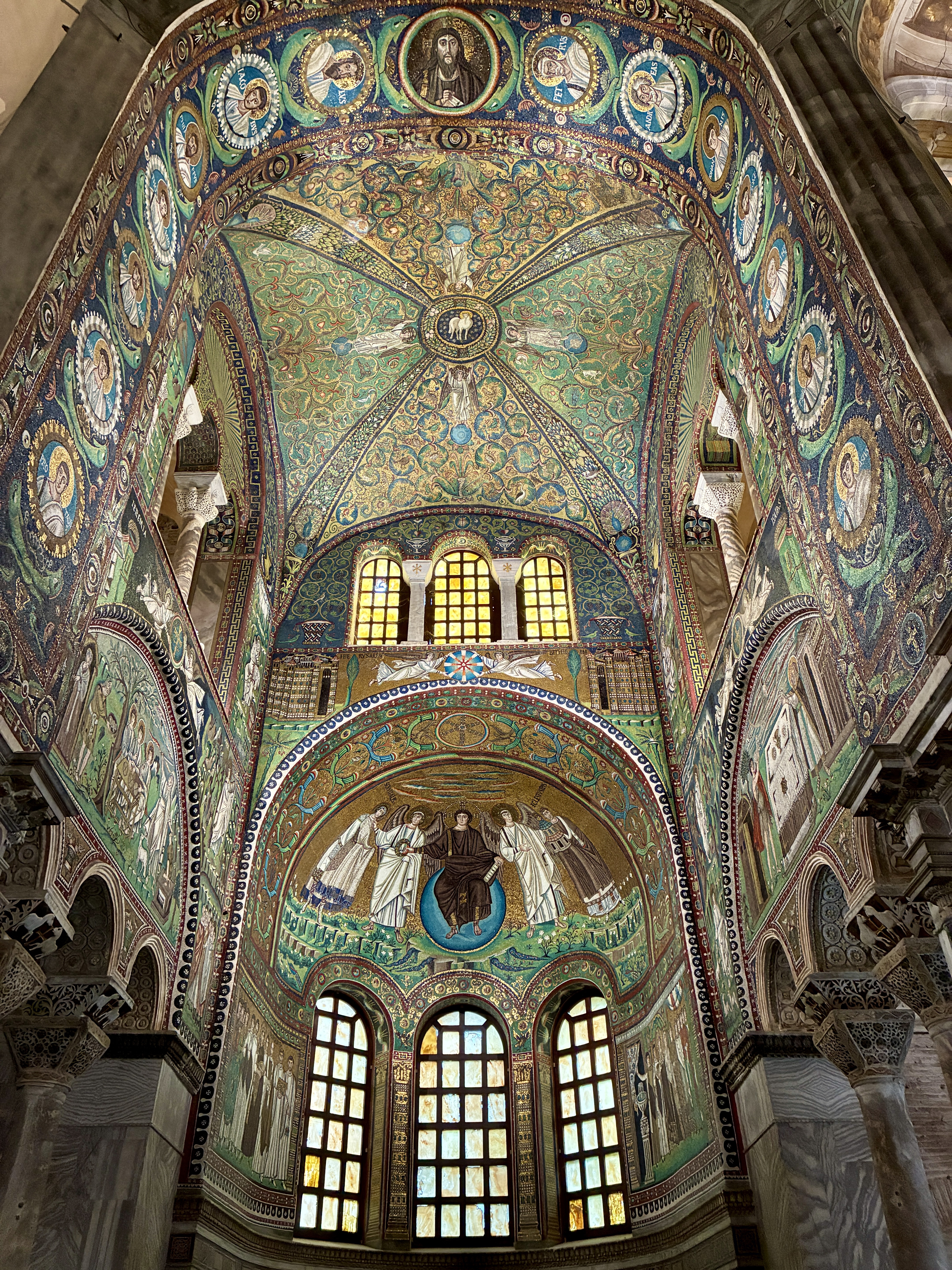
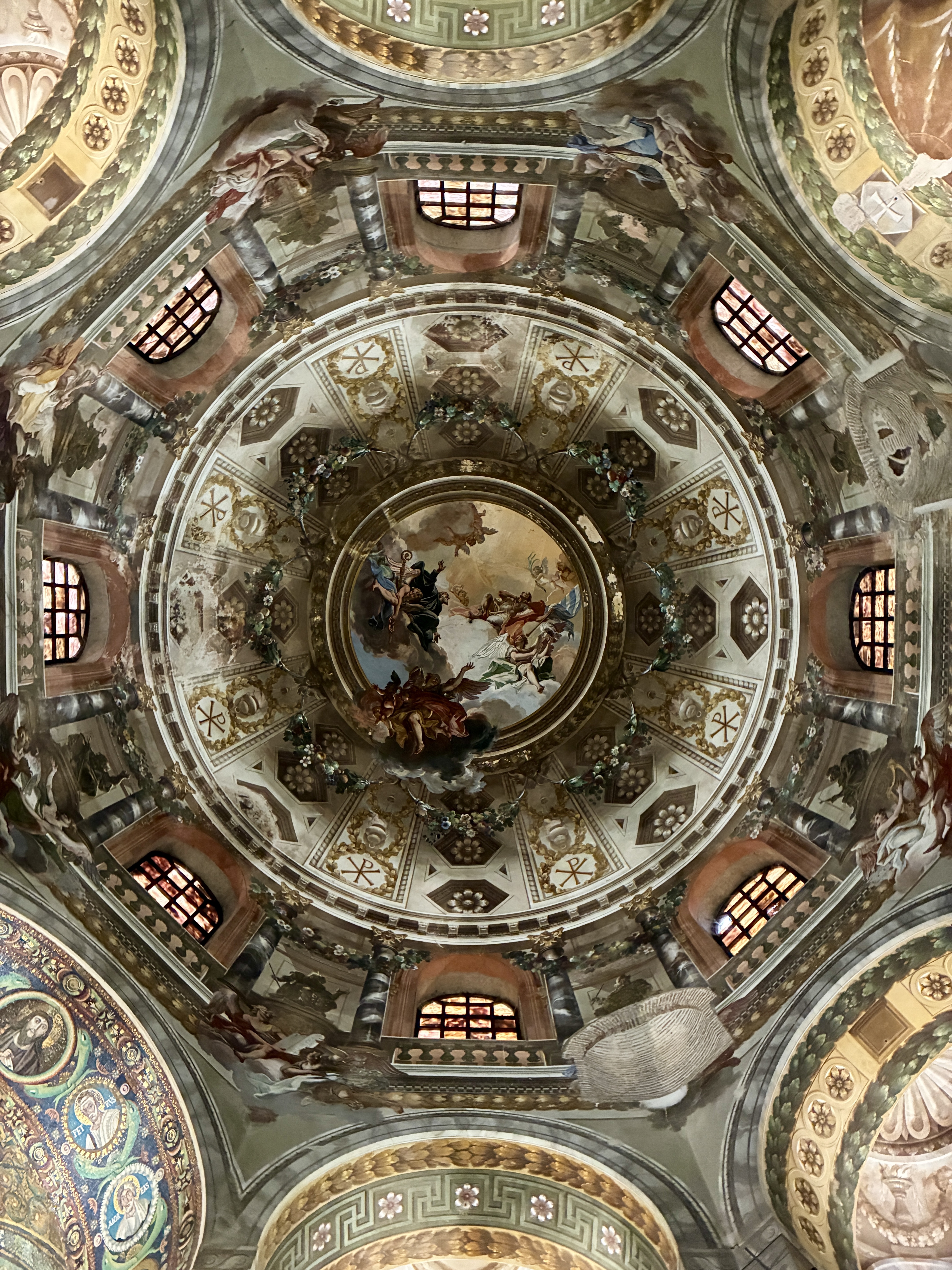
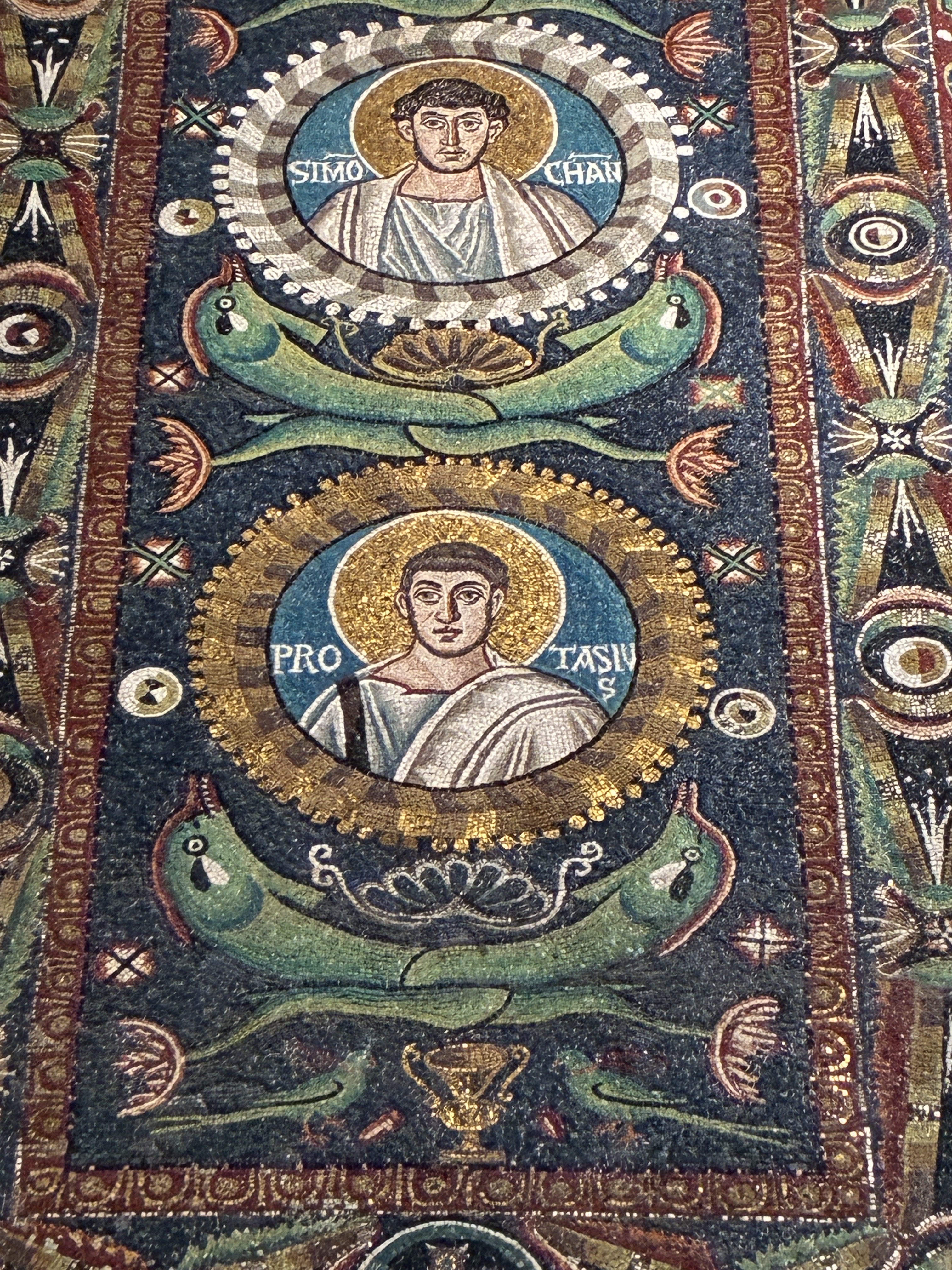
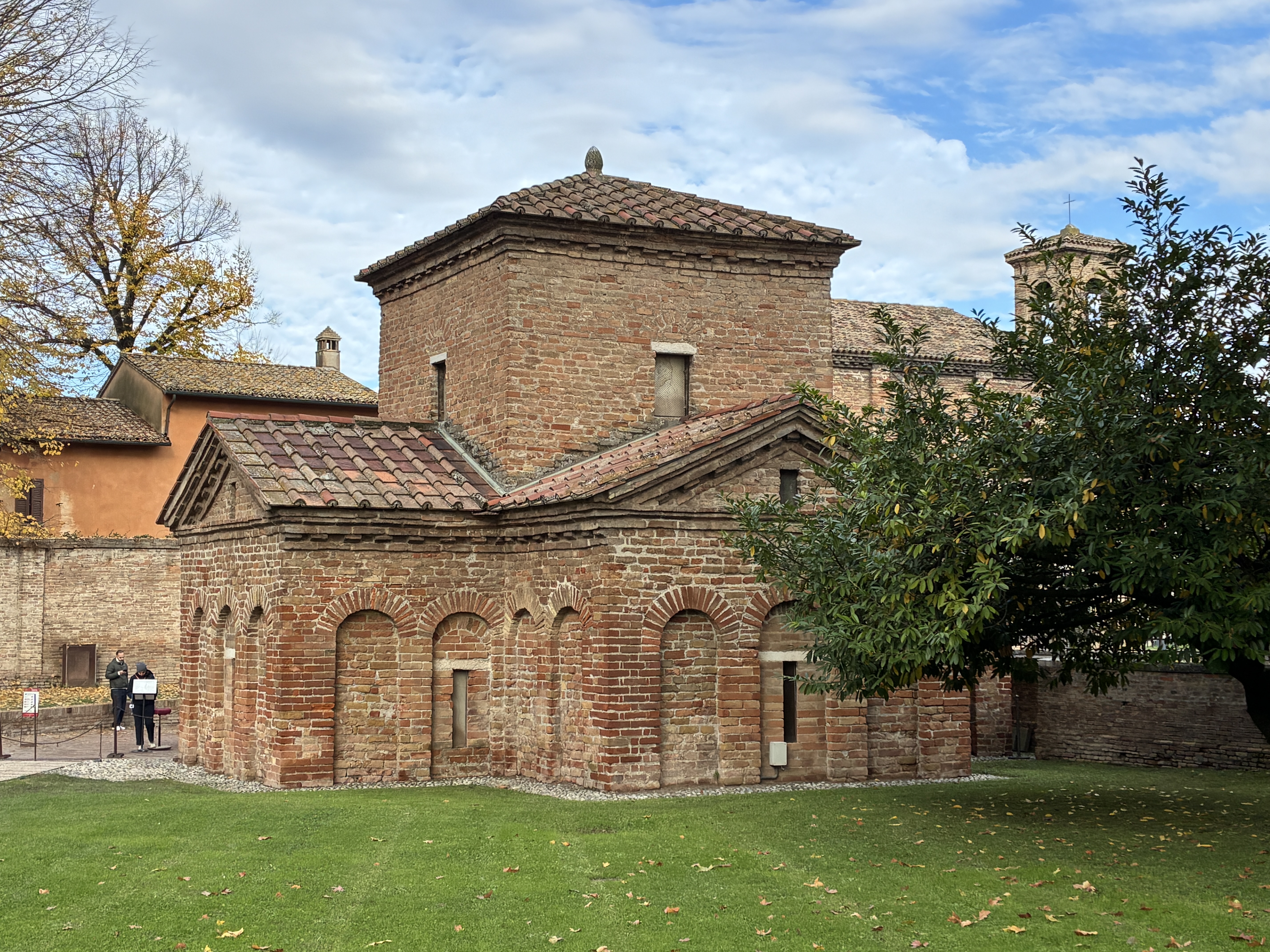
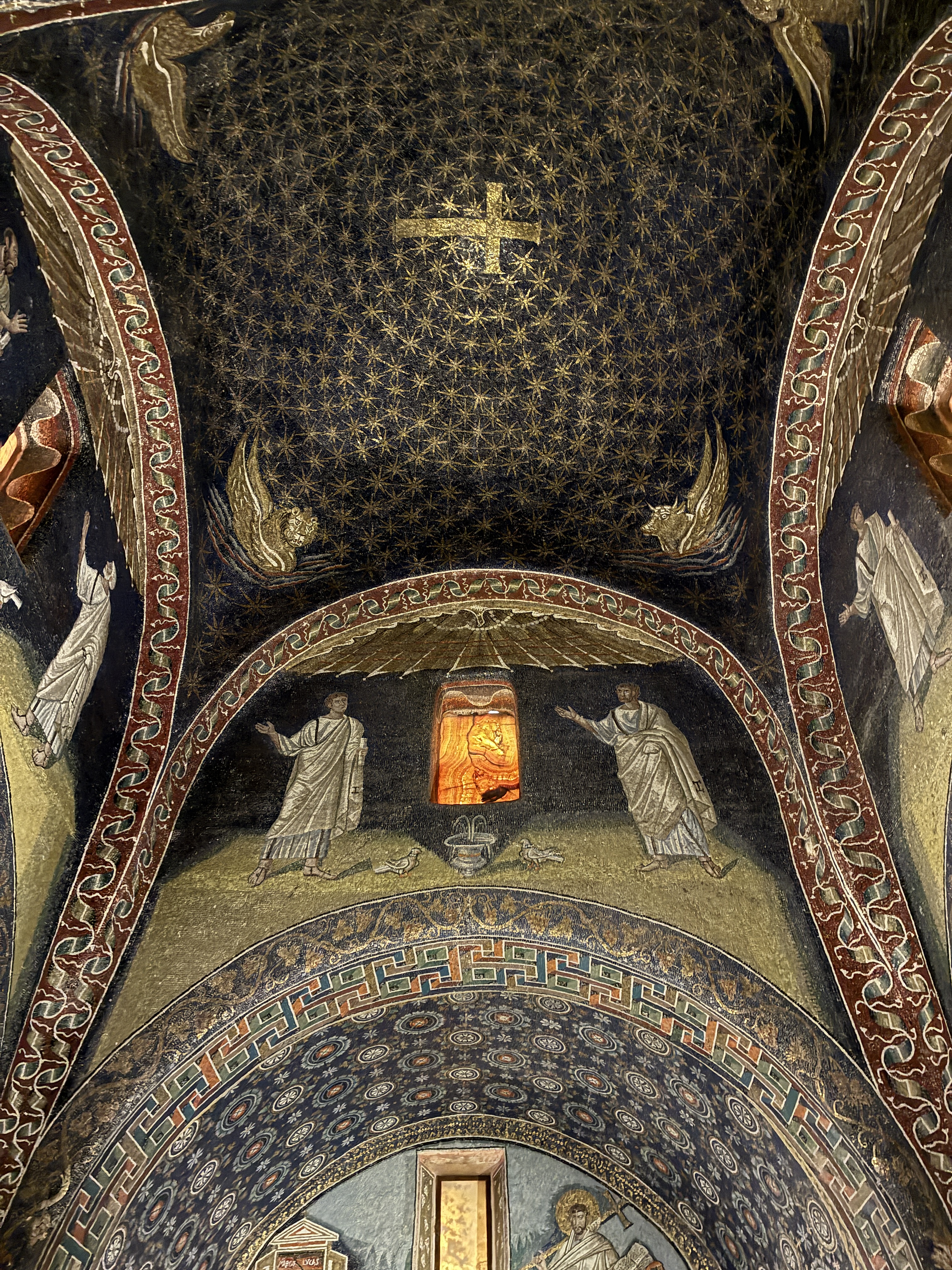
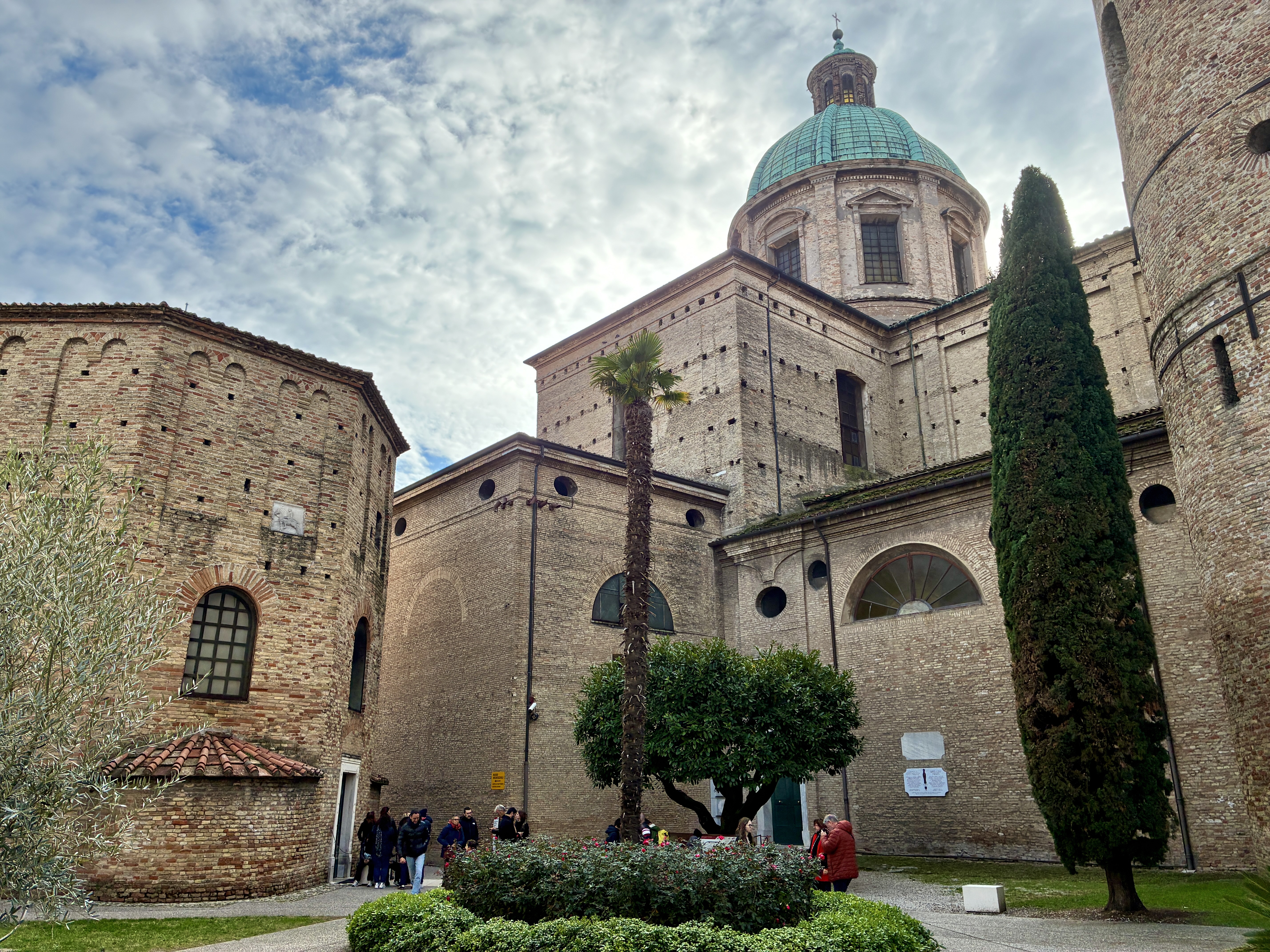
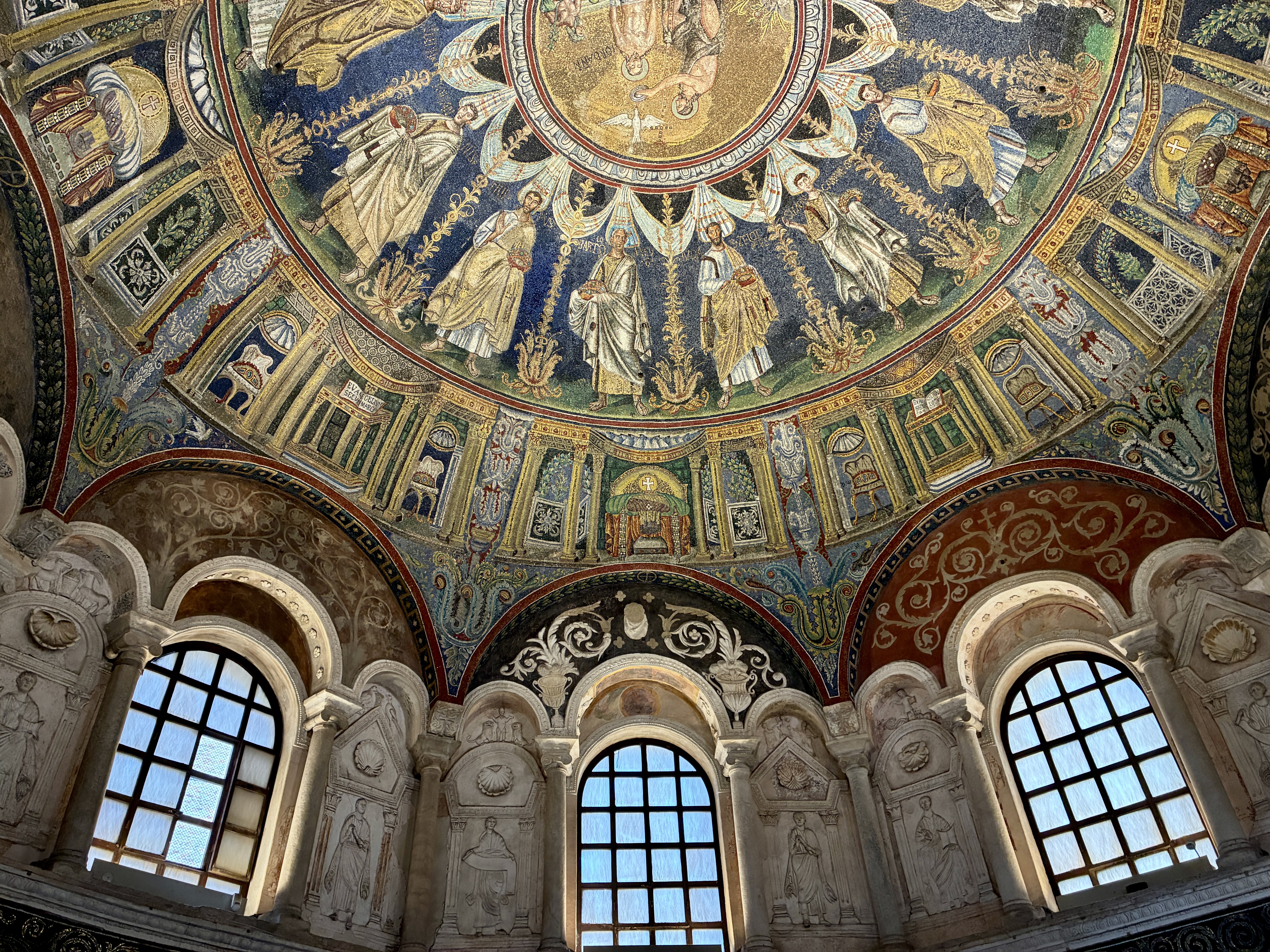
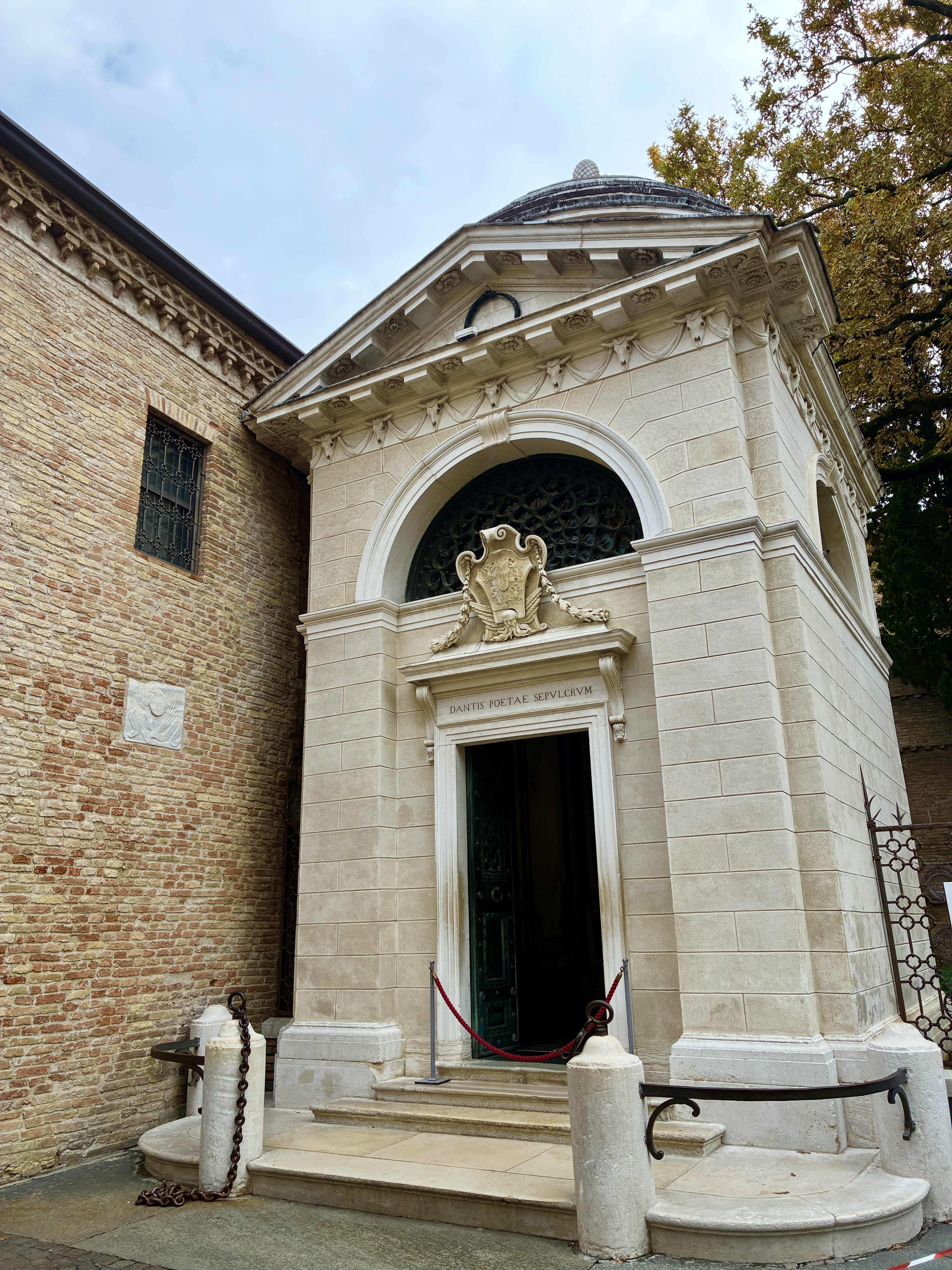
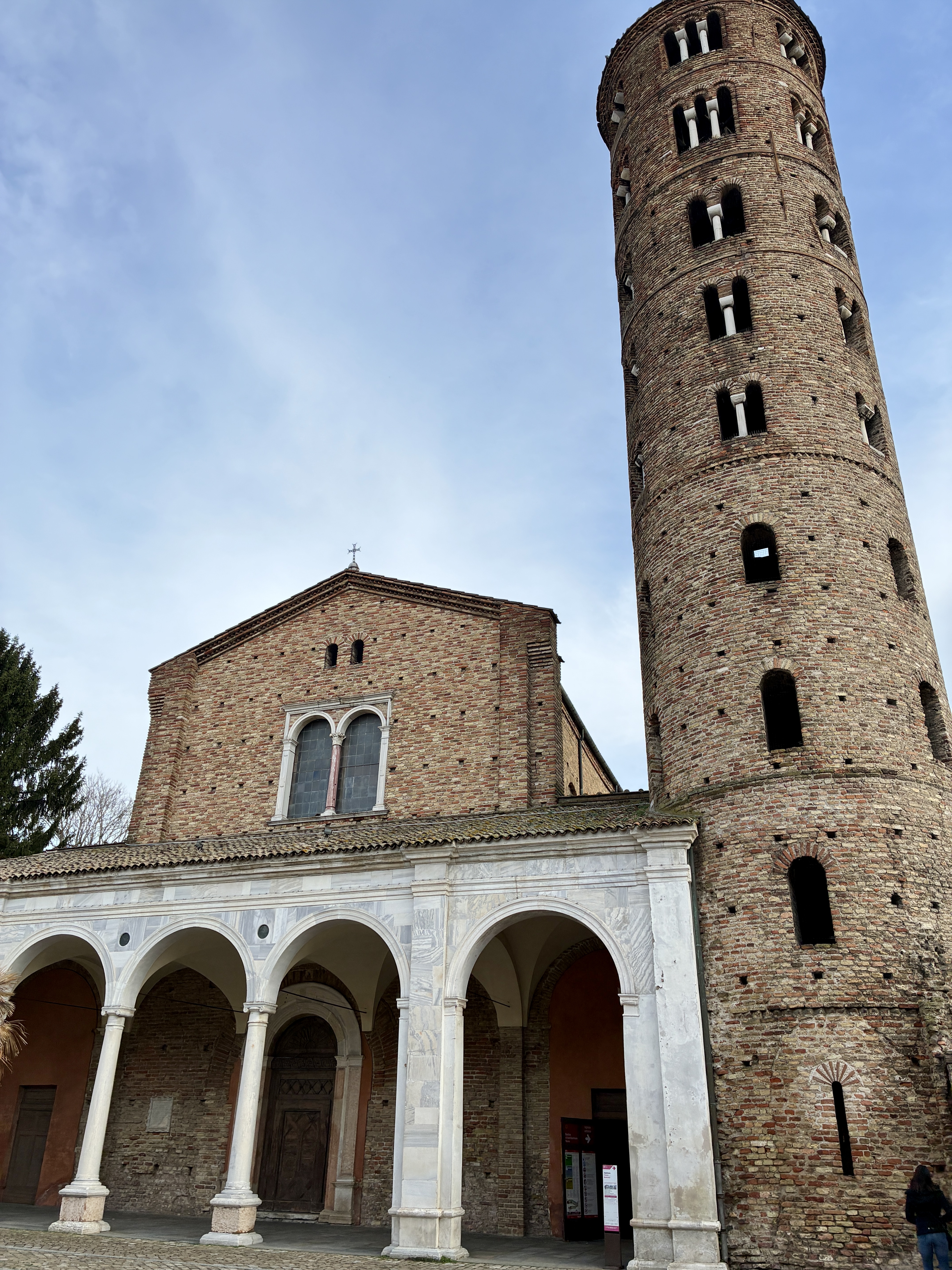
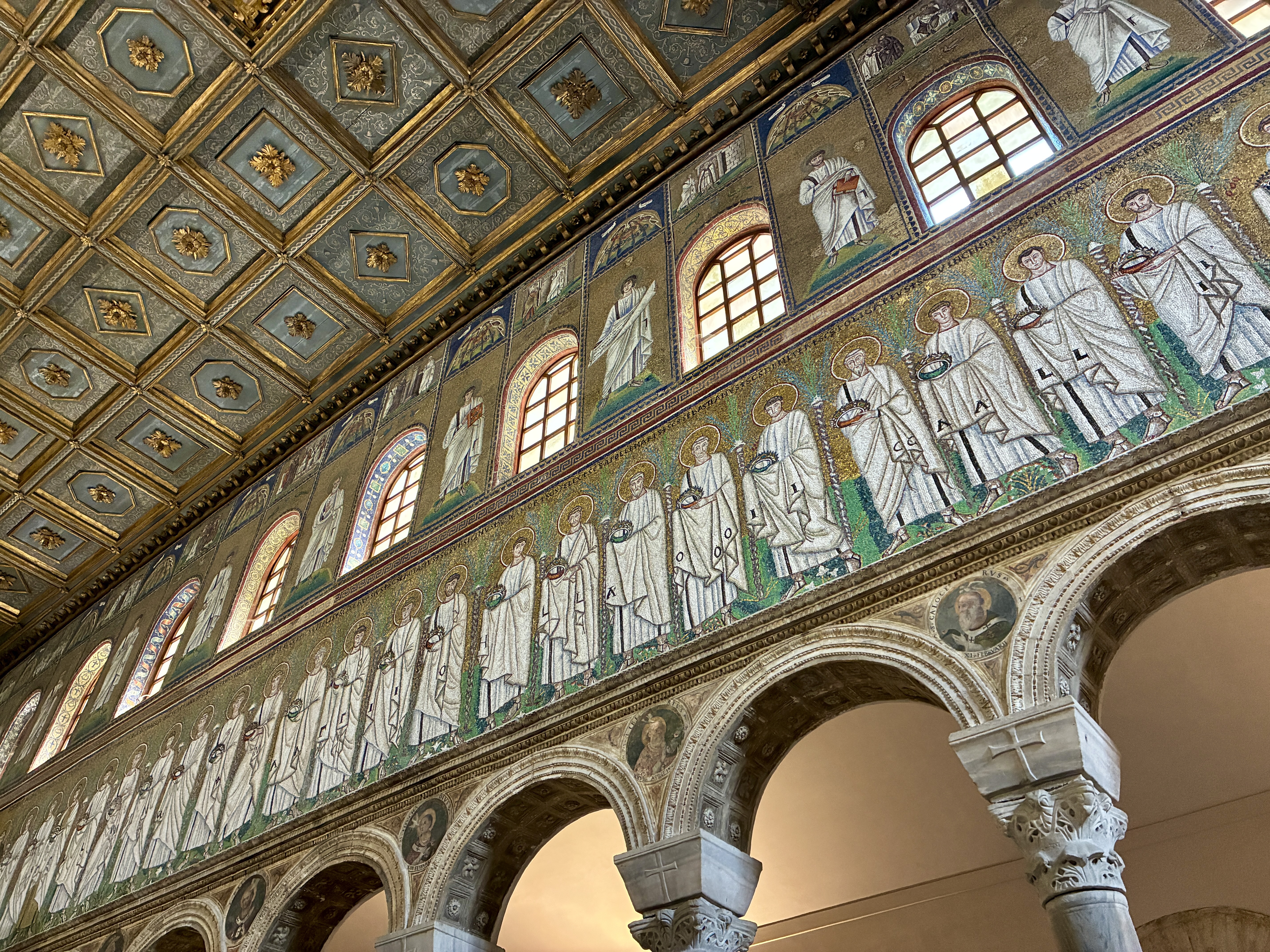
While I’ve been in Bologna, I’ve had exactly ONE dry day, and it was on a Sunday, when the bike rental shop was closed. To console myself, I took a day trip to Ravenna, which is a quiet city about an hour east of Bologna. Ravenna is known for being the final home of Dante after he was exiled from Florence and also for serving as a capital three times in its history: for the last emperors of Rome, for the Gothic kings who succeeded them, and for Byzantium’s governors in the West. Each left behind a church, a tomb, or a baptistery, and together these house the richest collection of early Christian art anywhere in Europe. The most notable of these are in the form of elaborate, 1500-year old glass and gilded-tile mosaics that are breathtaking to behold, not just because you marvel at how well preserved they are, but because of their vibrancy and detail. It really is something you have to see for yourself to truly appreciate.
That’s been my time in Bologna thus far: food (and only the occasional wine), history, art, and staying dry. I’m not quite done with it yet, but my time is soon wrapping up…



Leave a Reply