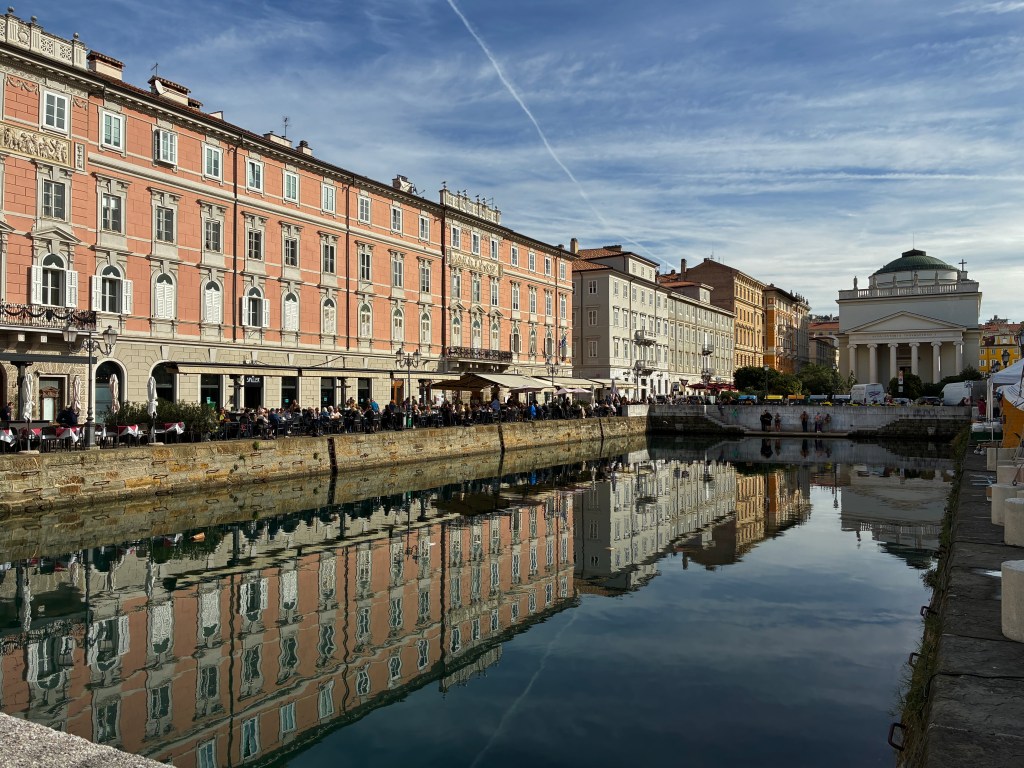
I am now in the part of my trip shared by my friends Jill and Don (who you may remember from Colombia and Croatia). Since I’ve introduced them before, I will simply summarize here: Jill and I have known each other since grade school and I’ve known her husband Don since high school, so we have what feels like a lifetime of shared history.
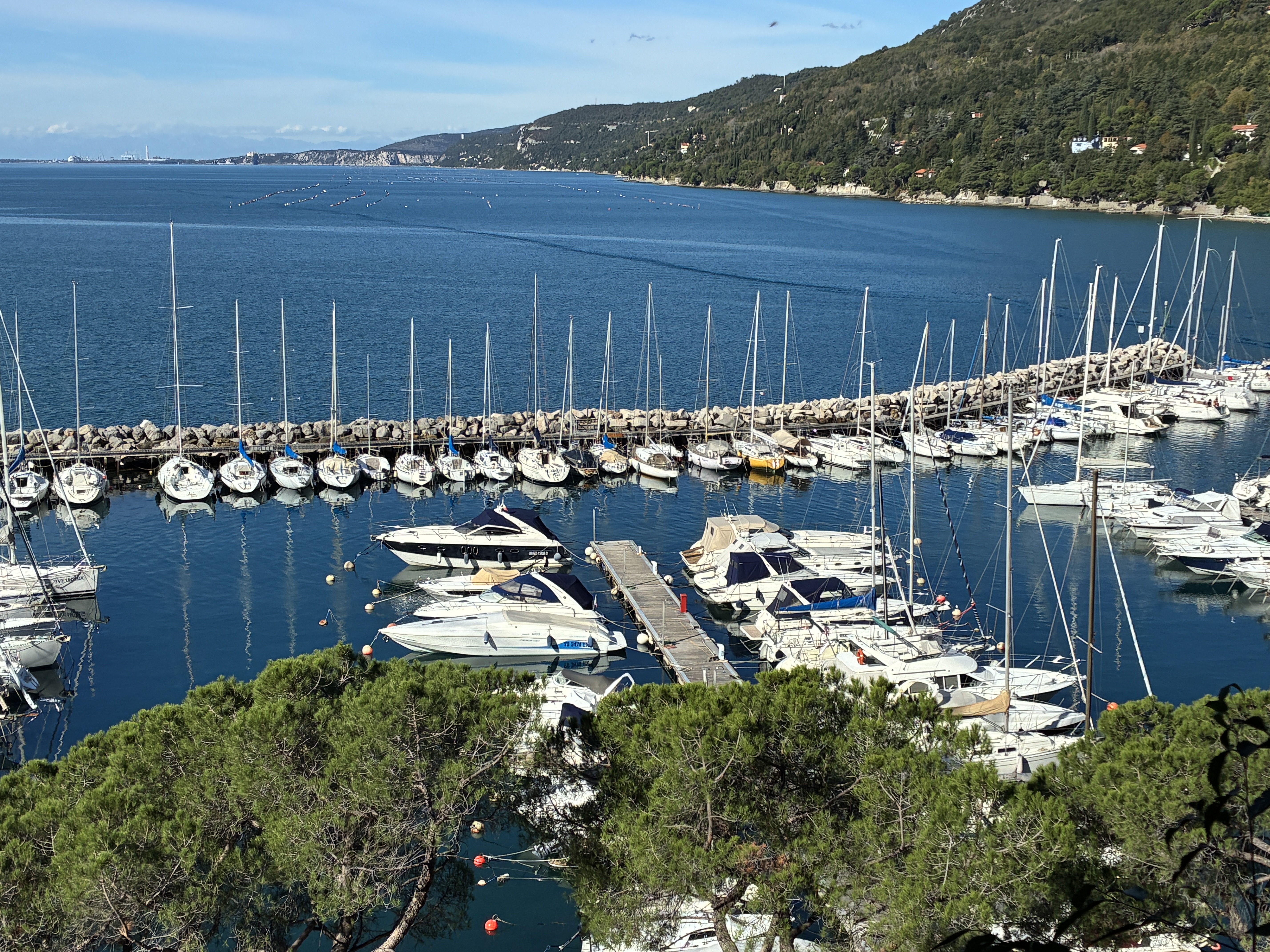
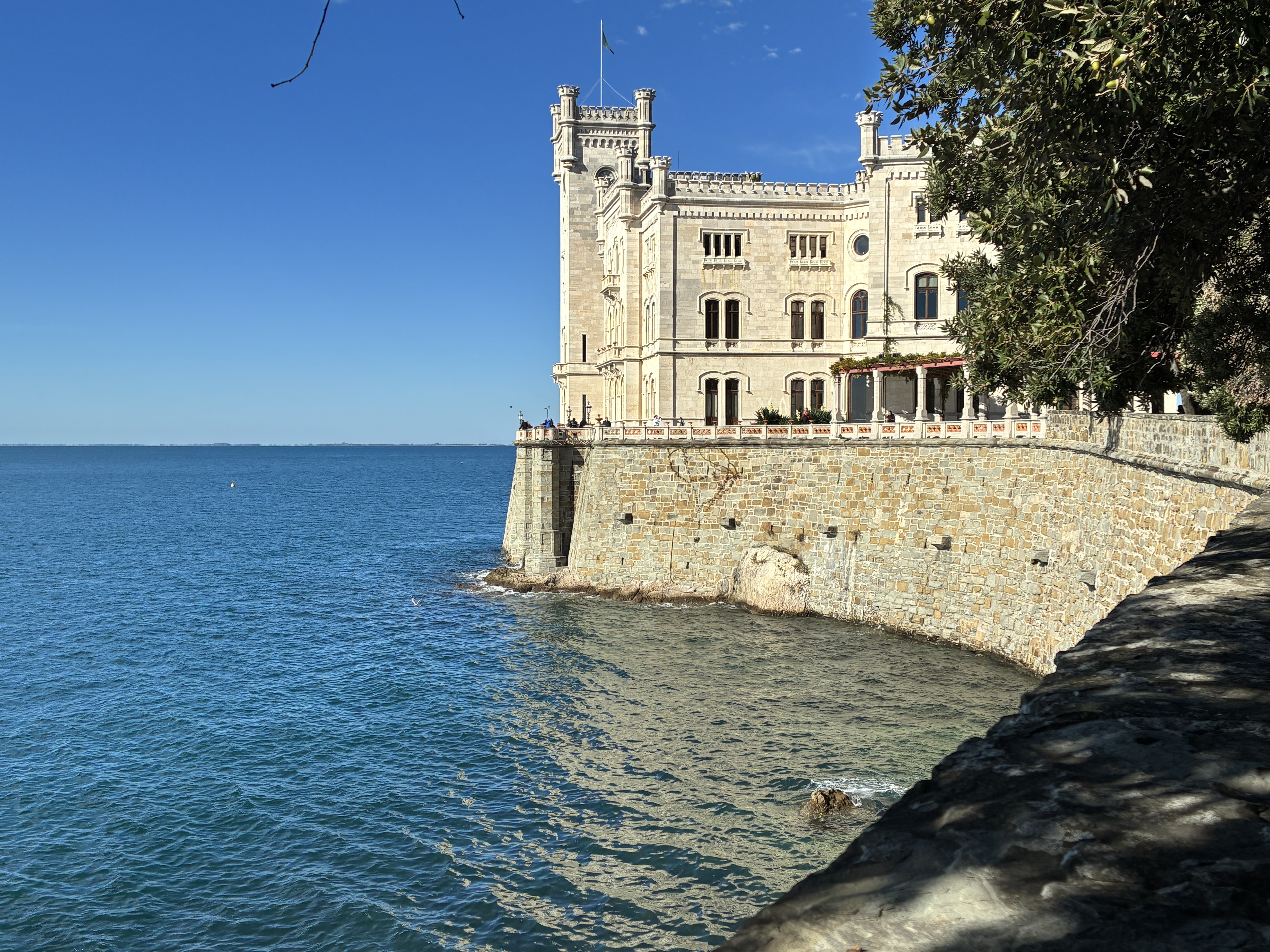
We met in Muggia, which is where they’re staying for several months. In this post, I am grouping Muggia and Trieste together because the town and city are near each other and we’ve been splitting our time between these two places (starting in Muggia, then in Trieste). While the two places are only a 40-minute bus ride apart (or an even shorter ferry ride), they couldn’t be more different. Trieste is a metropolitan city often called “Vienna by the Sea.” As the former main port of the Austro-Hungarian Empire, it has neoclassical palaces, wide boulevards, and an Central European coffeehouse culture with lots of outdoor cafes. In stark contrast, Muggia is a colorful, intimate fishing village that serves as Italy’s gateway to the Istrian Peninsula. While Trieste has a distinct Austrian feel, Muggia is strongly Venetian, defined by its compact medieval layout, quiet alleyways, and a laid-back maritime charm. One thing the two places share in common, however, is a unique cuisine that is a blend of all of its historic and geographic influences—a delicious mix of Italian, Istrian, Slovenian, and Austrian cuisines that can result in pasta and sauerkraut dishes appearing on the same menu.
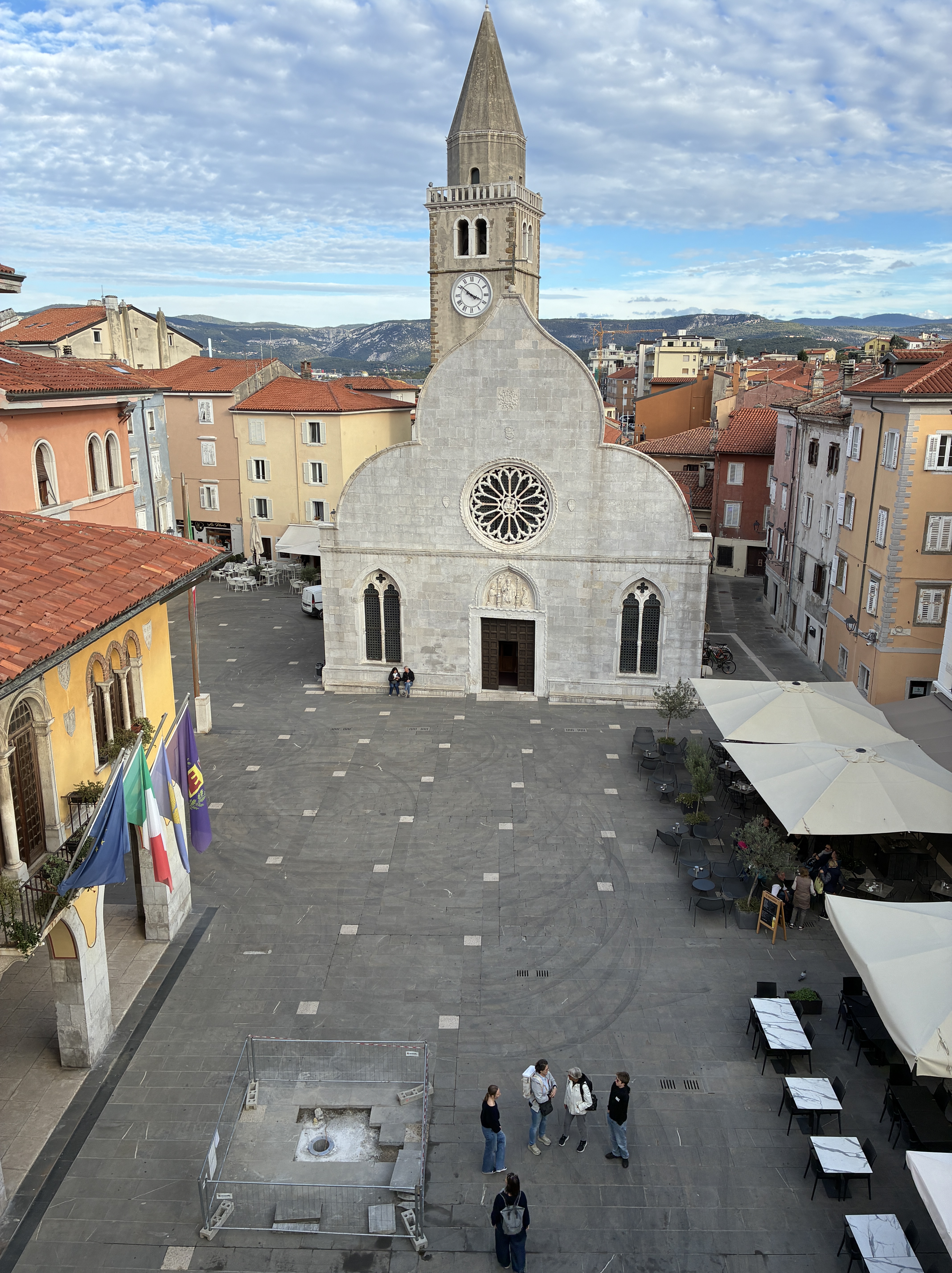
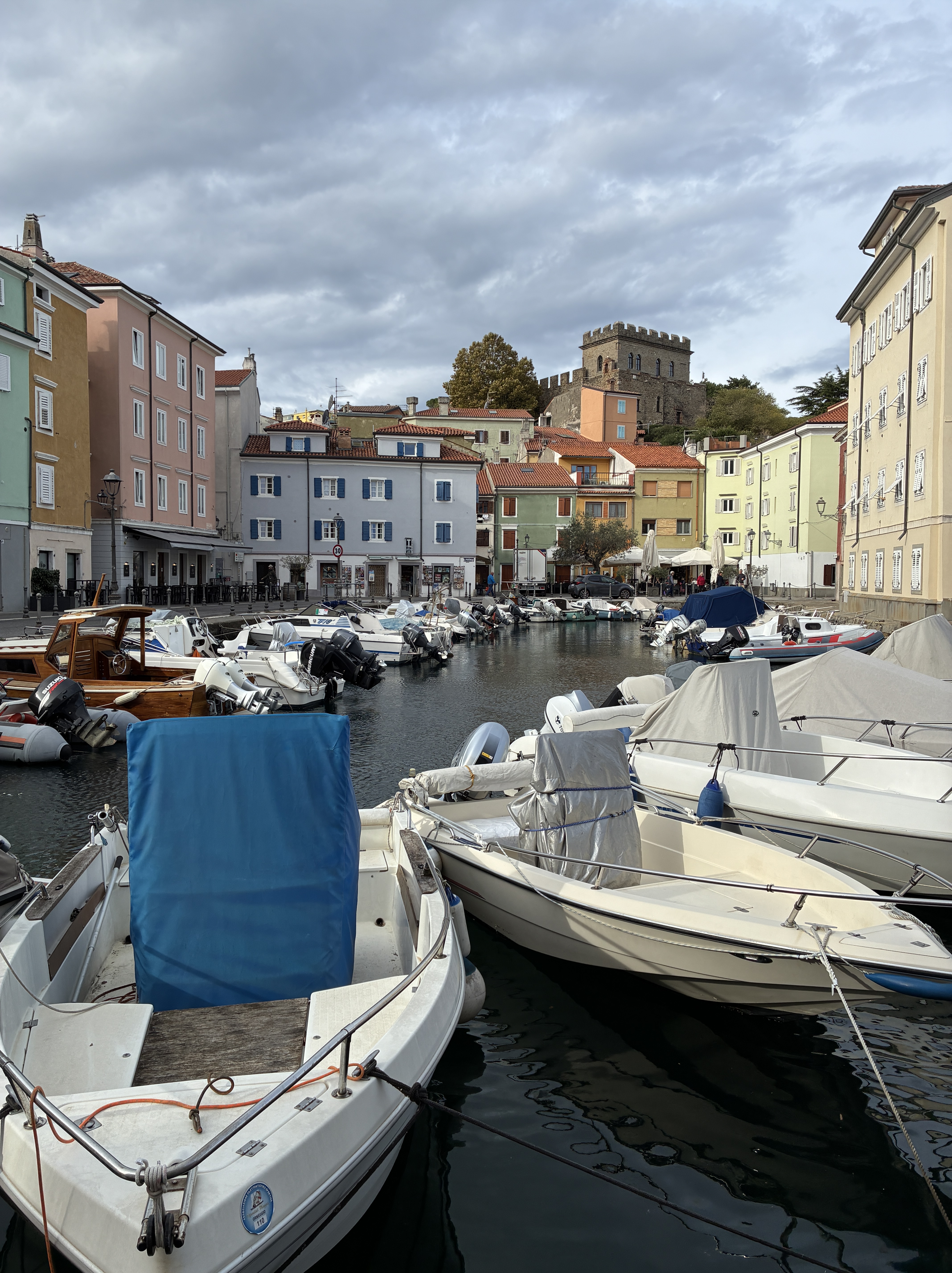
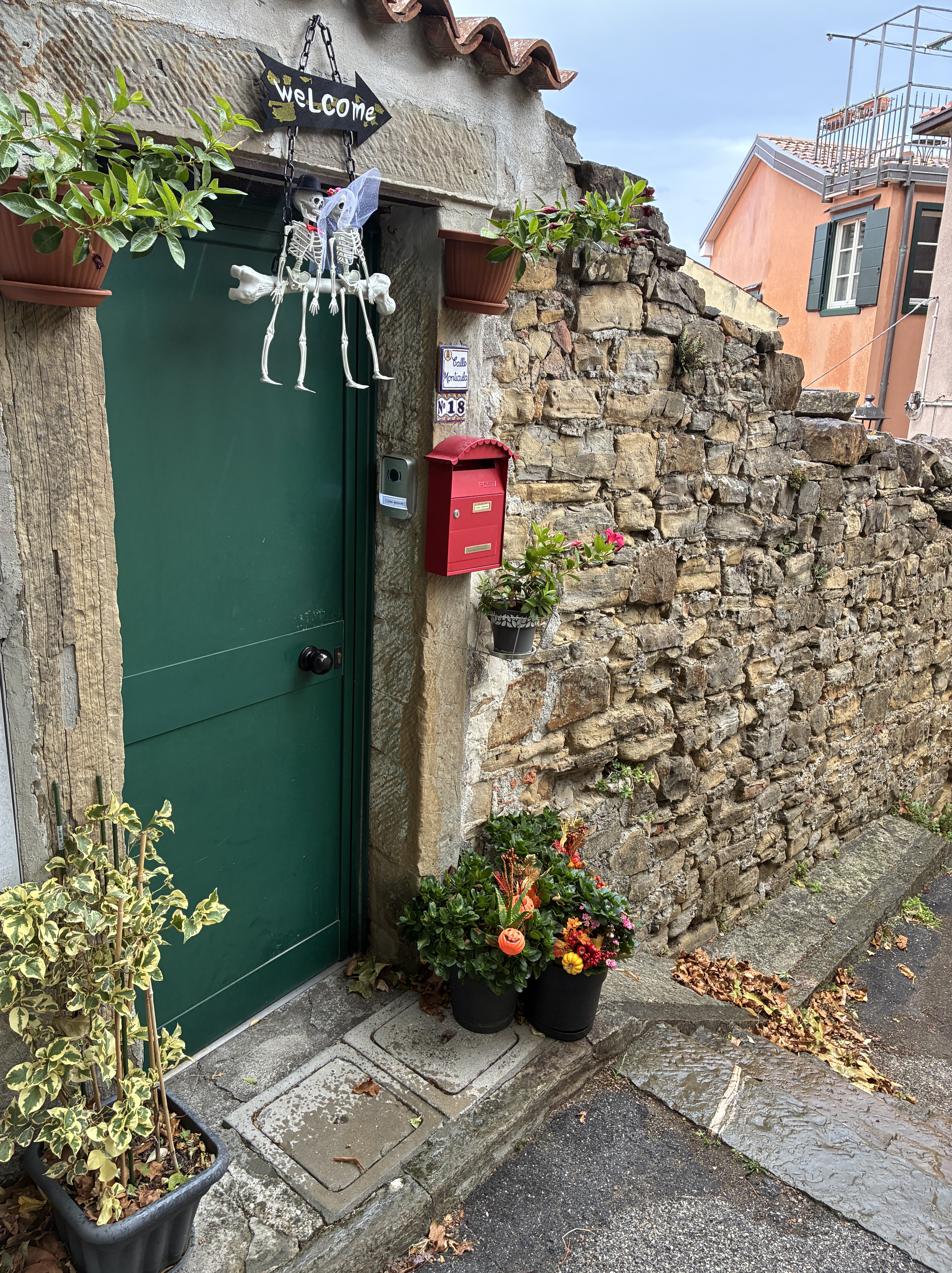
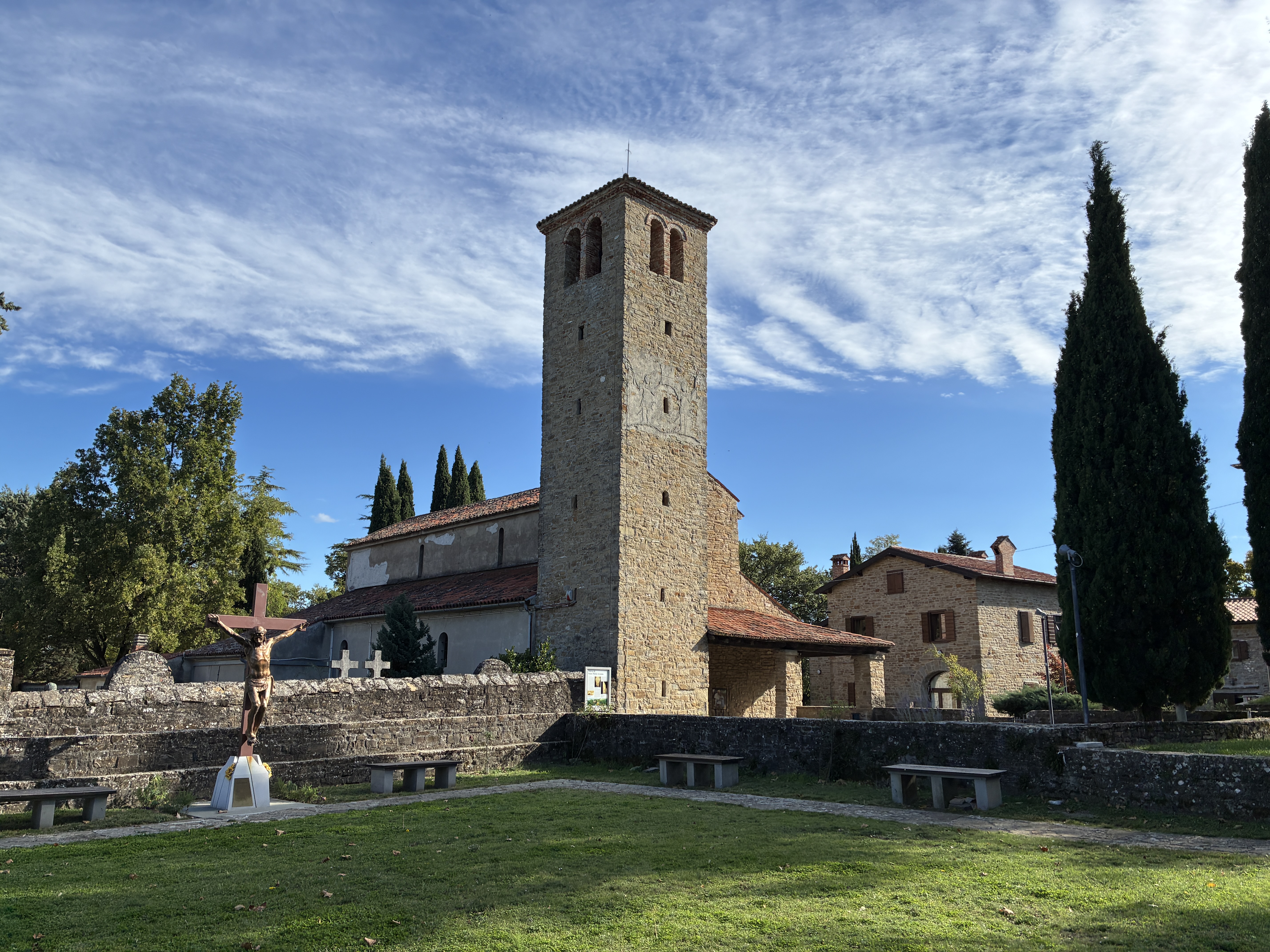
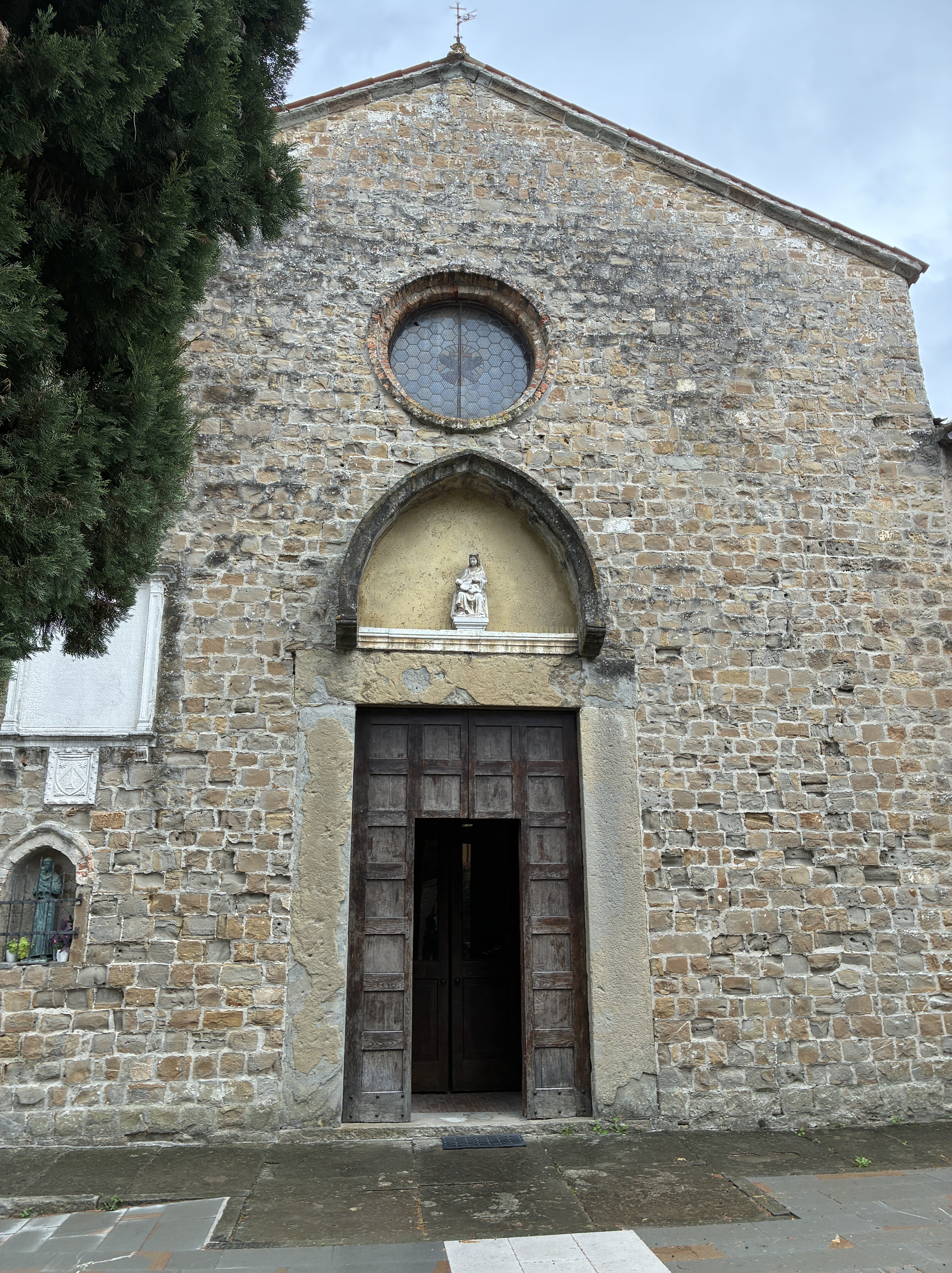
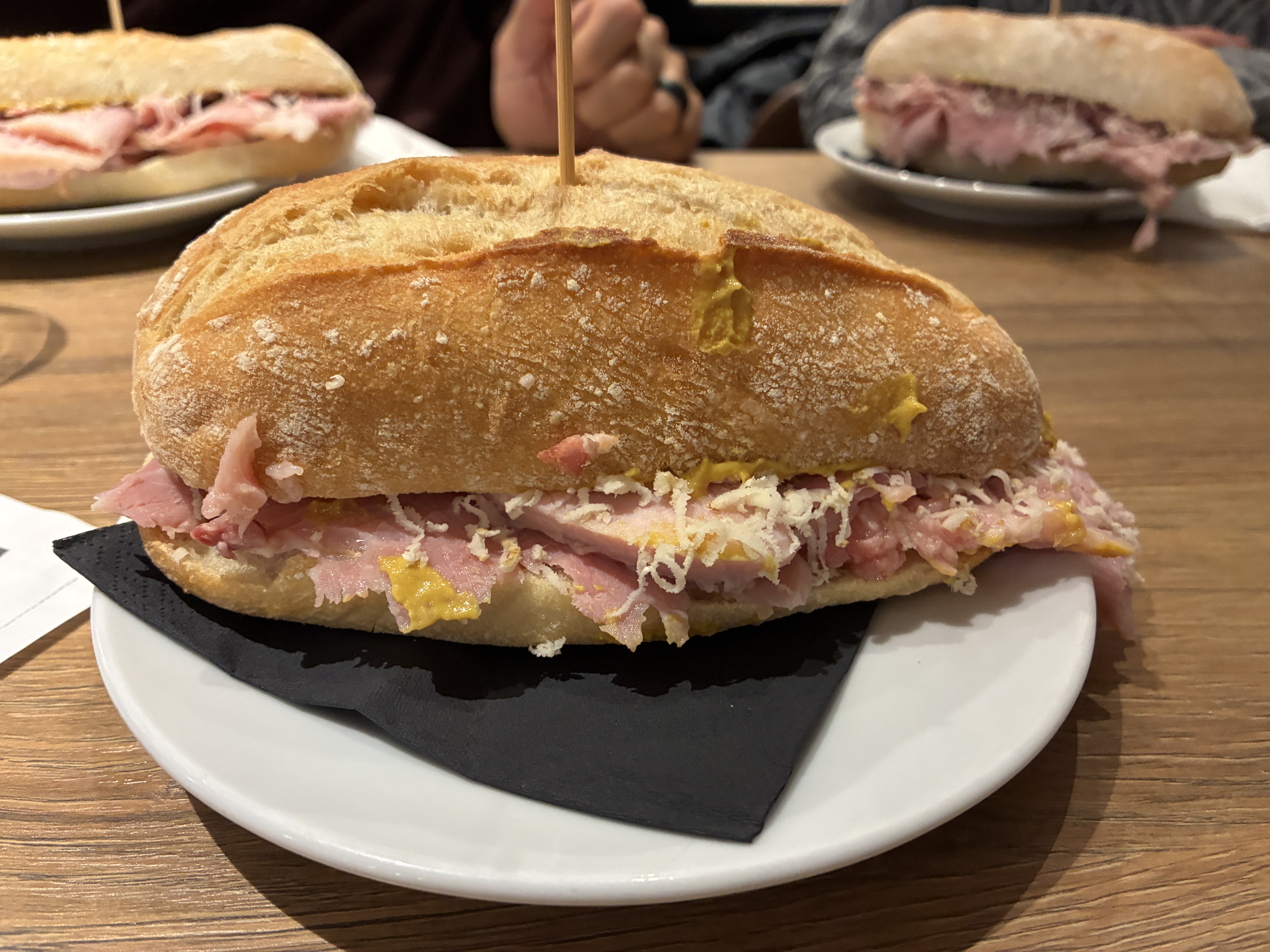
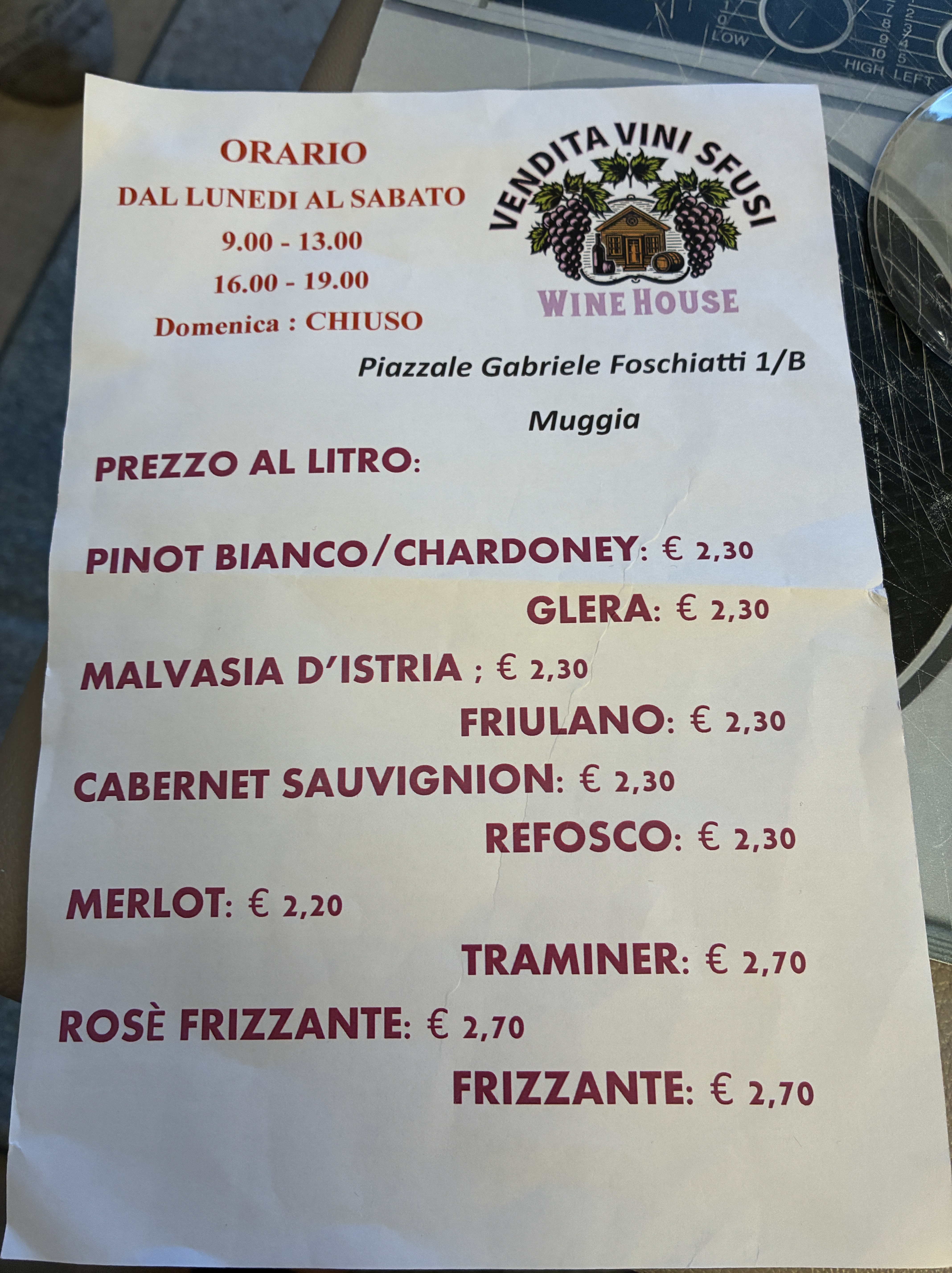
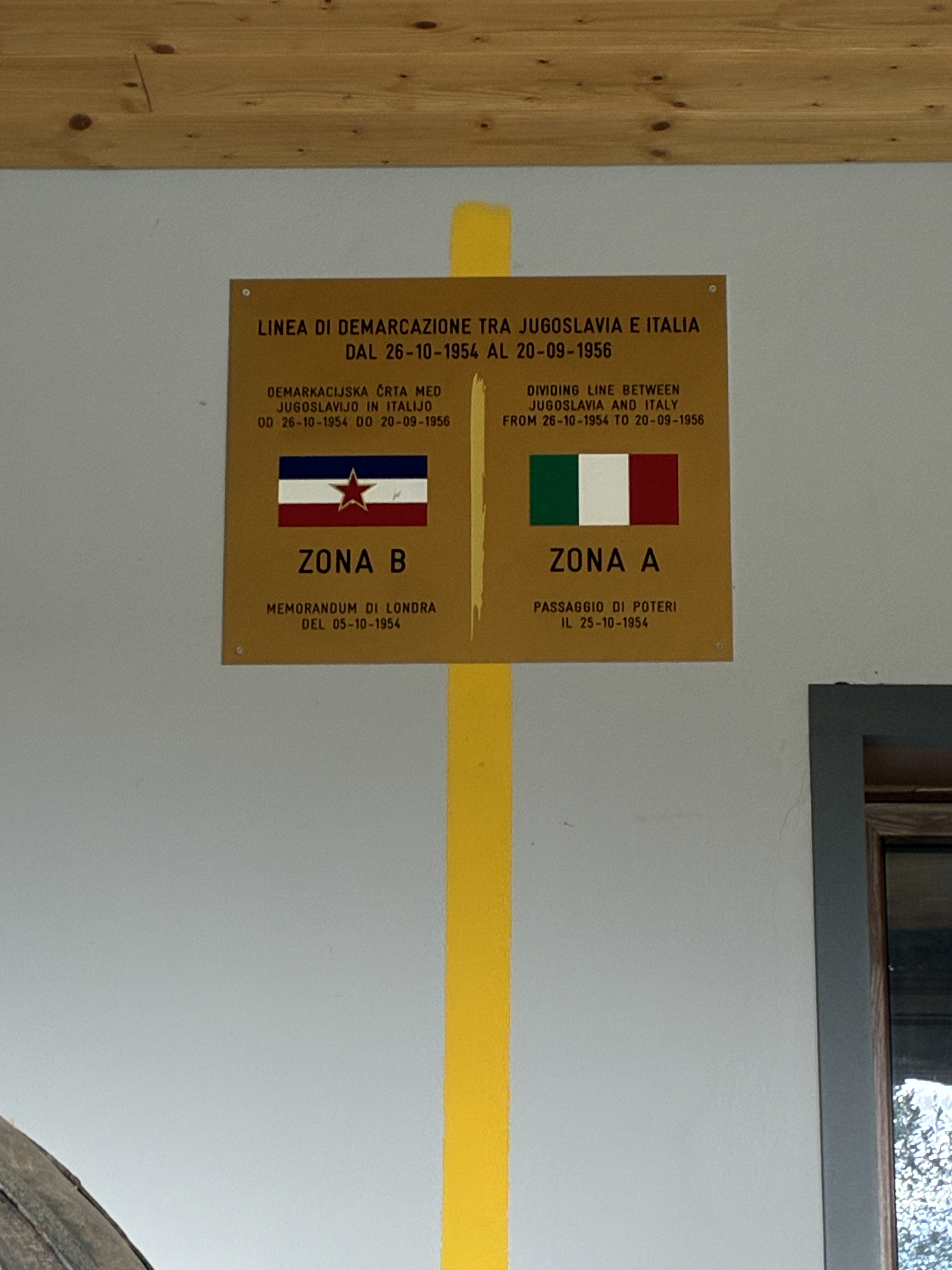
During our time in Muggia, we enjoyed touring Muggia Castle and strolling Muggia’s old town, with its quiet, winding alleyways. We ate panini de porzina (a sandwich that is a perfect example of the cultural influences in this area: it’s a scrumptious panini with roasted pork, grated horseradish, and mustard—the latter two ingredients being more Austrian than Italian) and we especially enjoyed the regional wines. In fact, one of our most memorable afternoons was spent with Bruno Lenardon of Lenardon Winery, who is well known in this area not only for his delicious wine and olive oil, but also for a geopolitical oddity: when the border between Italy and the former Yugoslavia was redrawn after WWII, it was drawn smack through the middle of Lenardon’s house, creating a conundrum that took years (and the forfeiture of land) to resolve. National Geographic even included a piece about this highly unusual situation in this article.
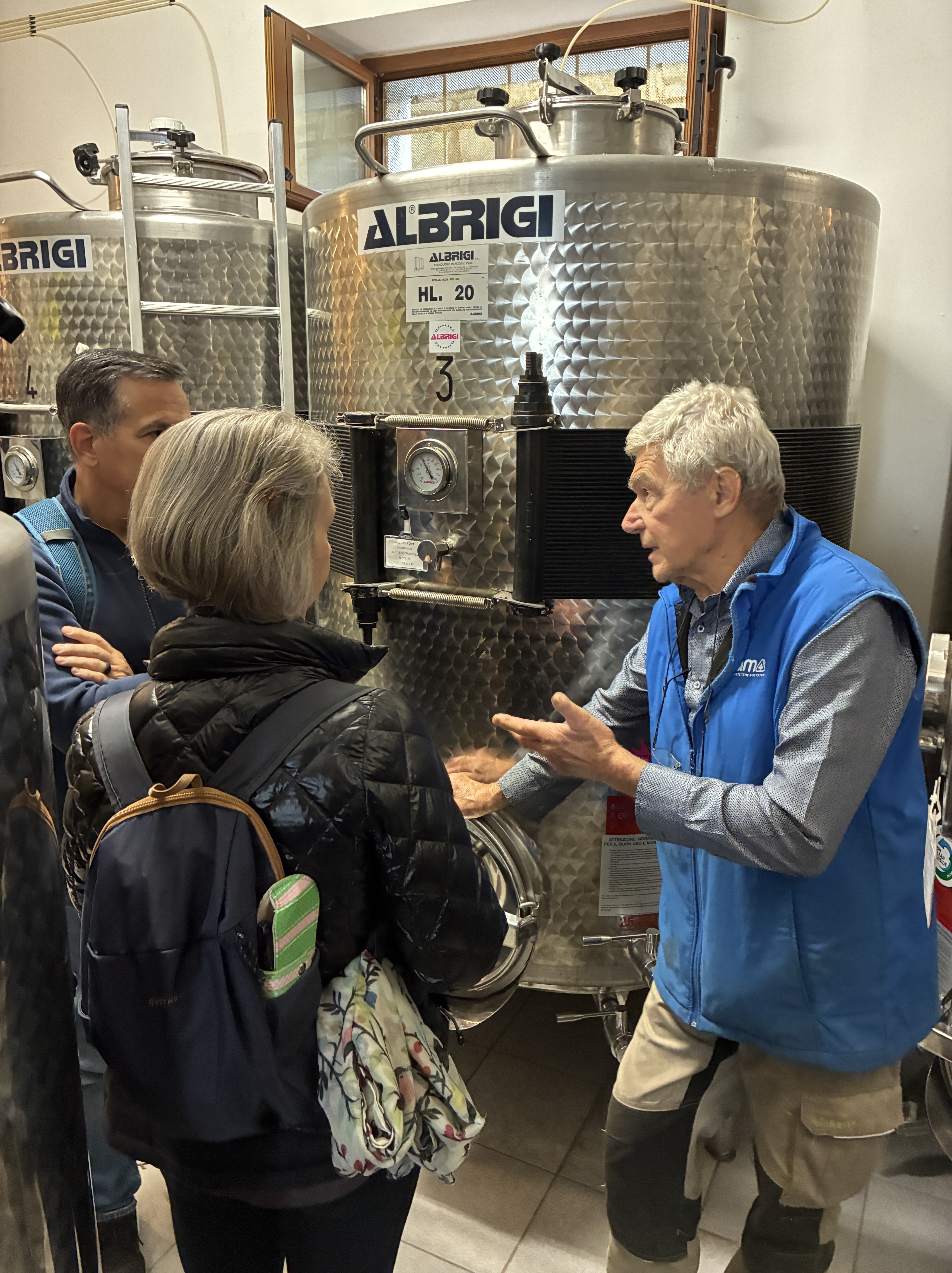
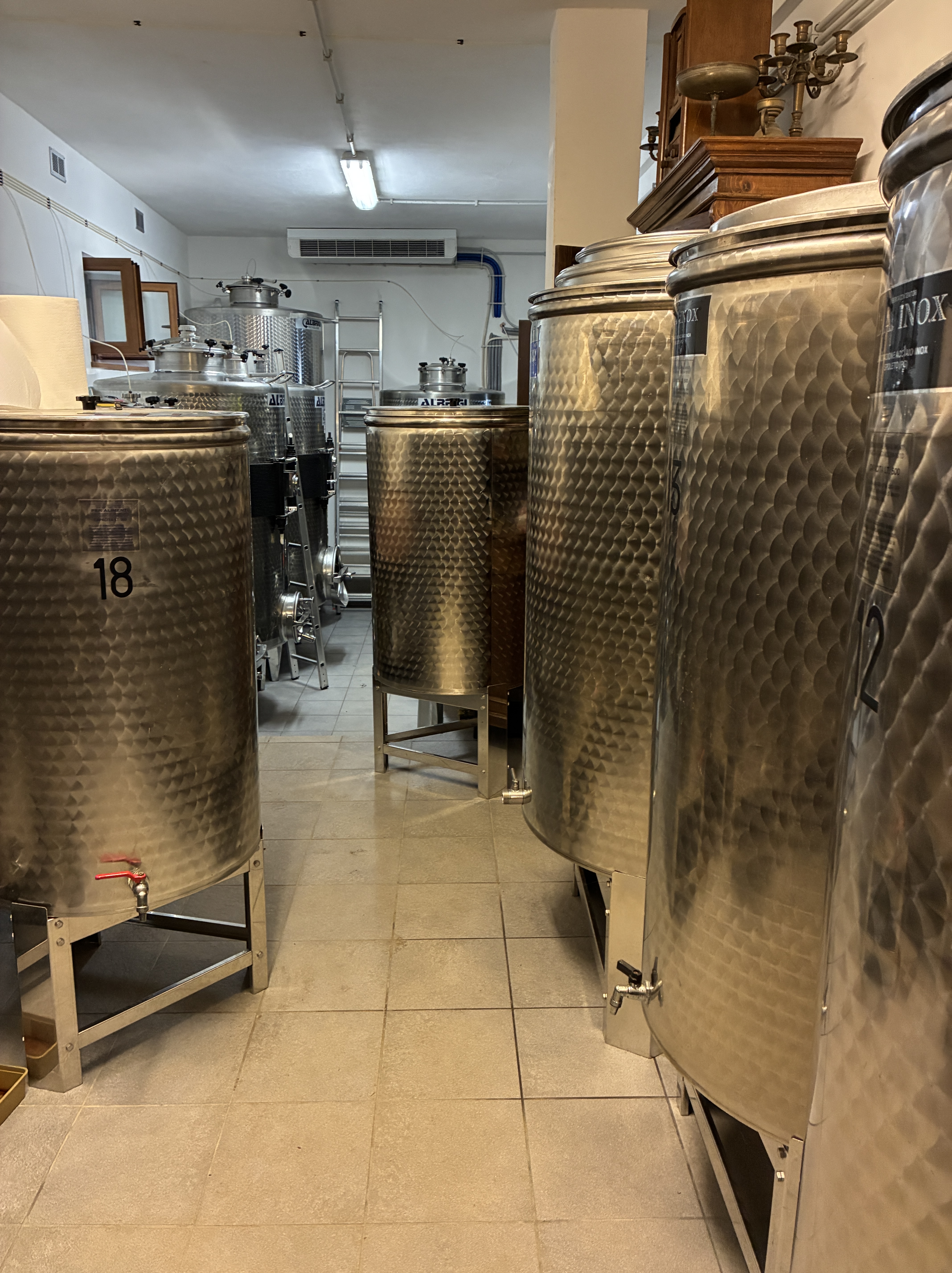
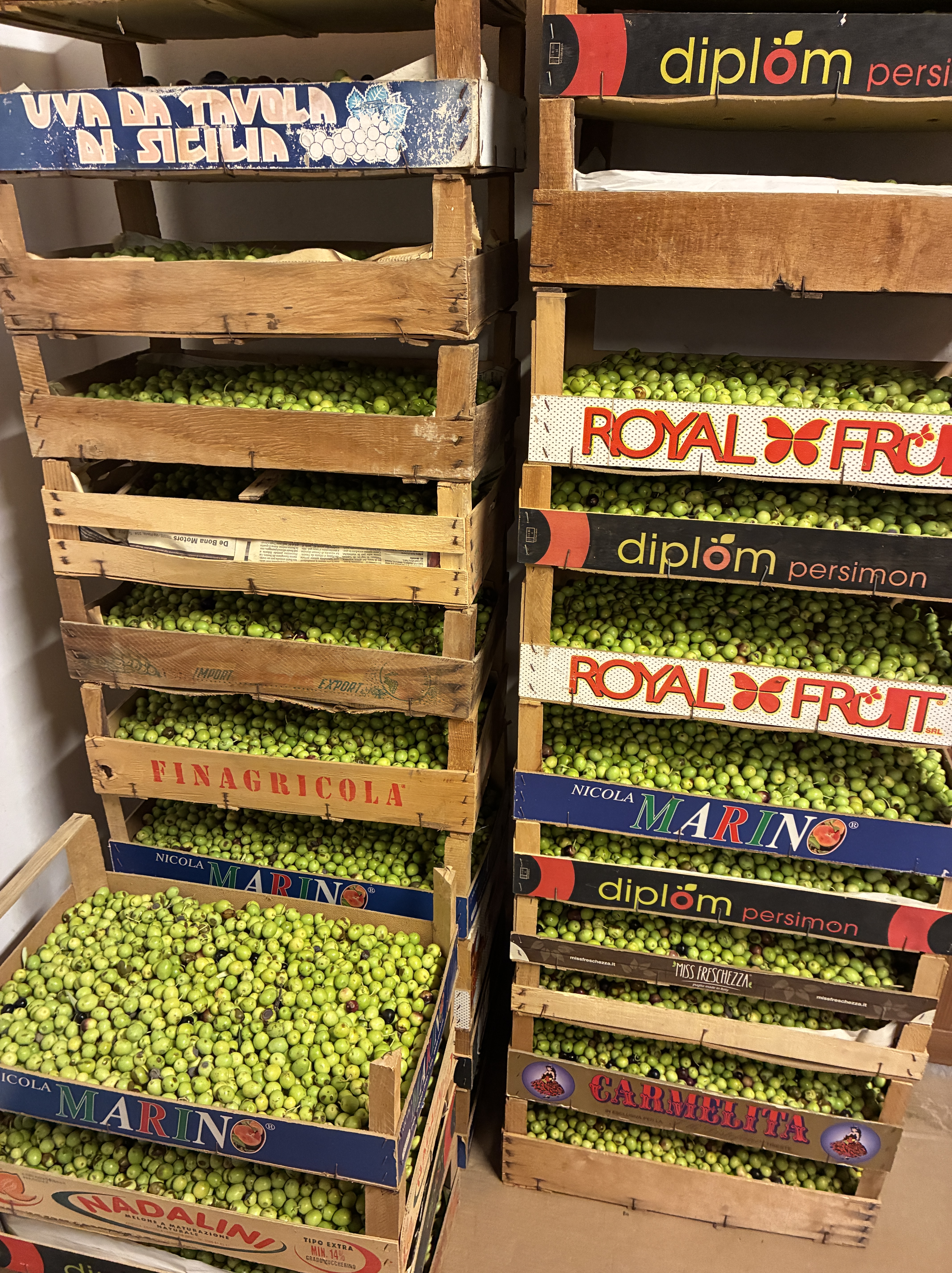
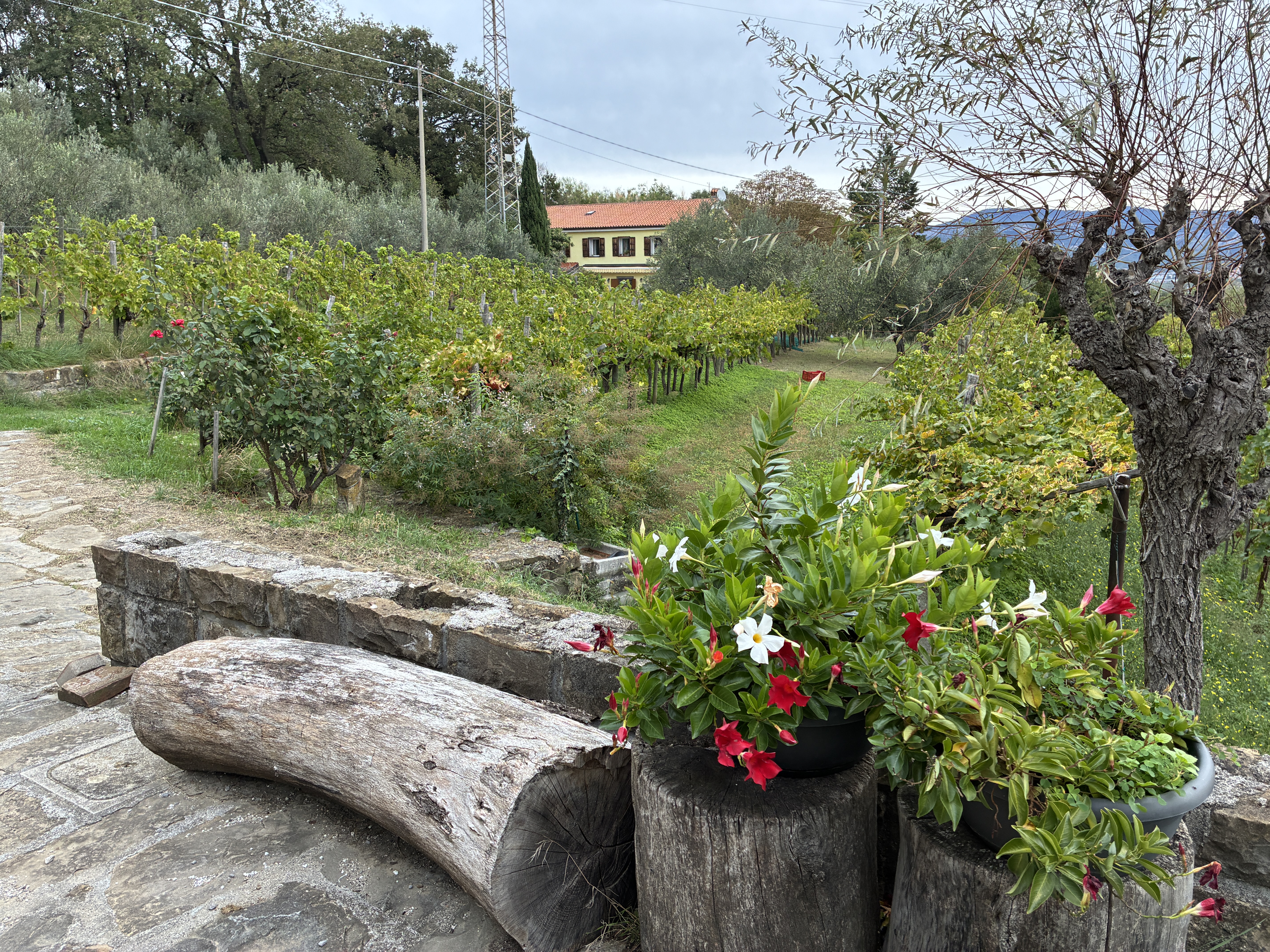
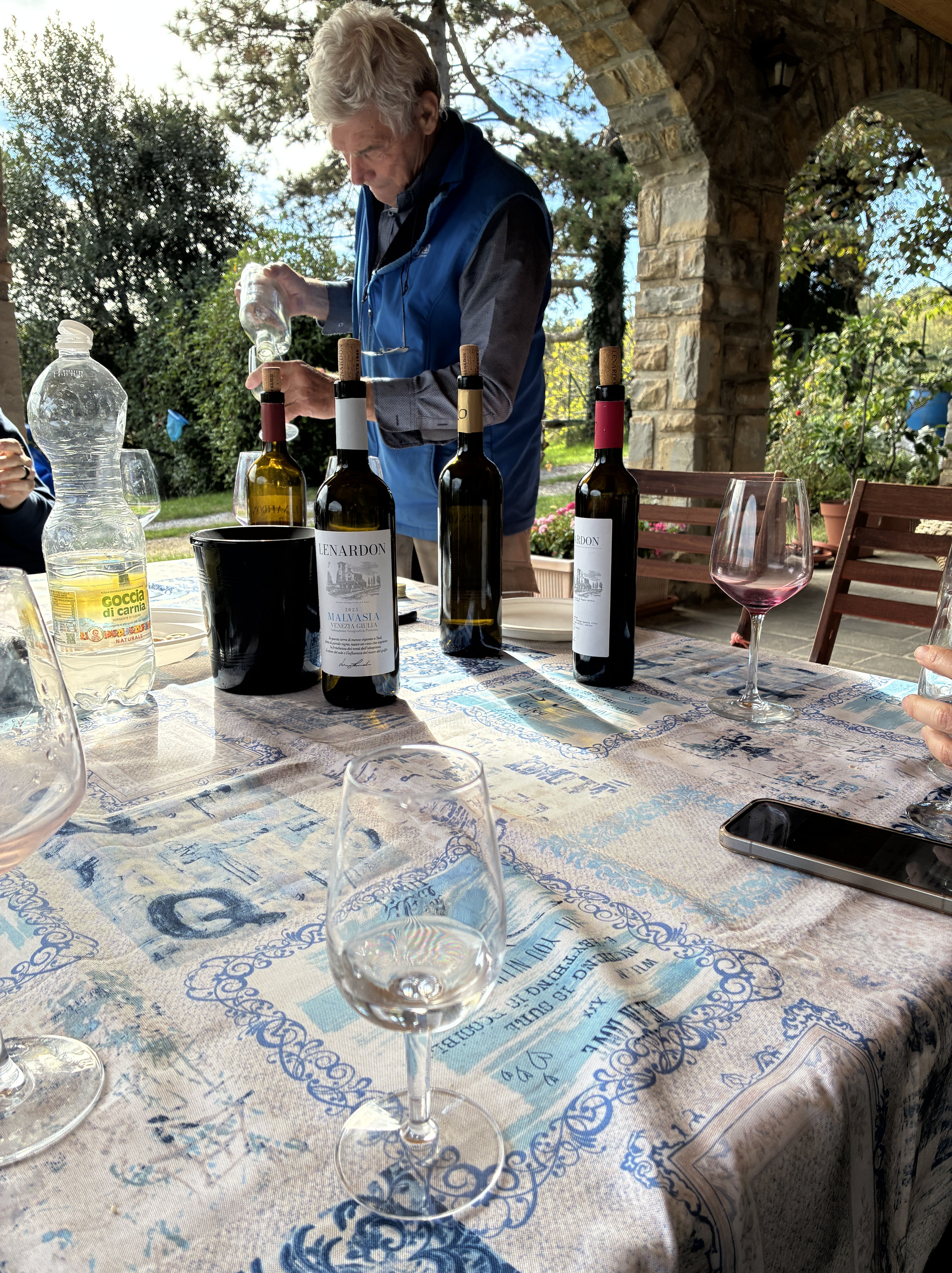
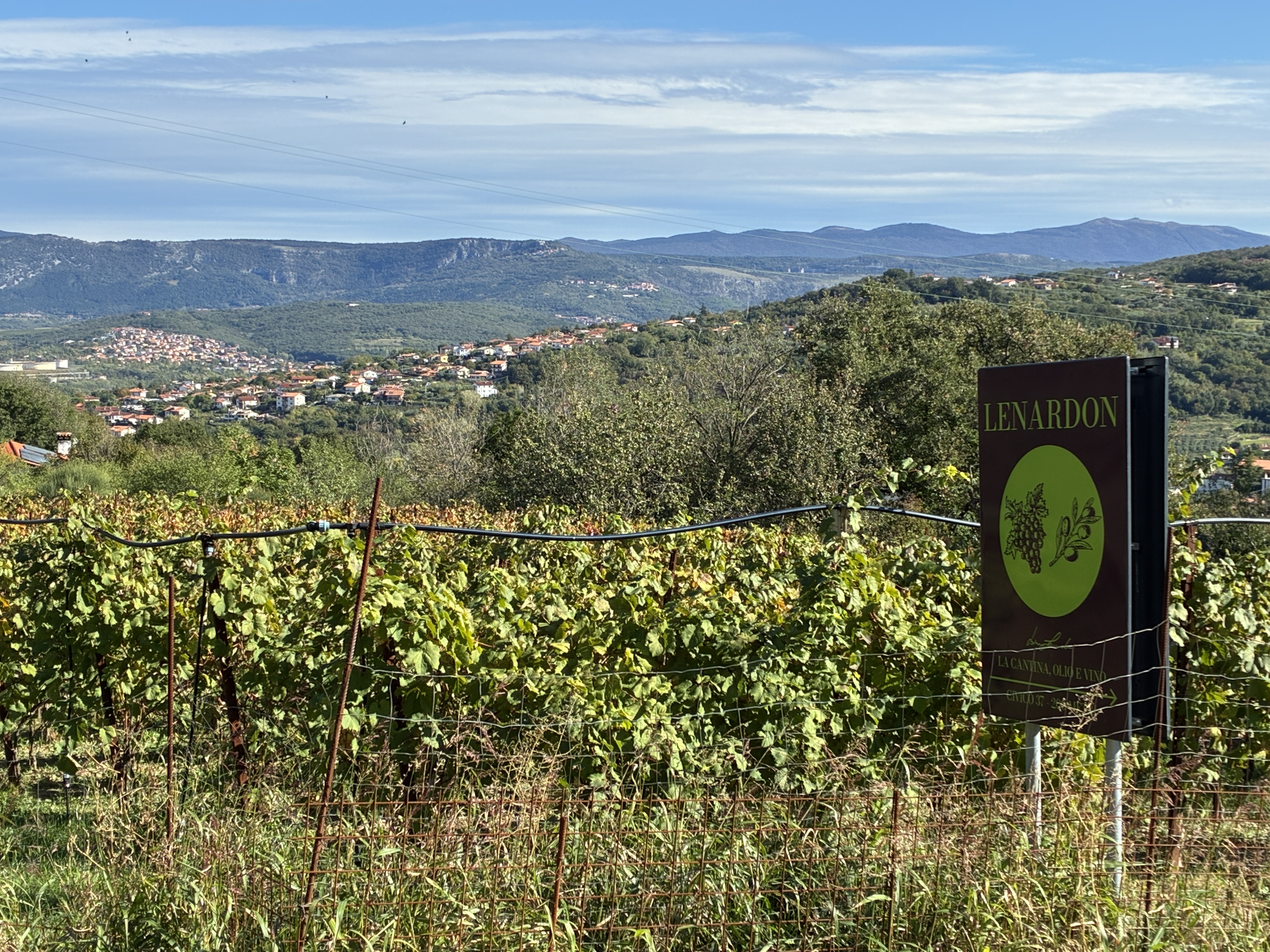
Thankfully, with that issue now behind him, Bruno can now focus his full attention on farming his land and producing some of the finest wine and olive oil in this area. We spent several delightful hours with Bruno as he generously shared with us his personal history, the history of his winery, and his process for producing both wine and olive oil using only the fruits from his own land. Naturally, we also got to sample each of the bottles he produces—and not just the wine and oil. Toward the end of our tasting, he pulled out a bottle of homemade grappa and poured each of us a generous glass, putting a capstone on a wonderful afternoon. I can honestly say it’s the tipsiest I’ve ever been from a wine tasting (and I’m not sure we needed that grappa), but I don’t think any of us regret a drop.
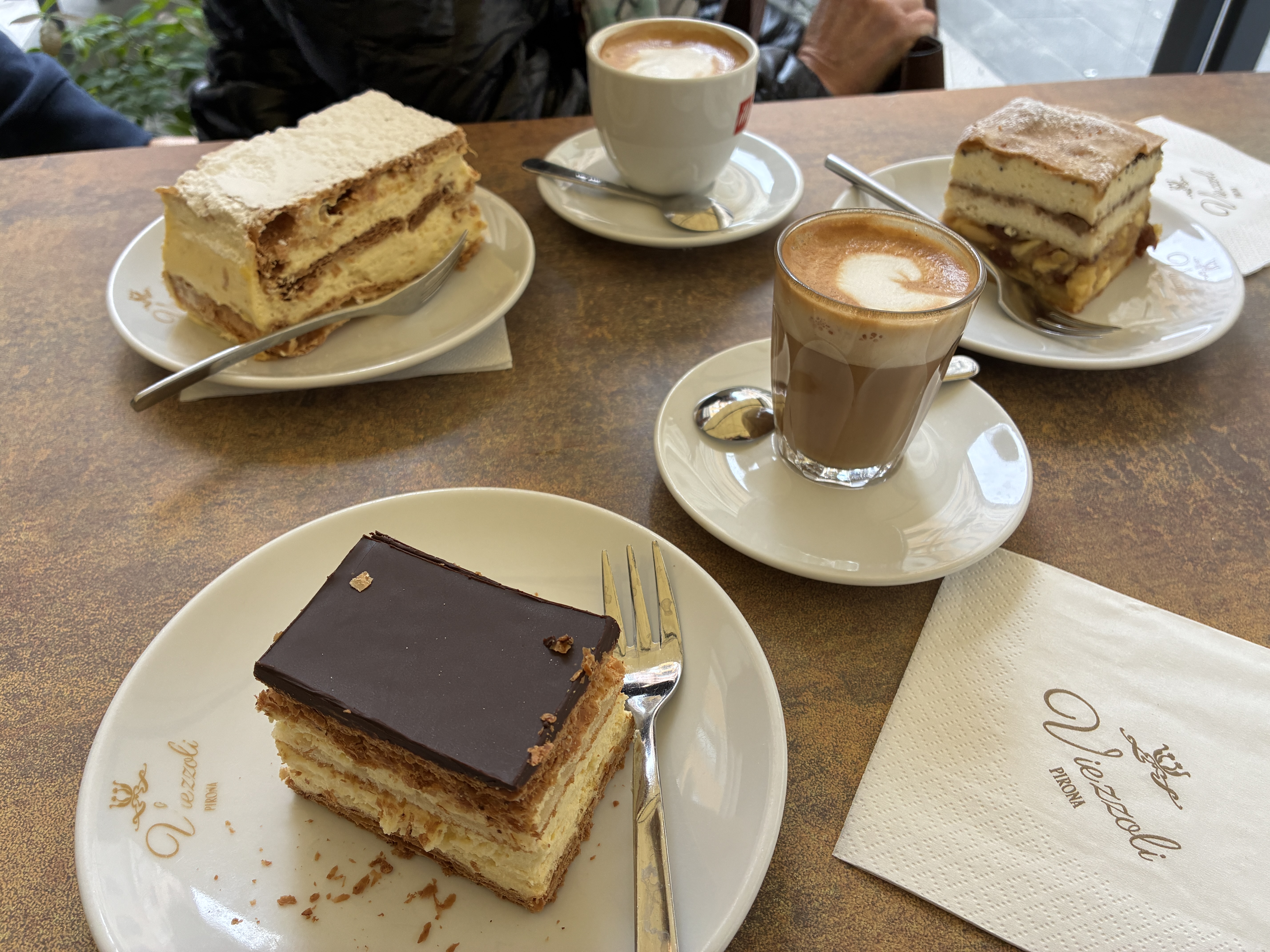
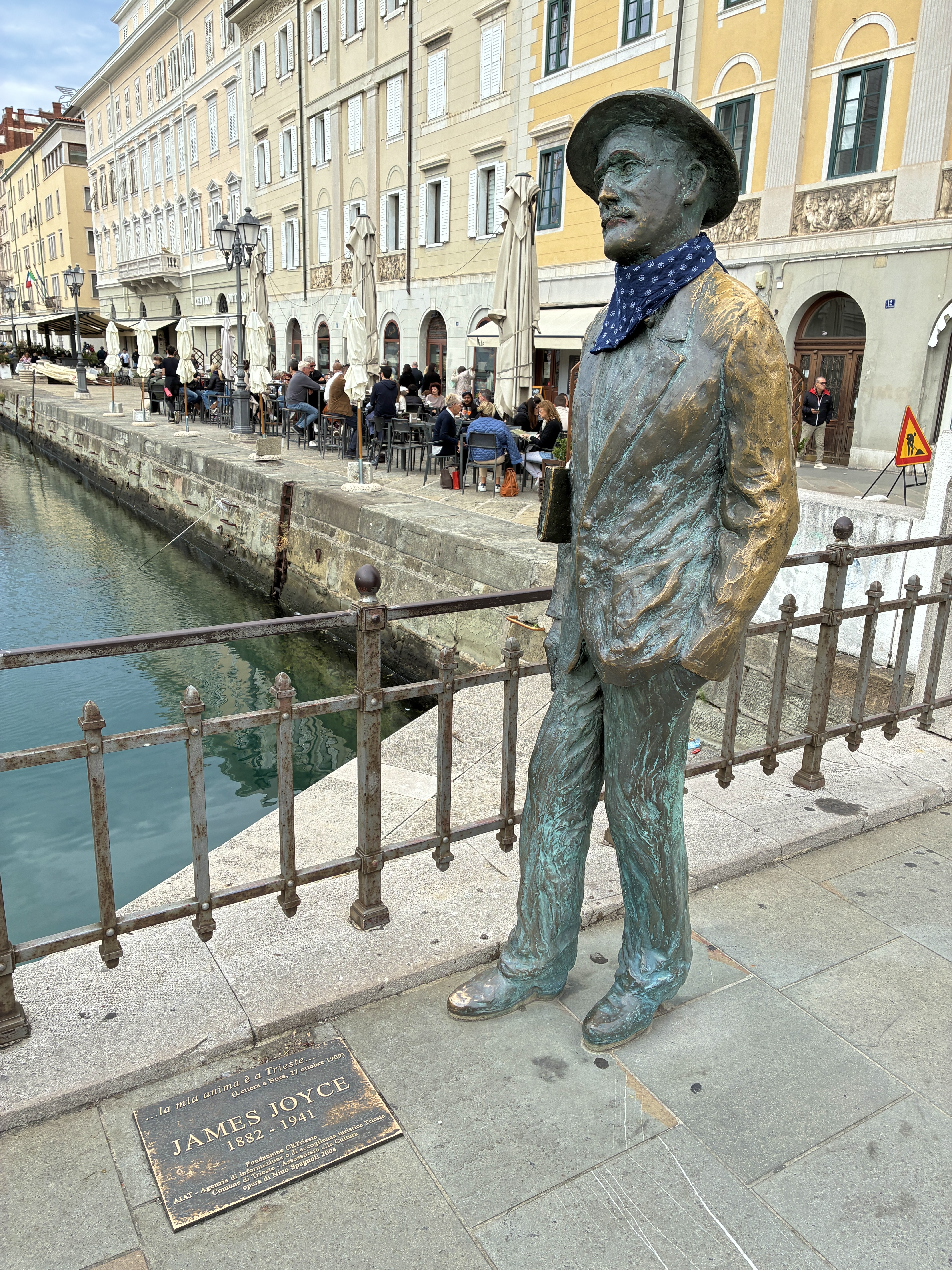
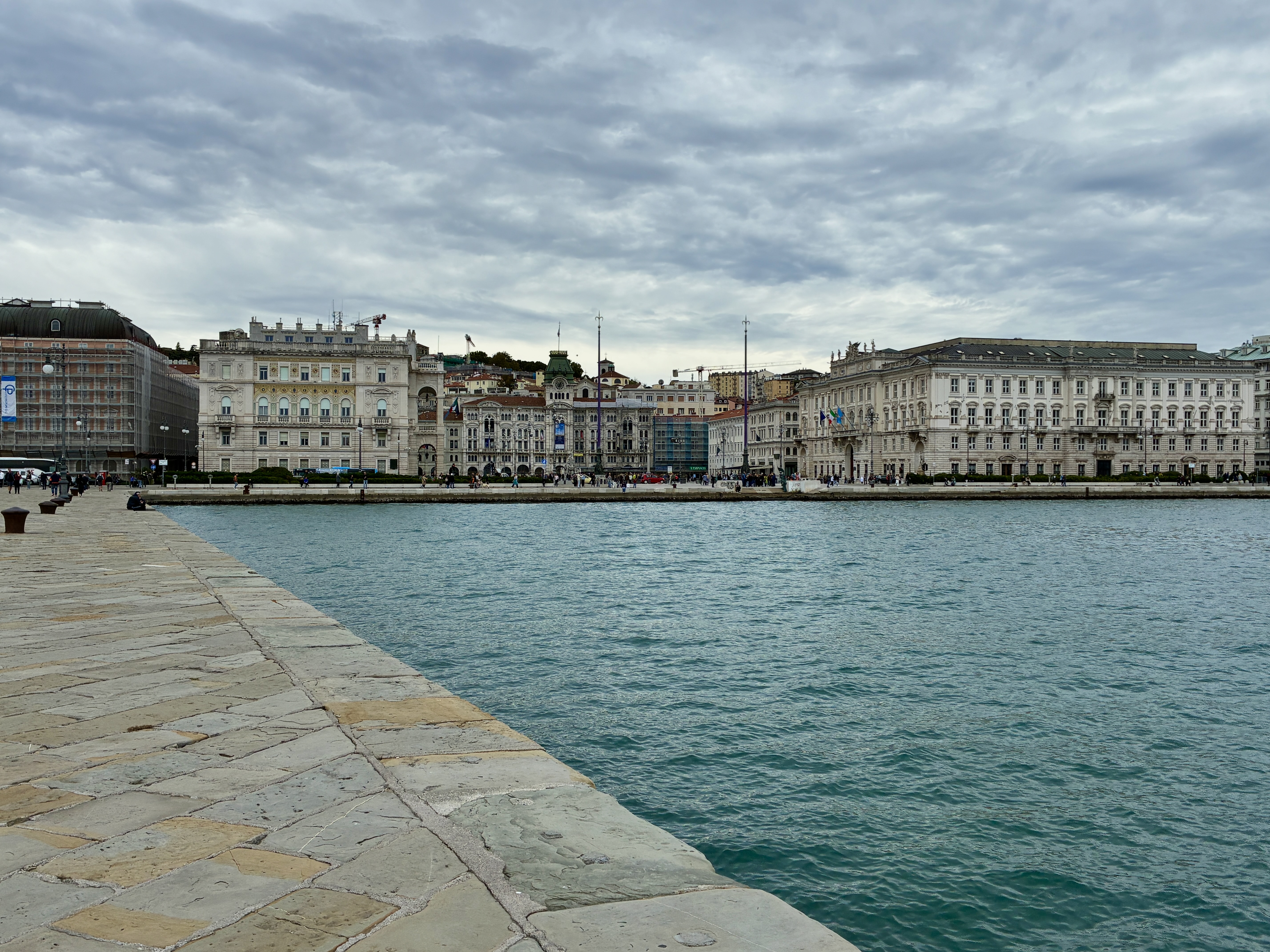
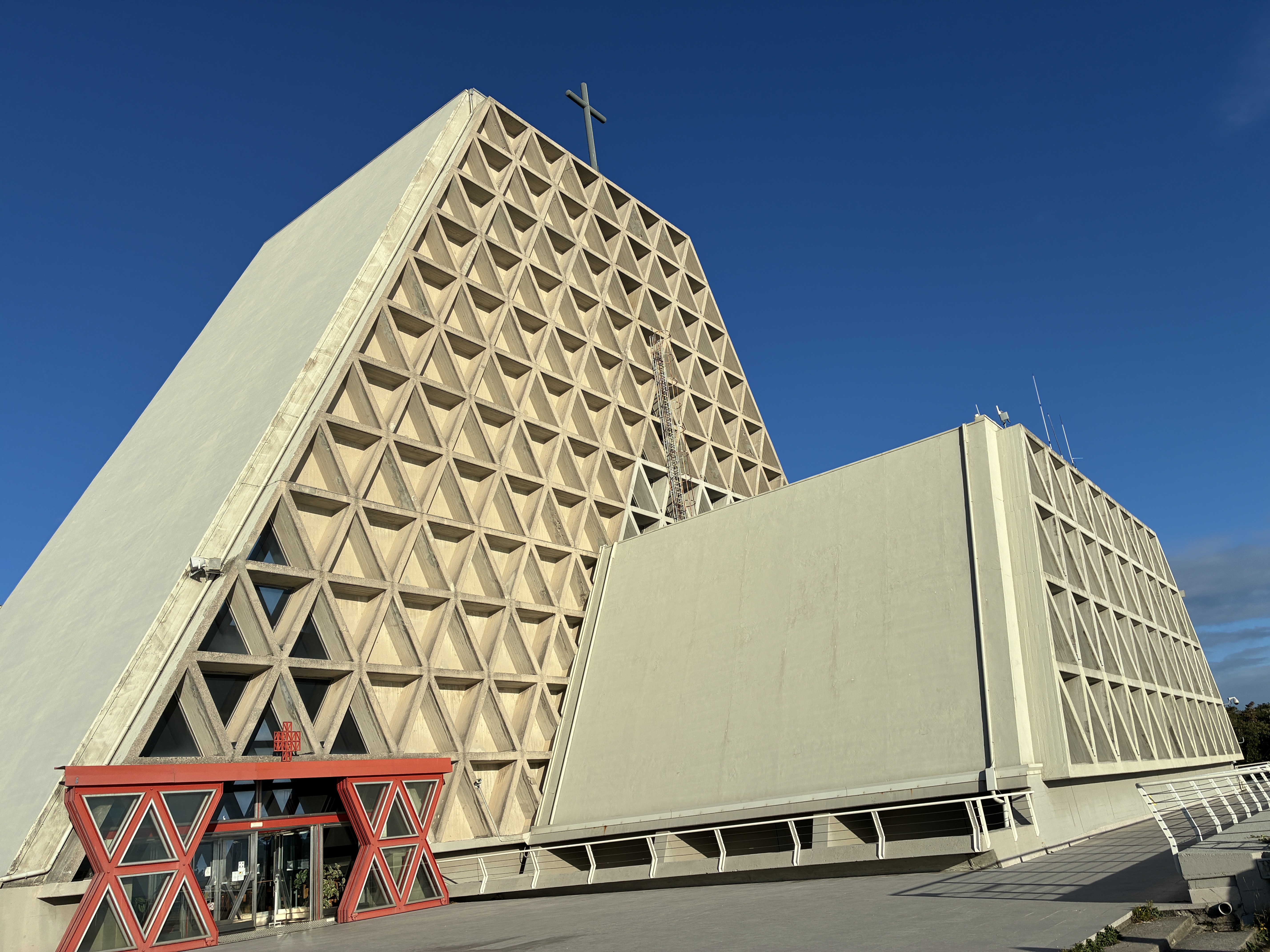
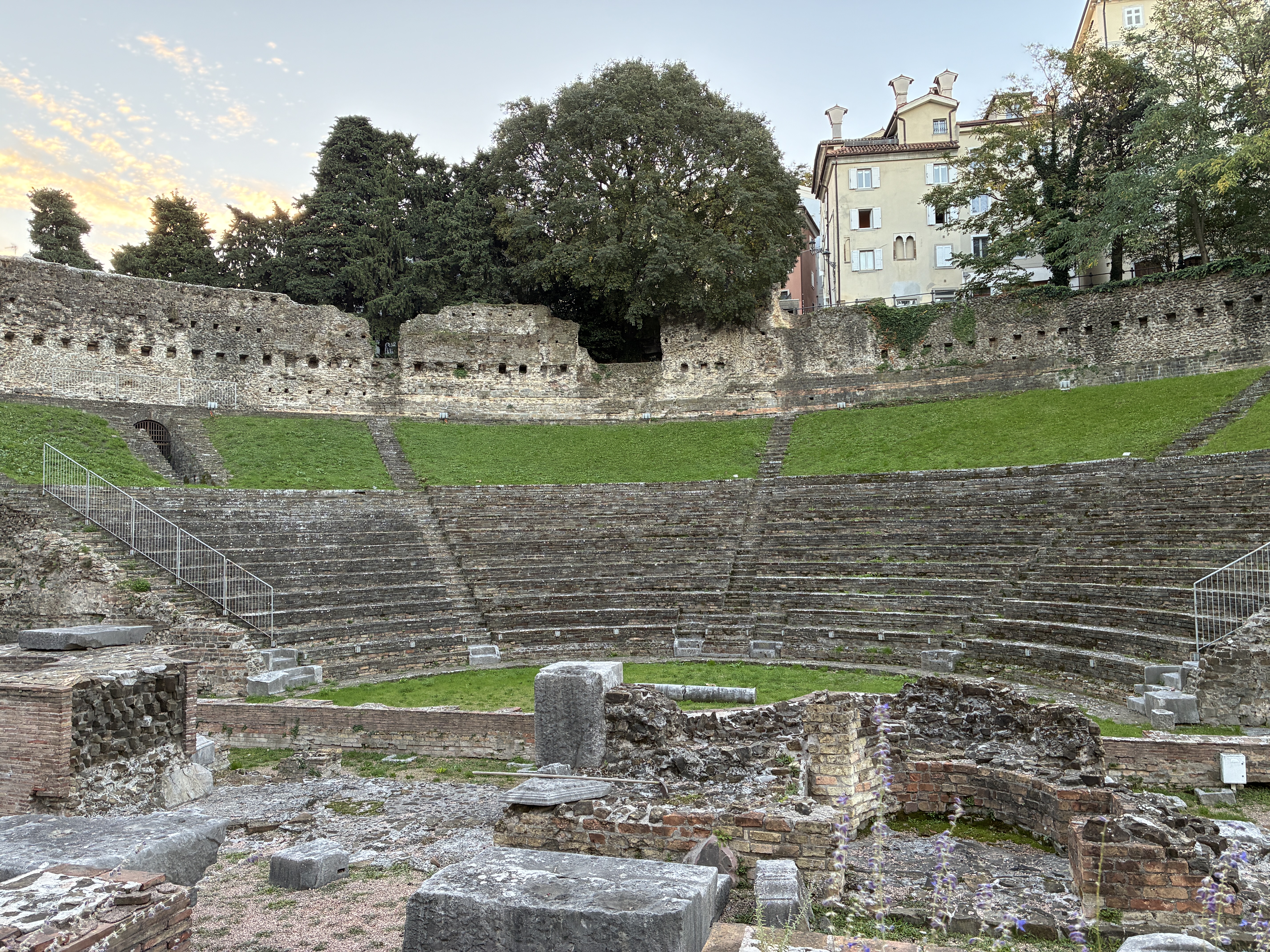
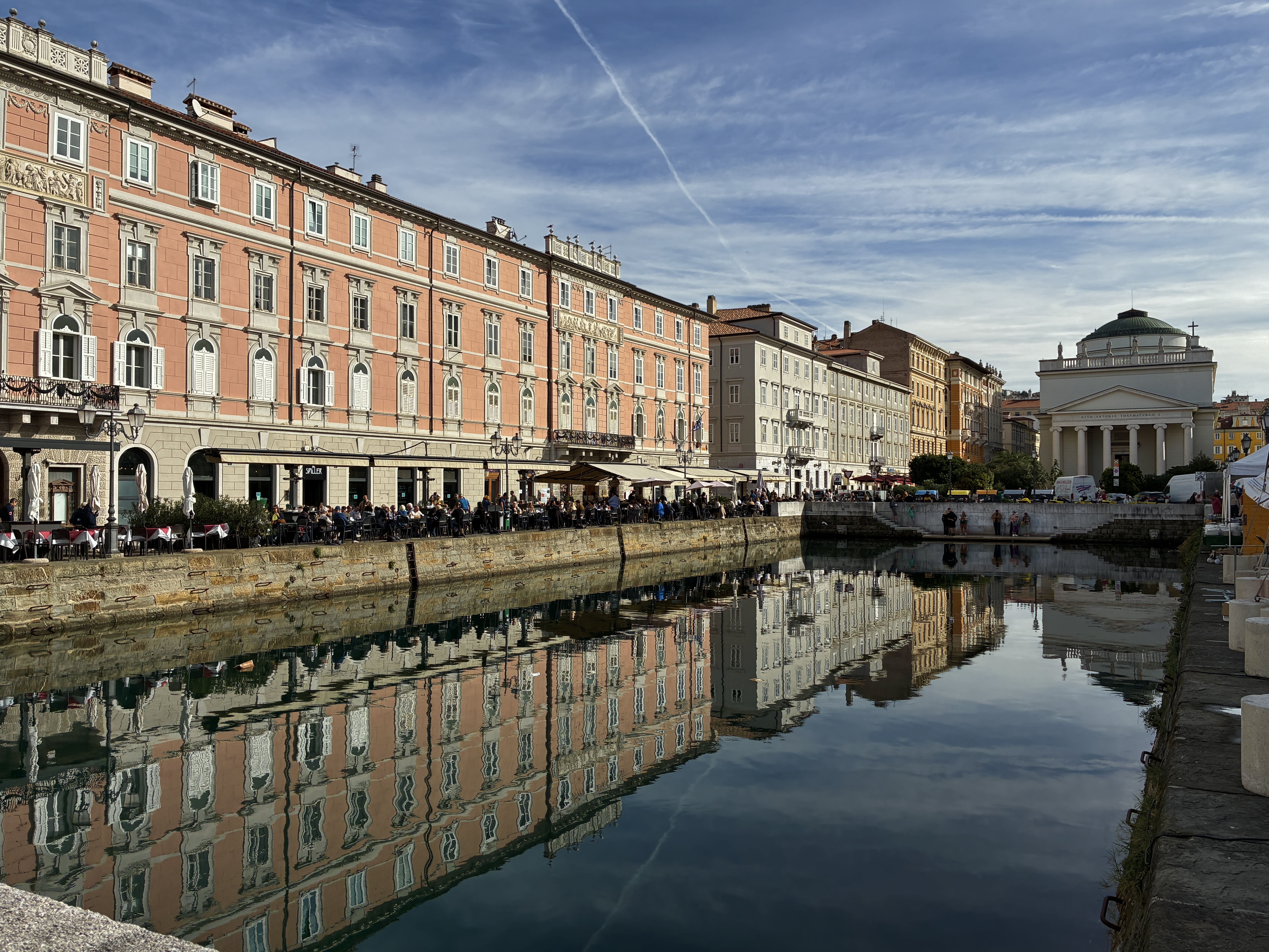
So I’ve covered just a bit about the region, the wine, and food…where does the coffee come in? I’m glad you asked. As it happens, Trieste is known as the “coffee capital” of Italy due to it having a major coffee port. The Trieste coffee tradition dates back to 1719 when, in an effort to boost trade, Emperor Charles VI of the Habsburg monarchy declared Trieste a tax-free port, a distinction it still carries today. This led to an influx of imported coffee beans, which jump-started Trieste’s caffeine addiction in a big way—this area consumes twice the amount of coffee than the national average. Trieste even has a coffee “language” that is unique from all other parts of Italy; for example, if you want an espresso, you ask for a “nero.” If you want a cappuccino, you ask for a “capo in b,” (shorthand for a “cappuccino” in a “bicchieri,” which is a glass)—the list goes on. Needless to say, we’ve been enjoying the local cafes just as much as the wine and food (and yes, there’s lots of sightseeing in between). It’s my favorite routine: coffee, wine, food, and travel all mixed together in a decadent routine—and all made more memorable by sharing it with friends.





Leave a Reply